Delhi clears Rs 40 billion plan to clean Yamuna, build new jail
ECONOMY & POLICY

Delhi clears Rs 40 billion plan to clean Yamuna, build new jail

In its first Expenditure Finance Committee (EFC) meeting under Chief Minister Rekha Gupta, the BJP government has approved infrastructure projects worth Rs 40 billion, with a sharp focus on cleaning the Yamuna and building a high-security prison in Narela.

Of the total outlay, Rs 3.14 billion has been earmarked for constructing 27 decentralised sewage treatment plants (STPs) and laying sewer lines across the city. The goal: stop untreated wastewater from entering the Yamuna and tackle Delhi’s growing water pollution crisis.

The STPs—spread across areas like Wajidpur Thakran, Mundka, Narela, Bawana, and Tikri Kalan—will be set up in 18 months. The project includes household sewer connections, maintenance contracts, and other technical upgrades, all aimed at improving groundwater recharge and eliminating foul odours in residential pockets.

The committee also cleared Rs 1 billion for setting up electric bus charging stations at multiple depots in Dwarka and ISBTs and Rs 1.48 billion for a new high-security prison in Narela. The facility, to be built over 40 acres, will house 256 inmates and eventually replace the overcrowded Tihar jail.

Gupta reaffirmed the government's commitment to restoring the Yamuna, calling it “a responsibility to future generations” and instructing departments to execute the plan in mission mode with modern technology.

Image source:bhaskarenglish

In its first Expenditure Finance Committee (EFC) meeting under Chief Minister Rekha Gupta, the BJP government has approved infrastructure projects worth Rs 40 billion, with a sharp focus on cleaning the Yamuna and building a high-security prison in Narela. Of the total outlay, Rs 3.14 billion has been earmarked for constructing 27 decentralised sewage treatment plants (STPs) and laying sewer lines across the city. The goal: stop untreated wastewater from entering the Yamuna and tackle Delhi’s growing water pollution crisis. The STPs—spread across areas like Wajidpur Thakran, Mundka, Narela, Bawana, and Tikri Kalan—will be set up in 18 months. The project includes household sewer connections, maintenance contracts, and other technical upgrades, all aimed at improving groundwater recharge and eliminating foul odours in residential pockets. The committee also cleared Rs 1 billion for setting up electric bus charging stations at multiple depots in Dwarka and ISBTs and Rs 1.48 billion for a new high-security prison in Narela. The facility, to be built over 40 acres, will house 256 inmates and eventually replace the overcrowded Tihar jail. Gupta reaffirmed the government's commitment to restoring the Yamuna, calling it “a responsibility to future generations” and instructing departments to execute the plan in mission mode with modern technology.Image source:bhaskarenglish

Related Stories

Gold Stories

Next Story
Infrastructure Urban

KONE Opens India's First Digital Experience Centre in Pune

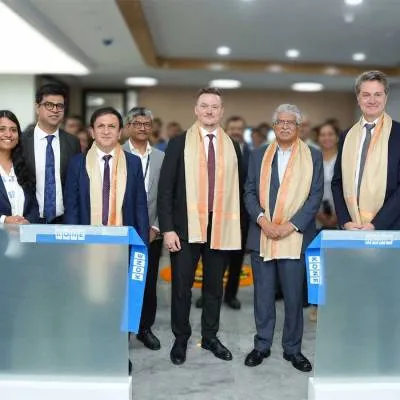
KONE, a global elevator and escalator manufacturer, has inaugurated its first Digital Experience Centre (DEC) in India, located in Pune. The facility aims to showcase how artificial intelligence (AI), connectivity and data-driven technologies can enhance customer experiences and improve building operations.The centre was inaugurated by Jussi Herlin, Executive Vice Chair, KONE Corporation; Philippe Delorme, President and CEO, KONE; and Nandan Nilekani, Co-founder and Chairman of the Board, Infosys.Designed as an interactive customer environment, the facility demonstrates digital solutions cover..

Next Story
Infrastructure Urban

CII GreenCo Launches Circularity Guidelines for Indian Industry

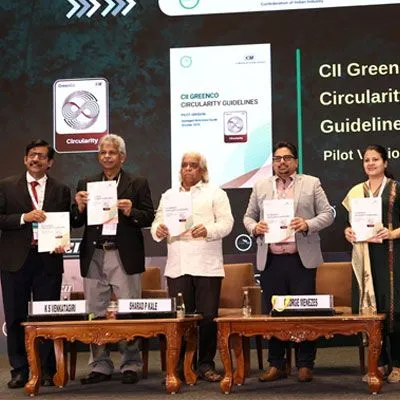
The Confederation of Indian Industry (CII) GreenCo Council has launched the CII GreenCo Circularity Guidelines – Pilot Version at the 17th CII GreenCo Waste & Resource Management Summit 2026 in Chennai. The initiative aims to strengthen resource efficiency, waste reduction and circular economy practices across Indian manufacturing and process industries.The guidelines introduce a structured framework with circularity indices covering raw materials, consumables, packaging and other resource inputs. These indicators will help industries assess existing practices, identify opportunities to ..

Next Story
Infrastructure Energy

Global Electronics Association Launches IPC-1783-CO2E Standard

The Global Electronics Association has introduced IPC-1783-CO2E, a new international standard aimed at improving consistency, transparency and comparability in product carbon footprint reporting across the electronics manufacturing industry.The standard, titled International Standard for Data Collection and Reporting of CO2 Equivalent (CO2e) Emissions for the Electronics Manufacturing Supply Chain, provides industry-specific guidance for collecting, estimating and reporting carbon emissions data.With increasing regulatory requirements and customer expectations, electronics manufacturers face c..

Advertisement

Subscribe to Our Newsletter

Get daily newsletters around different themes from Construction world.

STAY CONNECTED

Advertisement

SPECIAL OFFER
QR Code