Delhi Draft EV Policy to Ban Petrol Two?Wheelers from 2028
ECONOMY & POLICY

Delhi Draft EV Policy to Ban Petrol Two?Wheelers from 2028

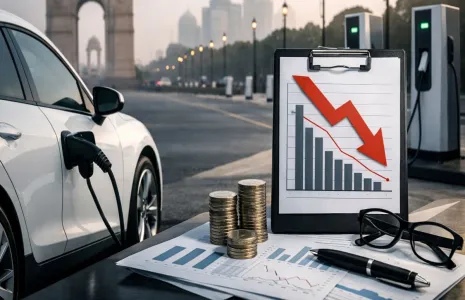
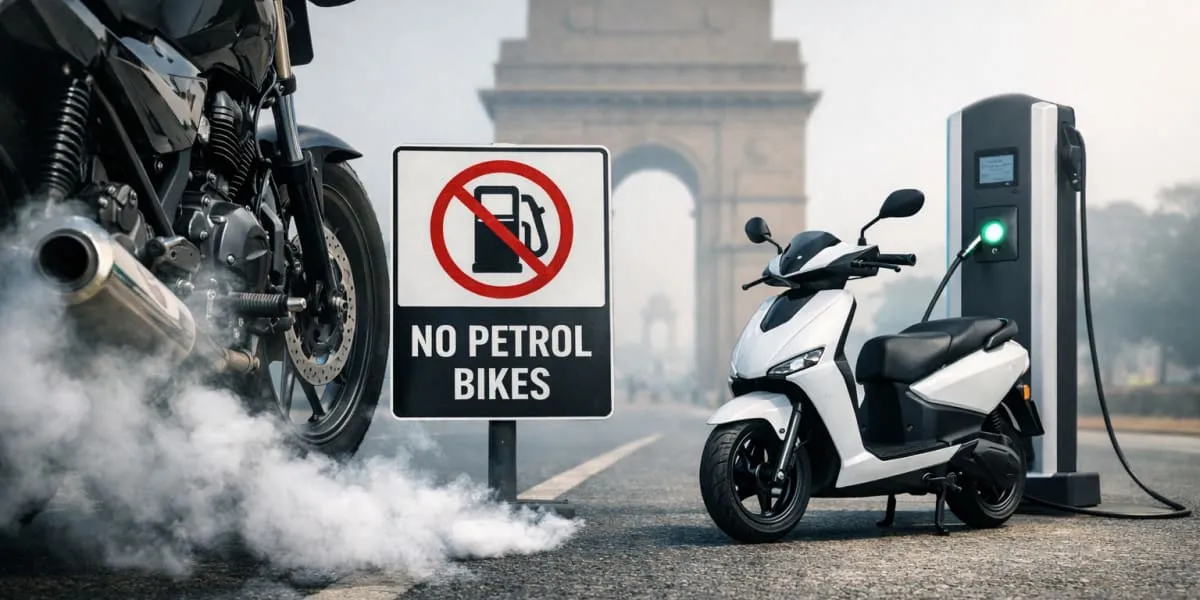
The Delhi government has published a draft electric vehicle policy proposing to stop registration of autos running on compressed natural gas from January one, 2027 and petrol two?wheelers from April one, 2028. The draft is open for public consultation and would, if enacted, make Delhi the first place in India to end sales of two? and three?wheelers powered by internal combustion engines. The measures are presented as part of a broader effort to reduce vehicular pollution in the capital. The policy frames the changes as necessary to improve air quality and support a faster shift to electric mobility.

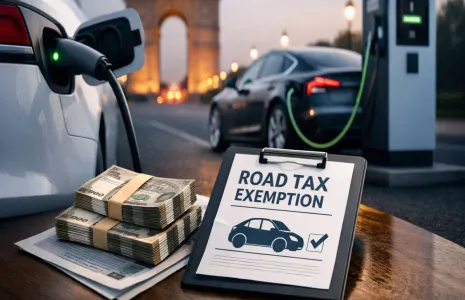
The draft requires that only electric three?wheelers may be registered from January one, 2027 and only electric two?wheelers from April one, 2028, while all school buses must be electric by March 31, 2030. Companies offering delivery and ride?sharing services will be barred from adding petroleum?powered two?wheelers and light commercial vehicles to fleets with retrospective effect from January one. The policy increases incentives for scrapping hydrocarbon?fuelled vehicles and for purchasing electric vehicles and requires EV sellers to install charging points. Officials present the measures as designed to accelerate the transition and to spur investment in charging infrastructure.

The chief minister's office said that the government had earmarked a total outlay of Rs 39,542.5 million (mn) for the policy, comprising Rs 12,362.5 mn for purchase incentives, Rs 17,180 mn for scrapping incentives and Rs 10,000 mn for charging infrastructure. Year?wise expenditure was listed as Rs 9,655 mn planned for the first year, Rs 10,127.5 mn for the second, Rs 12,315 mn for the third and Rs 7,445 mn for the fourth year. The conversions reflect the convention that one crore equals ten million and that one hundred crore equals one billion. The funding profile is intended to support both demand and supply measures for electric vehicles and associated infrastructure.

The draft notes a sharp rise in electric rickshaws in the city, several of which are illegal and use recycled lead?acid batteries charged in unsafe ways, but it does not set out steps to regularise them or targets for establishing charging points by Delhi Transco Limited. The Commission for Air Quality Management in the National Capital Region has attributed much of the capital's pollution to vehicles, and the policy is framed as a response to that assessment. The document now awaits public feedback before any final decision.

The Delhi government has published a draft electric vehicle policy proposing to stop registration of autos running on compressed natural gas from January one, 2027 and petrol two?wheelers from April one, 2028. The draft is open for public consultation and would, if enacted, make Delhi the first place in India to end sales of two? and three?wheelers powered by internal combustion engines. The measures are presented as part of a broader effort to reduce vehicular pollution in the capital. The policy frames the changes as necessary to improve air quality and support a faster shift to electric mobility. The draft requires that only electric three?wheelers may be registered from January one, 2027 and only electric two?wheelers from April one, 2028, while all school buses must be electric by March 31, 2030. Companies offering delivery and ride?sharing services will be barred from adding petroleum?powered two?wheelers and light commercial vehicles to fleets with retrospective effect from January one. The policy increases incentives for scrapping hydrocarbon?fuelled vehicles and for purchasing electric vehicles and requires EV sellers to install charging points. Officials present the measures as designed to accelerate the transition and to spur investment in charging infrastructure. The chief minister's office said that the government had earmarked a total outlay of Rs 39,542.5 million (mn) for the policy, comprising Rs 12,362.5 mn for purchase incentives, Rs 17,180 mn for scrapping incentives and Rs 10,000 mn for charging infrastructure. Year?wise expenditure was listed as Rs 9,655 mn planned for the first year, Rs 10,127.5 mn for the second, Rs 12,315 mn for the third and Rs 7,445 mn for the fourth year. The conversions reflect the convention that one crore equals ten million and that one hundred crore equals one billion. The funding profile is intended to support both demand and supply measures for electric vehicles and associated infrastructure. The draft notes a sharp rise in electric rickshaws in the city, several of which are illegal and use recycled lead?acid batteries charged in unsafe ways, but it does not set out steps to regularise them or targets for establishing charging points by Delhi Transco Limited. The Commission for Air Quality Management in the National Capital Region has attributed much of the capital's pollution to vehicles, and the policy is framed as a response to that assessment. The document now awaits public feedback before any final decision.

Next Story
Real Estate

Dubai Real Estate Sales Reach AED48 Billion

Dubai’s real estate market recorded 13,977 sales transactions worth AED48 billion in April 2026, reflecting continued resilience across residential and commercial segments.According to a market update by fäm Properties, sales volume rose 3.5 per cent month-on-month compared to March, while total sales value increased by 10.7 per cent. The commercial sector, including offices and shops, recorded the strongest growth, with 561 transactions valued at AED4 billion, up 33.9 per cent year-on-year and 36.2 per cent month-on-month.Apartment sales rose 6.5 per cent month-on-month to 11,377 transacti..

Next Story
Real Estate

Casagrand Launches 35-Acre Hyderabad Project

Casagrand has launched Casagrand Vybe, its largest residential project in Hyderabad, spread across 35 acres in Rajendra Nagar. The launch marks the company’s fifth residential rollout in 2026 and strengthens its expansion momentum in the city.As part of its Hyderabad growth strategy, Casagrand is adding 3.98 million sq ft of residential space to its portfolio. Since entering the Hyderabad residential market in 2023, the company has scaled its presence with projects across key micro-markets. In 2025, it launched four projects — Casagrand Evon, Casagrand Windsor Court, Casagrand Belair and C..

Next Story
Technology

Bentley Event Spotlights AI Infrastructure

Bentley Systems recently hosted Illuminate Mumbai 2026, bringing together infrastructure leaders, policymakers, technology experts and academia to discuss how AI-driven engineering and digital twins can accelerate India’s journey towards Viksit Bharat 2047.The event focused on scaling intelligent and connected infrastructure ecosystems beyond digital adoption. Discussions covered the use of infrastructure AI, open data environments and digital twin technologies to improve project delivery, sustainability and long-term asset performance across key sectors.Kamalakannan Thiruvadi, Regional Exec..

Advertisement

Subscribe to Our Newsletter

Get daily newsletters around different themes from Construction world.

STAY CONNECTED

Advertisement

Advertisement

Advertisement