



+
Delhi to Add 7,000 EV Charging Points in 2026
ECONOMY & POLICY

Delhi to Add 7,000 EV Charging Points in 2026

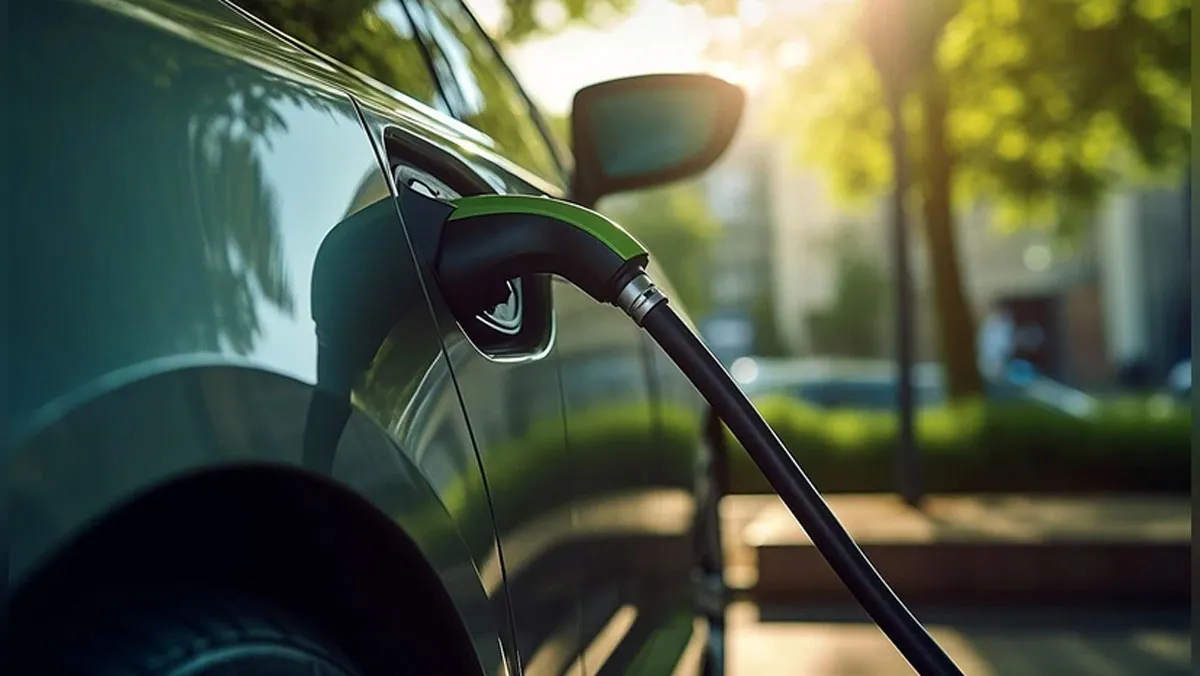
The Delhi government will add 7,000 electric vehicle charging points and 100 battery swapping stations this year as part of efforts to expand the city’s EV infrastructure and curb pollution, officials said on Monday.

The government is expected to notify the Delhi Electric Vehicle Policy 2.0 by March. Officials said the new policy, combined with the PM e-Drive scheme, will offer a range of incentives aimed at accelerating electric vehicle adoption across the national capital.

Official data shows Delhi currently has 8,849 charging points against a total requirement of 36,150. To bridge the shortfall of more than 27,000 points, the government has set quarterly targets for 2026. Under the plan, 1,000 charging points will be added during the January–March quarter, followed by 1,500 in April–June, 2,300 in July–September and 2,200 in the final quarter of the year. These additions are expected to take the total number of charging points in the city to over 16,000 by the end of 2026.

The Delhi Metro Rail Corporation will increase its charging points from 140 to 215. In addition, the Regional Rapid Transit System will install 12 charging points, with six each planned at the Ashok Vihar and Anand Vihar stations, officials said.

On battery swapping infrastructure, data shows Delhi had 893 stations as of December 31, 2025, against a requirement of 1,500. The government plans to add 1,268 stations by December 2026, including 25 stations each in the first and second quarters and 50 stations each in the third and fourth quarters.

A study by the Council on Energy, Environment and Water ranked Delhi third among states and union territories in EV adoption during the 2024–25 financial year. The national capital recorded registrations of 83,423 electric vehicles during the period. According to the study, EV adoption in Delhi spans multiple segments, including two-wheelers, three-wheelers and public transport, unlike several states where adoption has been largely limited to three-wheelers.

The Delhi government will add 7,000 electric vehicle charging points and 100 battery swapping stations this year as part of efforts to expand the city’s EV infrastructure and curb pollution, officials said on Monday. The government is expected to notify the Delhi Electric Vehicle Policy 2.0 by March. Officials said the new policy, combined with the PM e-Drive scheme, will offer a range of incentives aimed at accelerating electric vehicle adoption across the national capital. Official data shows Delhi currently has 8,849 charging points against a total requirement of 36,150. To bridge the shortfall of more than 27,000 points, the government has set quarterly targets for 2026. Under the plan, 1,000 charging points will be added during the January–March quarter, followed by 1,500 in April–June, 2,300 in July–September and 2,200 in the final quarter of the year. These additions are expected to take the total number of charging points in the city to over 16,000 by the end of 2026. The Delhi Metro Rail Corporation will increase its charging points from 140 to 215. In addition, the Regional Rapid Transit System will install 12 charging points, with six each planned at the Ashok Vihar and Anand Vihar stations, officials said. On battery swapping infrastructure, data shows Delhi had 893 stations as of December 31, 2025, against a requirement of 1,500. The government plans to add 1,268 stations by December 2026, including 25 stations each in the first and second quarters and 50 stations each in the third and fourth quarters. A study by the Council on Energy, Environment and Water ranked Delhi third among states and union territories in EV adoption during the 2024–25 financial year. The national capital recorded registrations of 83,423 electric vehicles during the period. According to the study, EV adoption in Delhi spans multiple segments, including two-wheelers, three-wheelers and public transport, unlike several states where adoption has been largely limited to three-wheelers.

Next Story
Building Material

NITI Aayog Unveils Cement Decarbonisation Roadmap

NITI Aayog has released a sector-specific decarbonisation roadmap for cement as part of three green transition reports covering cement, aluminium and MSMEs. The report projects cement production rising to around 2,100 million tonnes by 2070 from 391 million tonnes in 2023, while targeting a reduction in carbon intensity to 0.09–0.13 tCO₂e per tonne. It recommends clinker substitution, refuse-derived fuels, CCUS adoption and carbon trading mechanisms to enable deep decarbonisation. ..

Next Story
Technology

Genesys Launches Advanced GeoRadar System

Genesys International Corporation has launched an advanced Ground Penetrating Radar (GPR) solution from IDS GeoRadar for underground utility mapping in India. The system uses patented Equalised Scrambling Technology (EST) and Wide/Multi-Array Antenna Technology to deliver high-resolution three-dimensional imaging of subsurface infrastructure. The technology enables the detection and mapping of buried assets such as water pipelines, sewer networks, telecom cables and power lines. By providing detailed subsurface insights, the system aims to help urban authorities and infrastructure developers ..

Next Story
Infrastructure Urban

Hindustan Zinc Partners Virginia Tech to Boost Silver Recovery

Hindustan Zinc Limited recently signed a Memorandum of Understanding (MoU) with Virginia Tech to advance research aimed at improving silver recovery across its lead–zinc (Pb–Zn) concentrators. The collaboration will focus on refining flotation techniques and optimising reagent usage to improve concentrate quality and operational efficiency at processing plants.Virginia Tech, based in Blacksburg, Virginia, is globally recognised for its expertise in mining engineering, mineral processing and applied metallurgical research. Through this partnership, Hindustan Zinc will leverage global resear..

Advertisement

Subscribe to Our Newsletter

Get daily newsletters around different themes from Construction world.

STAY CONNECTED

Advertisement

Advertisement

Advertisement

Open In App














