

Delhi to Cap E-Rickshaw Fleet at 250,000, Add ECC
ECONOMY & POLICY

Delhi to Cap E-Rickshaw Fleet at 250,000, Add ECC

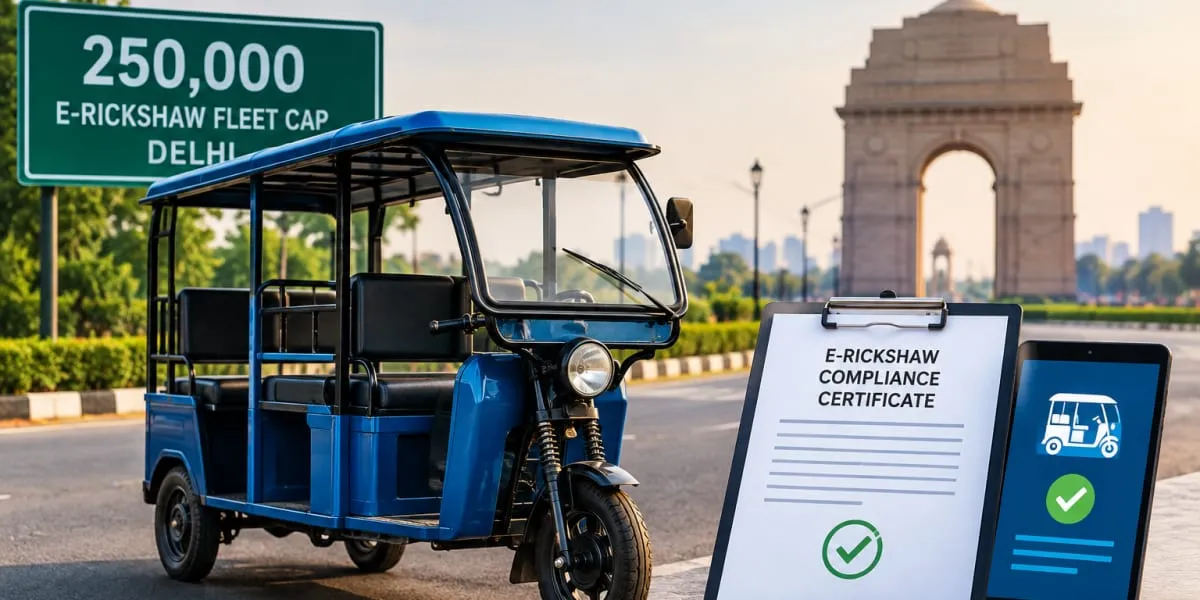
The Delhi government has proposed capping the number of e-rickshaws operating in the national capital at 250,000 and making a digital E-Rickshaw Compliance Certificate (ECC) mandatory under a new regulatory framework. The proposed Delhi E-Rickshaw (Registration and Operation) Scheme, 2026, is intended to improve road safety, reduce congestion and regulate the expanding fleet.

Existing e-rickshaws registered in Delhi will have 90 days from notification of the scheme to obtain an ECC, although the Transport department may extend the deadline. The certificate will serve as a compliance and operational authorisation separate from a permit under Section 66 of the Motor Vehicles Act and will remain valid for two years unless suspended or cancelled earlier.

The ECC will be linked to one vehicle and one driver and will record registration, ownership, the authorised driver, battery compliance, fitness certification and insurance. A driving licence or driver will not be permitted to be linked to more than one valid certificate. Existing vehicles, including those with incomplete fitness, insurance or driver documentation, will have to secure the certificate within the prescribed period.

New vehicles will need registration and compliance approval before beginning operations. Only models type-approved under Rule 126 of the Central Motor Vehicles Rules, 1989, and endorsed by the Delhi Transport department will qualify. Individual Delhi residents will be allowed to own up to five e-rickshaws, while entities may own up to 100. An entity registering its 25th vehicle will need to apply for an aggregator licence within one month.

Drivers will require a valid e-rickshaw licence and Public Service Vehicle (PSV) Badge. Vehicles must carry High Security Registration Plates, a yellow rear reflector and owner details, while bull bars will be prohibited. They cannot operate on restricted roads, obstruct traffic or carry more than four passengers or 40 kg of luggage. Unregistered vehicles may be impounded, crushed and auctioned, while batteries will be sent to registered recyclers. Owners may appeal ECC suspension or cancellation within 30 days.

The Delhi government has proposed capping the number of e-rickshaws operating in the national capital at 250,000 and making a digital E-Rickshaw Compliance Certificate (ECC) mandatory under a new regulatory framework. The proposed Delhi E-Rickshaw (Registration and Operation) Scheme, 2026, is intended to improve road safety, reduce congestion and regulate the expanding fleet. Existing e-rickshaws registered in Delhi will have 90 days from notification of the scheme to obtain an ECC, although the Transport department may extend the deadline. The certificate will serve as a compliance and operational authorisation separate from a permit under Section 66 of the Motor Vehicles Act and will remain valid for two years unless suspended or cancelled earlier. The ECC will be linked to one vehicle and one driver and will record registration, ownership, the authorised driver, battery compliance, fitness certification and insurance. A driving licence or driver will not be permitted to be linked to more than one valid certificate. Existing vehicles, including those with incomplete fitness, insurance or driver documentation, will have to secure the certificate within the prescribed period. New vehicles will need registration and compliance approval before beginning operations. Only models type-approved under Rule 126 of the Central Motor Vehicles Rules, 1989, and endorsed by the Delhi Transport department will qualify. Individual Delhi residents will be allowed to own up to five e-rickshaws, while entities may own up to 100. An entity registering its 25th vehicle will need to apply for an aggregator licence within one month. Drivers will require a valid e-rickshaw licence and Public Service Vehicle (PSV) Badge. Vehicles must carry High Security Registration Plates, a yellow rear reflector and owner details, while bull bars will be prohibited. They cannot operate on restricted roads, obstruct traffic or carry more than four passengers or 40 kg of luggage. Unregistered vehicles may be impounded, crushed and auctioned, while batteries will be sent to registered recyclers. Owners may appeal ECC suspension or cancellation within 30 days.

Related Stories

Gold Stories

Next Story
Real Estate

Danube's Gauri Khan-designed penthouses sell out at launch

Danube Properties has announced the sell-out of all Gauri Khan-designed penthouses at Shahrukhz Residences, its fully furnished waterfront residential development in Dubai Maritime City. Each penthouse was priced at Rs 500 million (INR 50 crore). The project was unveiled at a launch event at Coca-Cola Arena, Dubai, on 11 November, attended by Danube Group Founder and Chairman Rizwan Sajan, Shah Rukh Khan and Gauri Khan.The event, hosted by filmmaker Karan Johar, marked the second collaboration between Sajan and Shah Rukh Khan. The residential development follows the launch of the Shahrukhz com..

Next Story
Real Estate

Danube's Gauri Khan-designed penthouses sell out at launch

Danube Properties has announced the sell-out of all Gauri Khan-designed penthouses at Shahrukhz Residences, its fully furnished waterfront residential development in Dubai Maritime City. Each penthouse was priced at Rs 500 million (INR 50 crore). The project was unveiled at a launch event at Coca-Cola Arena, Dubai, on 11 November, attended by Danube Group Founder and Chairman Rizwan Sajan, Shah Rukh Khan and Gauri Khan.The event, hosted by filmmaker Karan Johar, marked the second collaboration between Sajan and Shah Rukh Khan. The residential development follows the launch of the Shahrukhz com..
Next Story
Building Material

Big 5 Global to showcase Indian manufacturing capabilities

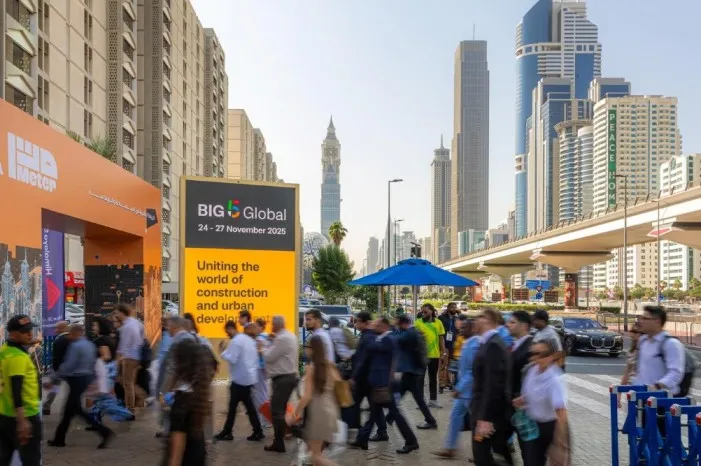
Big 5 Global 2026 will bring together international construction suppliers and buyers at the Dubai World Trade Centre from 23 to 26 November, providing Indian manufacturers an opportunity to expand their presence in the Middle East, Africa and South Asia (MEASA) markets. The event will host more than 1,800 exhibitors from over 60 countries, showcasing 55,000 products, services and solutions. International companies will account for 70 per cent of the exhibitor base.With India's construction market projected to reach USD 1.1 trillion by 2031, growing demand for infrastructure, housing and susta..

Advertisement

Subscribe to Our Newsletter

Get daily newsletters around different themes from Construction world.

STAY CONNECTED

Advertisement

SPECIAL OFFER
QR Code