Delhi To Offer EV Subsidies Under New Clean Air Push
ECONOMY & POLICY

Delhi To Offer EV Subsidies Under New Clean Air Push

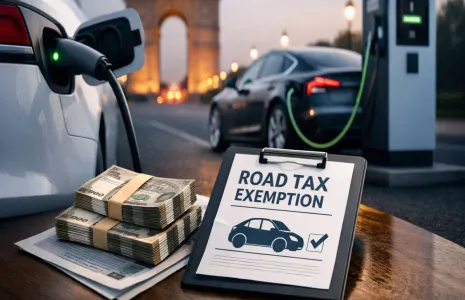
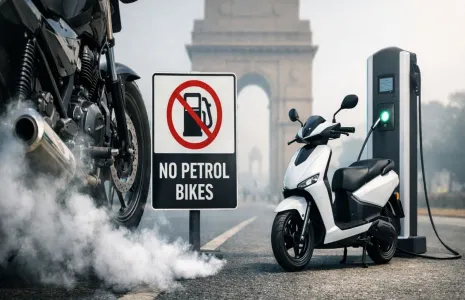
Delhi Chief Minister Rekha Gupta has announced that the Delhi government will provide subsidies under its upcoming electric vehicle (EV) policy to accelerate EV adoption across the city, including private vehicles. The initiative is part of a larger effort to curb air pollution and promote sustainable urban mobility.

Speaking at the Aironomics 2025 convention, Gupta outlined the government’s comprehensive anti-pollution strategy. This includes the year-round operation of 1,000 water sprinklers to reduce dust, scheduled to function during early mornings and late nights to minimise traffic impact.

Additionally, integrated machines capable of road sweeping, water sprinkling, and litter collection will be deployed across all 70 Assembly constituencies. Gupta called on citizens to actively participate in measures such as avoiding biomass burning, expanding green cover, and supporting the shift to EVs.

Former Renewable Energy Secretary Bhupinder Bhalla underscored the importance of coordination between central and state authorities to combat Delhi’s air crisis. Sanjiv Kumar, Chairman of the Delhi Pollution Control Committee (DPCC), also stressed the value of cost-effective, real-time pollution monitoring to support rapid response.

Delhi Chief Minister Rekha Gupta has announced that the Delhi government will provide subsidies under its upcoming electric vehicle (EV) policy to accelerate EV adoption across the city, including private vehicles. The initiative is part of a larger effort to curb air pollution and promote sustainable urban mobility.Speaking at the Aironomics 2025 convention, Gupta outlined the government’s comprehensive anti-pollution strategy. This includes the year-round operation of 1,000 water sprinklers to reduce dust, scheduled to function during early mornings and late nights to minimise traffic impact.Additionally, integrated machines capable of road sweeping, water sprinkling, and litter collection will be deployed across all 70 Assembly constituencies. Gupta called on citizens to actively participate in measures such as avoiding biomass burning, expanding green cover, and supporting the shift to EVs.Former Renewable Energy Secretary Bhupinder Bhalla underscored the importance of coordination between central and state authorities to combat Delhi’s air crisis. Sanjiv Kumar, Chairman of the Delhi Pollution Control Committee (DPCC), also stressed the value of cost-effective, real-time pollution monitoring to support rapid response.

Next Story
Infrastructure Urban

Implementation Status of Jal Jeevan Mission

Since August 2019 the Government has implemented Jal Jeevan Mission to provide assured potable water through household tap connections in rural India. At the start of the mission only 32.3 million (mn) rural households, representing 16.7 per cent, were reported to have tap water connections. States and union territories have reported that 125.8 mn additional rural households have since been provided with tap connections. As a result, of about 193.6 mn rural households roughly 158.2 mn, or 81.71 per cent, are reported to have tap water supply at home.\n\nThe State, district and village level st..

Next Story
Infrastructure Urban

Jal Jeevan Mission Reaches Eighty One Per Cent Rural Coverage

The Government reported substantial progress under the Jal Jeevan Mission, launched in August 2019 to provide tap water to every rural household. At launch only 32.3 million (mn) rural households had tap connections and states and Union territories reported provision of 125.8 mn additional households by March 2026. Consequently, out of about 193.6 mn rural households around 158.2 mn, or 81.71 per cent, are reported to have tap water at home. The Finance Minister announced extension of the mission until 2028 in the 2025-26 budget speech. The Swachh Bharat Mission Grameen, launched in October 20..

Next Story
Infrastructure Urban

Empowering Local Governance for Sustainable Rural Water Supply

The Ministry of Jal Shakti has aligned the Jal Jeevan Mission (JJM) with the 73rd Amendment to strengthen village level planning and community ownership of water supply. Gram Panchayats, village water and sanitation committees and Pani Samitis are to plan, implement, manage and maintain piped water systems, with gram sabha processes formalising handover and oversight. Implementation support agencies including non government organisations, community based organisations and self help groups have been empanelled to train local committees and promote women participation. Under JJM, the department ..

Advertisement

Subscribe to Our Newsletter

Get daily newsletters around different themes from Construction world.

STAY CONNECTED

Advertisement

Advertisement

Advertisement