DFS Workshop On Insolvency And Bankruptcy Amendment Act 2026
ECONOMY & POLICY

DFS Workshop On Insolvency And Bankruptcy Amendment Act 2026

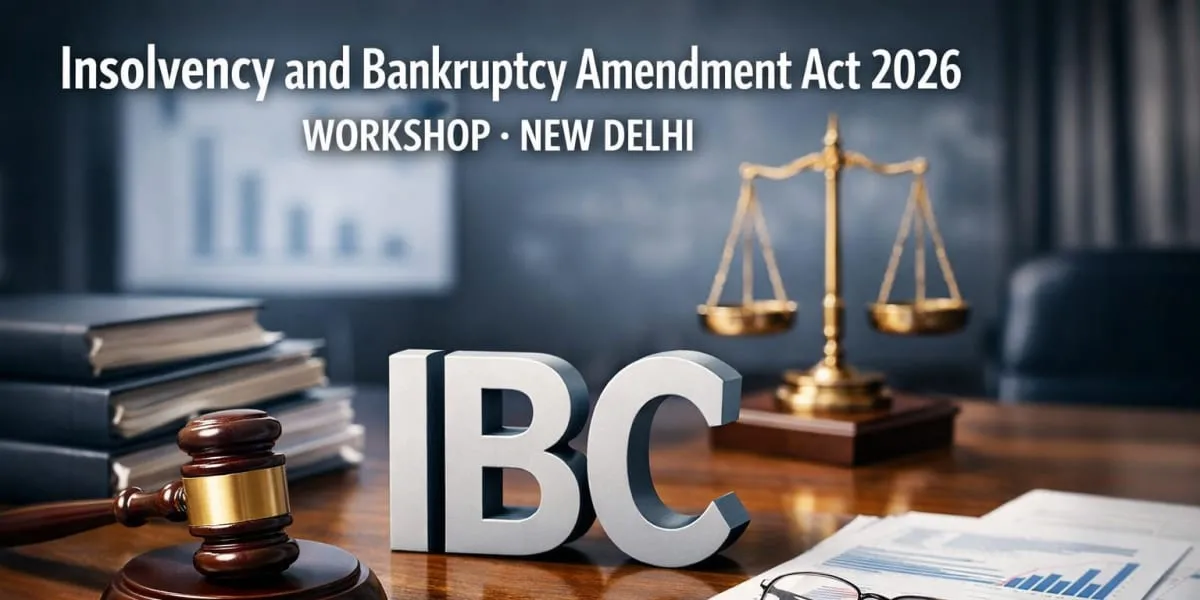
The Department of Financial Services (DFS) organised a half-day workshop in New Delhi on the Insolvency and Bankruptcy (Amendment) Act, 2026 and the Insolvency and Bankruptcy Code (IBC). It was chaired by M. Nagaraju, Secretary, DFS, and attended by officials from the Ministry of Corporate Affairs (MCA), the Insolvency and Bankruptcy Board of India (IBBI), legal experts and executives from public sector banks and asset resolution companies. The programme aimed to strengthen stakeholder understanding of the amended provisions.

It was noted that more than 8,800 corporate insolvency resolution processes had been admitted under the Code until December 2025, and creditors had realised Rs 4.11 tn through approved resolution plans. More than 4,000 corporate debtors were reported to have been rescued through resolution, settlements, withdrawals or appeal-related closures. The workshop sought to examine the implications of the amendments for the Committee of Creditors and operational aspects of implementation. Discussions aimed to clarify legal issues and improve coordination among stakeholders.

Senior officials said the Code had established a time-bound, creditor-driven framework that strengthened repayment discipline and shifted emphasis from liquidation to revival and value maximisation of stressed businesses. The Secretary, DFS said recent amendments on group insolvency, cross-border cases and creditor-initiated processes were aimed at addressing delays and improving resolution efficiency. The IBBI chairperson highlighted the need for institutional capacity and transparency. Presentations provided technical detail on implementation challenges.

In closing, the Special Secretary, DFS recognised the Code's role in accelerating resolution, improving recoveries and maximising asset value, while noting that work remained to address delays, capacity constraints and protracted litigation. Delegates were encouraged to continue collaborative efforts to build procedural capacity and reduce impediments to timely resolution. The workshop concluded that effective and timely resolution of stressed assets was central to the Government's aim of a strong, transparent and efficient financial system.

"Join industry leaders at RAHSTA Expo, India's premier platform for roads, highways and traffic infrastructure. Register now to explore innovations, network with experts and shape the future of mobility."

The Department of Financial Services (DFS) organised a half-day workshop in New Delhi on the Insolvency and Bankruptcy (Amendment) Act, 2026 and the Insolvency and Bankruptcy Code (IBC). It was chaired by M. Nagaraju, Secretary, DFS, and attended by officials from the Ministry of Corporate Affairs (MCA), the Insolvency and Bankruptcy Board of India (IBBI), legal experts and executives from public sector banks and asset resolution companies. The programme aimed to strengthen stakeholder understanding of the amended provisions. It was noted that more than 8,800 corporate insolvency resolution processes had been admitted under the Code until December 2025, and creditors had realised Rs 4.11 tn through approved resolution plans. More than 4,000 corporate debtors were reported to have been rescued through resolution, settlements, withdrawals or appeal-related closures. The workshop sought to examine the implications of the amendments for the Committee of Creditors and operational aspects of implementation. Discussions aimed to clarify legal issues and improve coordination among stakeholders. Senior officials said the Code had established a time-bound, creditor-driven framework that strengthened repayment discipline and shifted emphasis from liquidation to revival and value maximisation of stressed businesses. The Secretary, DFS said recent amendments on group insolvency, cross-border cases and creditor-initiated processes were aimed at addressing delays and improving resolution efficiency. The IBBI chairperson highlighted the need for institutional capacity and transparency. Presentations provided technical detail on implementation challenges. In closing, the Special Secretary, DFS recognised the Code's role in accelerating resolution, improving recoveries and maximising asset value, while noting that work remained to address delays, capacity constraints and protracted litigation. Delegates were encouraged to continue collaborative efforts to build procedural capacity and reduce impediments to timely resolution. The workshop concluded that effective and timely resolution of stressed assets was central to the Government's aim of a strong, transparent and efficient financial system.

Next Story
Real Estate

Pecan Realty Completes Rs 1.5 Billion Transactions

Pecan Realty has recently completed four institutional transactions worth over Rs 1.5 billion over the past two years, strengthening its position as an execution-led real estate platform. The deals include resolution-led acquisitions, structured finance transactions and capital partnerships across its development portfolio.The transactions covered acquisitions through the National Company Law Tribunal process and helped provide repayment or exits to both private and public sector lenders. The company said the deals demonstrate its ability to resolve complex project situations, work with instit..

Next Story
Real Estate

SNN Estates Expands North Bengaluru Housing Project

SNN Estates has announced an expansion of its SNN Estates Felicity residential project in North Bengaluru following strong buyer demand, with 75 per cent of the first-phase inventory sold within three days of launch.The developer will add 76 apartments in the new phase, taking the project's estimated revenue potential to around Rs 1,000 crore upon completion of Phase 2.Spread across 6.5 acres in Rachenahalli, near Manyata Tech Park, the project comprises 604 apartments in 1.5, 2, 2.5, 3 and 4 BHK configurations. The development includes a 50,000-sq-ft clubhouse with amenities such as sports co..

Next Story
Infrastructure Urban

SCG Drives ASEAN Industrial Transformation Strategy

SCG is strengthening its focus on ASEAN as a key growth region by advancing industrial transformation, enhancing competitiveness and building resilient regional value chains. Thammasak Sethaudom, President and Chief Executive Officer, SCG, highlighted the need for industries to continuously develop capabilities, strengthen resilience and deepen regional cooperation to achieve sustainable long-term growth.SCG views ASEAN as an important growth engine alongside China, supported by favourable demographics, trade connectivity and investment flows. With ASEAN’s GDP projected to grow by around 4.7..

Advertisement

Subscribe to Our Newsletter

Get daily newsletters around different themes from Construction world.

STAY CONNECTED

Advertisement

Advertisement

Advertisement