Metro Rail Signs Contract For Multi-Model Hub Study In Guindy
RAILWAYS & METRO RAIL

Metro Rail Signs Contract For Multi-Model Hub Study In Guindy

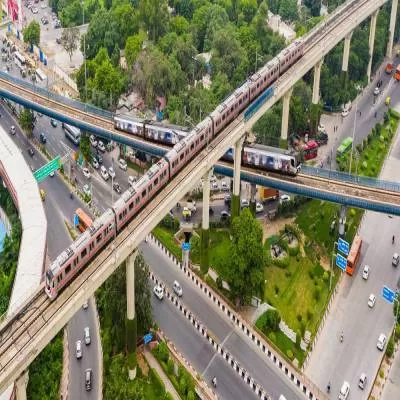
Chennai Metro Asset Management Limited (CMAML) has signed a contract for the preparation of a Detailed Feasibility Report (DFR) and a Detailed Project Report (DPR) for a multi-model transit hub at Guindy. The agreement was executed on Wednesday and the contract has been awarded to CBRE South Asia (P) Limited, New Delhi. The value of the engagement is Rs seven point six seven million (mn).

The scope of the assignment includes market studies, transaction advisory services, land use assessments and the preparation of concept plans to guide development. The transit hub is to be designed to provide seamless connectivity with the suburban Guindy railway station, the local bus terminus and the Metro station at Guindy. The studies will examine options for physical integration and commercial land use that support multimodal interchange. The assignment will also consider pedestrian access and first and last mile connectivity to improve circulation within the interchange.

A CMAML press note said the proposed hub has been envisioned to provide efficient physical integration between existing transit services and to improve commuter convenience. The project is expected to significantly reduce traffic congestion, enhance traffic circulation and facilitate safer and smoother passenger movement at one of Chennai's busiest transport nodes. The consultancy will also assess opportunities to integrate commercial infrastructure that complements transit operations. It will evaluate commercial opportunities and possible revenue models to support operational sustainability without altering transport functions.

Findings from the Detailed Feasibility Report (DFR) and the Detailed Project Report (DPR) will inform detailed design decisions and transaction structures for any future phases of development. CMAML will use the recommendations to guide procurement, land use planning and stakeholder engagement required for implementation. The work is intended to strengthen connectivity within the city and to support better movement of passengers across modes. Final reports are to be presented to the metro authority and relevant civic agencies to coordinate subsequent actions.

Chennai Metro Asset Management Limited (CMAML) has signed a contract for the preparation of a Detailed Feasibility Report (DFR) and a Detailed Project Report (DPR) for a multi-model transit hub at Guindy. The agreement was executed on Wednesday and the contract has been awarded to CBRE South Asia (P) Limited, New Delhi. The value of the engagement is Rs seven point six seven million (mn). The scope of the assignment includes market studies, transaction advisory services, land use assessments and the preparation of concept plans to guide development. The transit hub is to be designed to provide seamless connectivity with the suburban Guindy railway station, the local bus terminus and the Metro station at Guindy. The studies will examine options for physical integration and commercial land use that support multimodal interchange. The assignment will also consider pedestrian access and first and last mile connectivity to improve circulation within the interchange. A CMAML press note said the proposed hub has been envisioned to provide efficient physical integration between existing transit services and to improve commuter convenience. The project is expected to significantly reduce traffic congestion, enhance traffic circulation and facilitate safer and smoother passenger movement at one of Chennai's busiest transport nodes. The consultancy will also assess opportunities to integrate commercial infrastructure that complements transit operations. It will evaluate commercial opportunities and possible revenue models to support operational sustainability without altering transport functions. Findings from the Detailed Feasibility Report (DFR) and the Detailed Project Report (DPR) will inform detailed design decisions and transaction structures for any future phases of development. CMAML will use the recommendations to guide procurement, land use planning and stakeholder engagement required for implementation. The work is intended to strengthen connectivity within the city and to support better movement of passengers across modes. Final reports are to be presented to the metro authority and relevant civic agencies to coordinate subsequent actions.

Related Stories

Gold Stories

Next Story
Infrastructure Urban

KONE Opens India's First Digital Experience Centre in Pune

KONE, a global elevator and escalator manufacturer, has inaugurated its first Digital Experience Centre (DEC) in India, located in Pune. The facility aims to showcase how artificial intelligence (AI), connectivity and data-driven technologies can enhance customer experiences and improve building operations.The centre was inaugurated by Jussi Herlin, Executive Vice Chair, KONE Corporation; Philippe Delorme, President and CEO, KONE; and Nandan Nilekani, Co-founder and Chairman of the Board, Infosys.Designed as an interactive customer environment, the facility demonstrates digital solutions cover..

Next Story
Infrastructure Urban

CII GreenCo Launches Circularity Guidelines for Indian Industry

The Confederation of Indian Industry (CII) GreenCo Council has launched the CII GreenCo Circularity Guidelines – Pilot Version at the 17th CII GreenCo Waste & Resource Management Summit 2026 in Chennai. The initiative aims to strengthen resource efficiency, waste reduction and circular economy practices across Indian manufacturing and process industries.The guidelines introduce a structured framework with circularity indices covering raw materials, consumables, packaging and other resource inputs. These indicators will help industries assess existing practices, identify opportunities to ..

Next Story
Infrastructure Energy

Global Electronics Association Launches IPC-1783-CO2E Standard

The Global Electronics Association has introduced IPC-1783-CO2E, a new international standard aimed at improving consistency, transparency and comparability in product carbon footprint reporting across the electronics manufacturing industry.The standard, titled International Standard for Data Collection and Reporting of CO2 Equivalent (CO2e) Emissions for the Electronics Manufacturing Supply Chain, provides industry-specific guidance for collecting, estimating and reporting carbon emissions data.With increasing regulatory requirements and customer expectations, electronics manufacturers face c..

Advertisement

Subscribe to Our Newsletter

Get daily newsletters around different themes from Construction world.

STAY CONNECTED

Advertisement

SPECIAL OFFER
QR Code