Dr Jitendra Singh Inaugurates Recombinant Cell Facility At BRIC-RGCB
ECONOMY & POLICY

Dr Jitendra Singh Inaugurates Recombinant Cell Facility At BRIC-RGCB

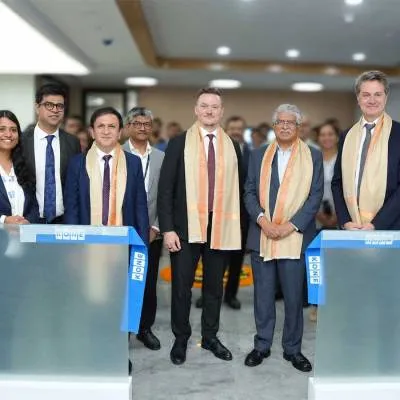
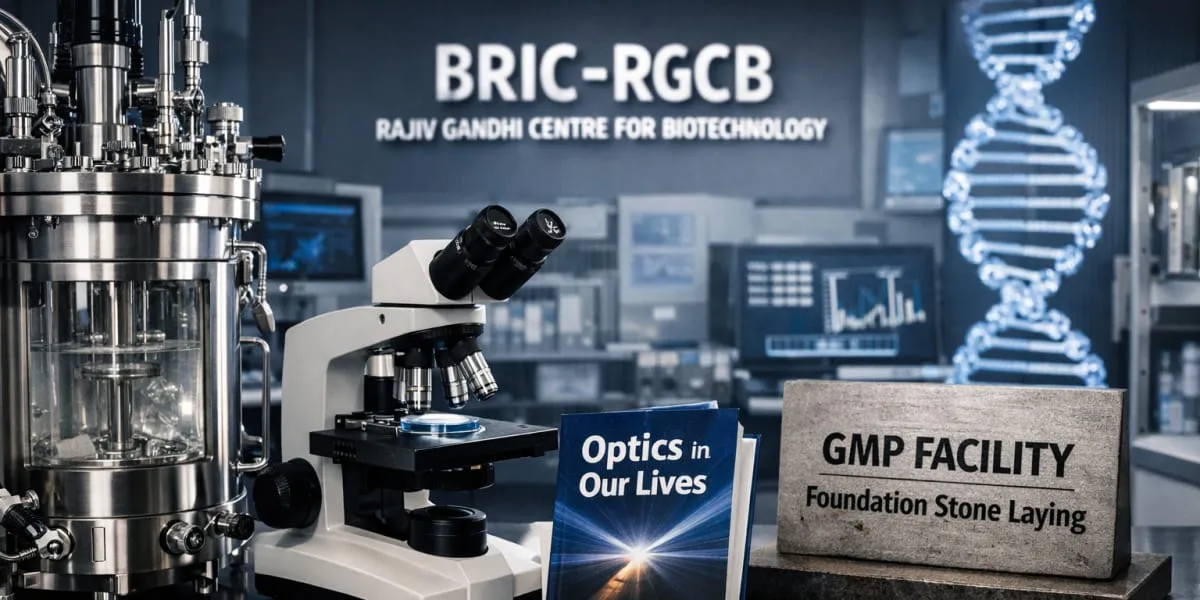
Union Minister Dr Jitendra Singh inaugurated the Central Facility for Recombinant Cells and Sensors at BRIC-Rajiv Gandhi Centre for Biotechnology in Thiruvananthapuram, Keralam, noting the facility will accelerate target-specific drug discovery and support medical and agricultural genomics. The minister also announced the foundation stone for a dedicated GMP facility and released a book by Professor V.P.N. Nampoori. The new facility was developed with investment of Rs 60 crores, equivalent to 600 million (600 mn) and is intended to serve academia, industry and healthcare innovators.

He outlined a vision for a bio-driven economy supported by the BioE3 Policy, which aims to align economy, environment and employment to boost biomanufacturing. He cited that India’s bioeconomy has grown 16-fold in the past decade from 10 billion US dollars (10 bn US dollars) to nearly 166 billion US dollars (166 bn US dollars) and is aiming for 300 billion US dollars (300 bn US dollars). The policy emphasis is intended to anticipate and enable a shift towards large-scale biomanufacturing and bio-based industries.

He highlighted growth in entrepreneurship with the number of biotechnology start-ups rising from about 50 to 70 in 2014 to over 11,000, reflecting an expanding innovation ecosystem supported by policy reforms and funding for deep-tech start-ups. The Department of Biotechnology has funded the new recombinant cell facility through long-term programmes. He emphasised the rising burden of non-communicable diseases and the institute's research in cancer biology, preventive healthcare and HPV vaccination evidence.

He announced that the GMP facility will support pre-commercial production of biologics and cell-based therapies, including CAR-T therapy, and will operate on a pay-and-use basis for biotech industries with implementation in two phases and total DBT investment of Rs 80 crores, equivalent to 800 million (800 mn). He called for deeper collaboration among research institutions, private industry and emerging sectors such as nuclear medicine and deep-ocean research, encouraging coastal states to align biotechnology with national missions. He urged young researchers to utilise the expanding ecosystem and assured continued government support for innovation and interdisciplinary collaboration.

Union Minister Dr Jitendra Singh inaugurated the Central Facility for Recombinant Cells and Sensors at BRIC-Rajiv Gandhi Centre for Biotechnology in Thiruvananthapuram, Keralam, noting the facility will accelerate target-specific drug discovery and support medical and agricultural genomics. The minister also announced the foundation stone for a dedicated GMP facility and released a book by Professor V.P.N. Nampoori. The new facility was developed with investment of Rs 60 crores, equivalent to 600 million (600 mn) and is intended to serve academia, industry and healthcare innovators. He outlined a vision for a bio-driven economy supported by the BioE3 Policy, which aims to align economy, environment and employment to boost biomanufacturing. He cited that India’s bioeconomy has grown 16-fold in the past decade from 10 billion US dollars (10 bn US dollars) to nearly 166 billion US dollars (166 bn US dollars) and is aiming for 300 billion US dollars (300 bn US dollars). The policy emphasis is intended to anticipate and enable a shift towards large-scale biomanufacturing and bio-based industries. He highlighted growth in entrepreneurship with the number of biotechnology start-ups rising from about 50 to 70 in 2014 to over 11,000, reflecting an expanding innovation ecosystem supported by policy reforms and funding for deep-tech start-ups. The Department of Biotechnology has funded the new recombinant cell facility through long-term programmes. He emphasised the rising burden of non-communicable diseases and the institute's research in cancer biology, preventive healthcare and HPV vaccination evidence. He announced that the GMP facility will support pre-commercial production of biologics and cell-based therapies, including CAR-T therapy, and will operate on a pay-and-use basis for biotech industries with implementation in two phases and total DBT investment of Rs 80 crores, equivalent to 800 million (800 mn). He called for deeper collaboration among research institutions, private industry and emerging sectors such as nuclear medicine and deep-ocean research, encouraging coastal states to align biotechnology with national missions. He urged young researchers to utilise the expanding ecosystem and assured continued government support for innovation and interdisciplinary collaboration.

Next Story
Real Estate

Housing Sales Dip 7 per cent QoQ Across Top Cities

India’s housing market saw a 7 per cent quarter-on-quarter decline in sales across the top seven cities in Q1 2026, with approximately 1,01,675 units sold compared to 1,08,970 units in Q4 2025, according to ANAROCK Group. However, on a yearly basis, sales rose 9 per cent, indicating continued underlying demand.The total sales value stood at around Rs 1.51 trillion, reflecting a 5 per cent quarterly drop but a 6 per cent annual increase. Mumbai Metropolitan Region and Bengaluru together accounted for nearly 48 per cent of total sales, while Chennai recorded the highest quarterly decline at 18..

Next Story
Real Estate

Birla Estates Enters Mumbai Redevelopment

Birla Estates has announced its entry into Mumbai’s redevelopment segment with a luxury residential project in Khar West, developed in partnership with Parinee Real Estate Builders. The project will redevelop Anmol Co-operative Housing Society and Bhartiya Bhavan Co-operative Housing Society, marking the company’s first redevelopment initiative in the Mumbai Metropolitan Region.Spread across 1.3 acres, the development will offer a saleable area of 2.9 lakh sq ft with an estimated revenue potential of Rs 17 billion. Positioned in one of Mumbai’s prime residential micro-markets, the projec..

Next Story
Infrastructure Urban

Hitachi, MUFG Expand EV Financing Model

Hitachi and MUFG Bank have expanded their NextGen business co-creation model to accelerate decarbonised mobility by financing electric vehicles and charging infrastructure. The renewed collaboration aims to address key barriers to electrification, including limited access to capital and the need for integrated energy solutions.Building on earlier partnerships, the expanded model extends beyond battery-focused solutions to include electric mobility assets, charging systems and energy management infrastructure across global markets. The initiative will leverage structured financing through speci..

Advertisement

Subscribe to Our Newsletter

Get daily newsletters around different themes from Construction world.

STAY CONNECTED

Advertisement

Advertisement

Advertisement