+
DST Institute Partners Industry on Smarter Cooling for Aviation Batteries
ECONOMY & POLICY

DST Institute Partners Industry on Smarter Cooling for Aviation Batteries

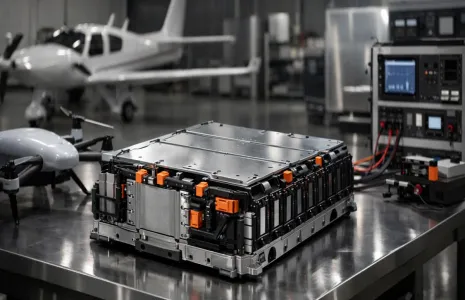
A new industry–academia partnership has been formed to translate advanced materials research into deployable thermal technologies for aviation battery systems. The collaboration addresses a key challenge facing high-energy-density lithium-based batteries used in aviation, where effective heat management remains a major bottleneck affecting performance, lifespan and safety.

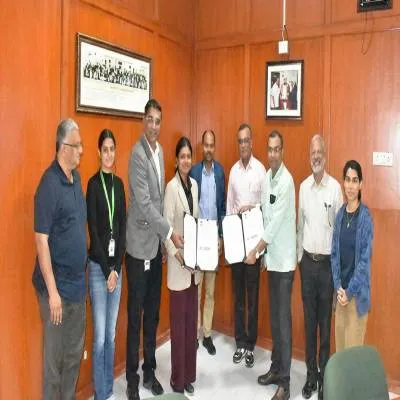
An MoU has been signed between Jawaharlal Nehru Centre for Advanced Scientific Research (JNCASR), an autonomous institute under the Department of Science and Technology, and Dreamfly Innovations Pvt. Ltd, a Bengaluru-based company working on thermal battery technologies. The partnership aims to develop advanced thermal materials and thermoelectric devices to improve heat storage and conversion in aviation batteries.

Excessive heat generation during high-power operation in aviation platforms can reduce battery efficiency, accelerate degradation and pose serious safety risks. While passive thermal management solutions such as phase change materials (PCMs) are attractive due to their low weight and zero power consumption, their adoption has been constrained by poor thermal conductivity, which limits rapid heat absorption.

Although composite PCMs enhanced with high-conductivity additives offer a potential solution, they often face long-term stability issues such as additive agglomeration during repeated thermal cycling, leading to performance degradation. The new collaboration seeks to overcome these limitations through materials-level innovation.

The joint research effort combines JNCASR’s expertise in materials design, synthesis, advanced characterisation and thermal transport measurements, led by Kanishka Biswas, with Dreamfly Innovations’ capabilities in aviation battery engineering and system-level integration.

The advanced thermal materials under development will be engineered to deliver high thermal conductivity, enabling rapid absorption of excess heat during high-load operation. This is expected to help maintain batteries within optimal temperature ranges, support lightweight thermal regulation and ensure long-term material stability.

By bringing together academic research and industrial innovation, the collaboration aims to address critical challenges in aviation and drone battery performance, safety and operational endurance, supporting the transition of laboratory research into real-world aviation platforms.

A new industry–academia partnership has been formed to translate advanced materials research into deployable thermal technologies for aviation battery systems. The collaboration addresses a key challenge facing high-energy-density lithium-based batteries used in aviation, where effective heat management remains a major bottleneck affecting performance, lifespan and safety. An MoU has been signed between Jawaharlal Nehru Centre for Advanced Scientific Research (JNCASR), an autonomous institute under the Department of Science and Technology, and Dreamfly Innovations Pvt. Ltd, a Bengaluru-based company working on thermal battery technologies. The partnership aims to develop advanced thermal materials and thermoelectric devices to improve heat storage and conversion in aviation batteries. Excessive heat generation during high-power operation in aviation platforms can reduce battery efficiency, accelerate degradation and pose serious safety risks. While passive thermal management solutions such as phase change materials (PCMs) are attractive due to their low weight and zero power consumption, their adoption has been constrained by poor thermal conductivity, which limits rapid heat absorption. Although composite PCMs enhanced with high-conductivity additives offer a potential solution, they often face long-term stability issues such as additive agglomeration during repeated thermal cycling, leading to performance degradation. The new collaboration seeks to overcome these limitations through materials-level innovation. The joint research effort combines JNCASR’s expertise in materials design, synthesis, advanced characterisation and thermal transport measurements, led by Kanishka Biswas, with Dreamfly Innovations’ capabilities in aviation battery engineering and system-level integration. The advanced thermal materials under development will be engineered to deliver high thermal conductivity, enabling rapid absorption of excess heat during high-load operation. This is expected to help maintain batteries within optimal temperature ranges, support lightweight thermal regulation and ensure long-term material stability. By bringing together academic research and industrial innovation, the collaboration aims to address critical challenges in aviation and drone battery performance, safety and operational endurance, supporting the transition of laboratory research into real-world aviation platforms.

Next Story
Infrastructure Transport

Second Mountain Tunnel Breakthrough in Palghar Advances High Speed Rail

The Mumbai-Ahmedabad high speed rail (MAHSR) project reached a milestone with the breakthrough of a mountain tunnel in Palghar, Maharashtra. Mountain tunnel MT-six measures 454 metres long and 14.4 metres wide and will accommodate up and down tracks. The breakthrough follows MT-five near Saphale on second January 2026 and the MT-six excavation was completed from both ends using the New Austrian Tunnelling Method. The ministry reported that the tunnelling was completed within 12 months. The New Austrian Tunnelling Method is favoured for its flexibility in complex geology and irregular tunnel s..

Next Story
Infrastructure Transport

Modi Government Pushes Atmanirbhar Container Drive With BCSL MoU

The Union Government advanced a plan to create an integrated, domestically anchored container ecosystem with the signing of a Memorandum of Understanding to establish the Bharat Container Shipping Line (BCSL). The MoU was signed by key agencies including the Shipping Corporation of India and Container Corporation of India alongside major port authorities and Sagarmala Finance Corporation Limited under the Ministry of Ports, Shipping and Waterways, in the presence of senior ministers. The initiative aligns with the Container Manufacturing Assistance Scheme announced in the Union Budget 2026–2..

Next Story
Infrastructure Urban

Ministry Reports Gains In Mobility For Marginalised Communities

The Ministry of Social Justice and Empowerment is implementing skill development, education and rehabilitation schemes to promote socio-economic mobility and sustainable livelihoods for marginalised and disadvantaged communities across the country. Programmes target Scheduled Castes, Other Backward Classes, Economically Weaker Sections, De-notified Tribes and Safai Karamcharis through specialised implementing corporations and empanelled training institutes. Pradhan Mantri Dakshata Aur Kushalta Sampann Hitgrahi Yojana, or PM-DAKSH, provided skill training and placement support through the Nati..

Advertisement

Subscribe to Our Newsletter

Get daily newsletters around different themes from Construction world.

STAY CONNECTED

Advertisement

Advertisement

Advertisement

Open In App