Electric Buses Transform Andhra Pradesh Public Transport
ECONOMY & POLICY

Electric Buses Transform Andhra Pradesh Public Transport

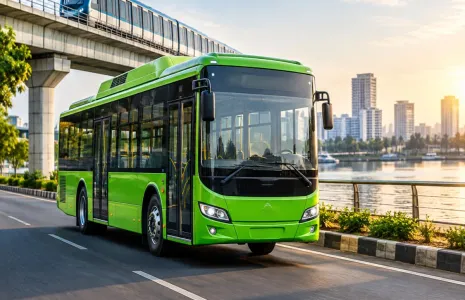
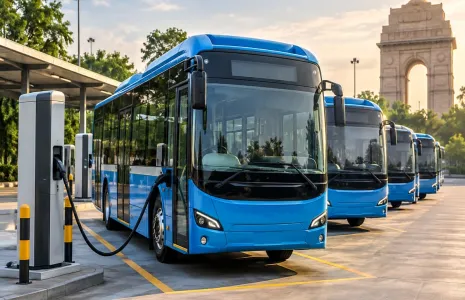
N Chandrababu Naidu, Chief Minister of Andhra Pradesh, urged a rapid shift to electric buses to make public transport more affordable and efficient and emphasised clean fuel initiatives and solar power management as key measures to reduce operating costs. He called for an expansion of charging infrastructure, the standardisation of batteries and the conversion of existing fleets into air conditioned electric vehicles. During a review of roads and highways in Amaravati he directed officials to optimise fuel costs and noted that electric bus operations currently run at Rs 72 per kilometre. The review highlighted the interdependence of transport modernisation and broader state planning.

The chief minister emphasised improved highway connectivity to ports and called for enhanced road maintenance in areas affected by black cotton soil where surface stability can hamper heavy vehicle movement. He said that better linkages would facilitate economic activity and support industrial growth across the state. Officials were instructed to prioritise critical corridors and to accelerate projects with a target completion within two years. This approach was presented as part of a coordinated effort between state departments and relevant agencies.

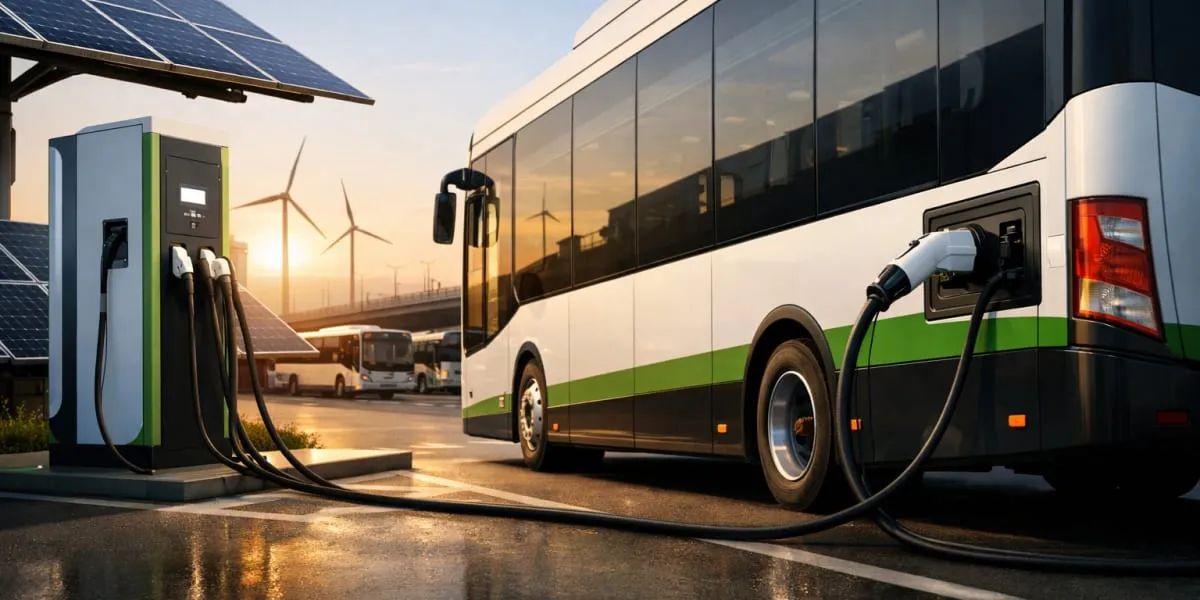
Plans discussed in the review included scaling up public charging points, promoting standardised battery systems and ensuring that new acquisitions meet energy efficiency benchmarks. Solar power management was proposed as a complementary measure to lower the cost per kilometre of service and to improve sustainability of operations. The chief minister underlined the need for technical standard setting and adequate maintenance regimes to maximise asset life and minimise downtime. Coordination with energy planners and transport operators was described as essential.

Officials were asked to present implementation roadmaps and cost estimates to facilitate timely decisions and budgetary allocations. The measures were framed as likely to benefit commuters through lower fares and more reliable services while strengthening logistics and industrial connectivity. The review concluded with a call for regular monitoring and fast track delivery of priority works to achieve the envisaged improvements. Inputs from agencies were noted in the official record.

N Chandrababu Naidu, Chief Minister of Andhra Pradesh, urged a rapid shift to electric buses to make public transport more affordable and efficient and emphasised clean fuel initiatives and solar power management as key measures to reduce operating costs. He called for an expansion of charging infrastructure, the standardisation of batteries and the conversion of existing fleets into air conditioned electric vehicles. During a review of roads and highways in Amaravati he directed officials to optimise fuel costs and noted that electric bus operations currently run at Rs 72 per kilometre. The review highlighted the interdependence of transport modernisation and broader state planning. The chief minister emphasised improved highway connectivity to ports and called for enhanced road maintenance in areas affected by black cotton soil where surface stability can hamper heavy vehicle movement. He said that better linkages would facilitate economic activity and support industrial growth across the state. Officials were instructed to prioritise critical corridors and to accelerate projects with a target completion within two years. This approach was presented as part of a coordinated effort between state departments and relevant agencies. Plans discussed in the review included scaling up public charging points, promoting standardised battery systems and ensuring that new acquisitions meet energy efficiency benchmarks. Solar power management was proposed as a complementary measure to lower the cost per kilometre of service and to improve sustainability of operations. The chief minister underlined the need for technical standard setting and adequate maintenance regimes to maximise asset life and minimise downtime. Coordination with energy planners and transport operators was described as essential. Officials were asked to present implementation roadmaps and cost estimates to facilitate timely decisions and budgetary allocations. The measures were framed as likely to benefit commuters through lower fares and more reliable services while strengthening logistics and industrial connectivity. The review concluded with a call for regular monitoring and fast track delivery of priority works to achieve the envisaged improvements. Inputs from agencies were noted in the official record.

Next Story
Resources

Jyoti Structures wins three CIDC Vishwakarma Awards

Jyoti Structures has received three awards at the 17th CIDC Vishwakarma Awards 2026, organised by the Construction Industry Development Council, recognising excellence across project execution, workforce and leadership.The company was honoured under Category G (Best Construction Projects) for the 400/220 kV D/C Goa–Tamnar Transmission Project in Goa, following a multi-stage evaluation covering performance, safety and quality benchmarks.In Category E2 (Artisans & Supervisors), four members from JSL’s site team working on the Torrent project were recognised, reflecting consistency in sit..

Next Story
Infrastructure Urban

Premier Energies Secures Rs 25,770 mn Orders In Q4

Premier Energies Limited has received orders aggregating to Rs 25,770 million (mn) in the fourth quarter of fiscal year 2026 for the supply of 1,600 megawatt (MW) solar cells and modules. Execution of these orders is scheduled across fiscal year 2027 and fiscal year 2028 and the contracts have been secured from a mix of domestic independent power producers, module manufacturers and engineering, procurement and construction contractors in India. Capacity increases support the order book, with cell capacity expected to reach 10.6 gigawatt (GW) by September 2026 and module manufacturing capacity ..

Next Story
Building Material

Steel Exchange India Reports Rs 280 mn Debt Repayment

Steel Exchange India Limited (SEIL), one of the leading integrated steel manufacturers in South India and the maker of SIMHADRI TMT, has reported the repayment of Rs 280 mn of debt over the last two quarters. The company informed exchanges under listing regulations that the repayment was part of scheduled deleveraging measures aimed at strengthening the balance sheet. The update followed credit facilities that were taken in September 2025 to support operations and growth initiatives. During the period October 2025 to March 2026 a partial redemption was executed with Rs 214.3 mn directed toward..

Advertisement

Subscribe to Our Newsletter

Get daily newsletters around different themes from Construction world.

STAY CONNECTED

Advertisement

Advertisement

Advertisement