

Exicom Opens EV Charging Plant in Hyderabad
ECONOMY & POLICY

Exicom Opens EV Charging Plant in Hyderabad

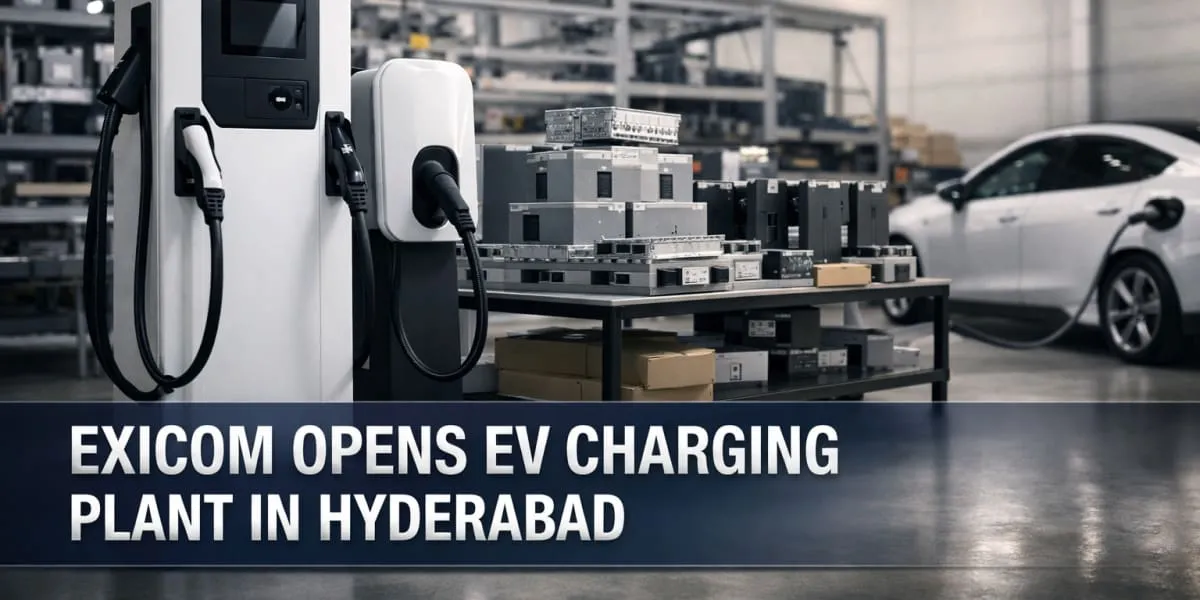
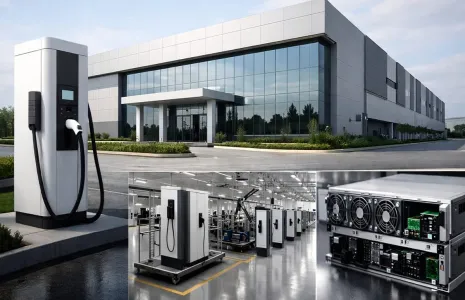
Exicom, a manufacturer of electric vehicle (EV) charging equipment, has opened a new plant in Hyderabad to expand its production capacity and support the growing market for electric mobility. The new facility will form part of the company's strategy to scale manufacturing of chargers and related systems for public and private charging networks. The development is expected to improve supply chain resilience and reduce lead times for customers in the region.

The plant is intended to strengthen local manufacturing and to deepen partnerships with component suppliers and logistics providers. It will focus on producing modular charging hardware and on integrating software for monitoring and load management. The facility is also designed to accommodate future capacity expansions as demand increases across urban and intercity corridors. Market watchers expect the plant to play a role in meeting regional demand and in supporting partnerships across the supply chain.

Company officials indicated that the move responds to rising demand for reliable charging infrastructure and will support deployment of chargers by fleet operators, commercial establishments and municipal authorities. The establishment of the Hyderabad plant is anticipated to contribute to skills development and to create employment opportunities in manufacturing, engineering and operations. The initiative may also enable the company to better serve export markets while aligning delivery schedules with domestic programmes. The move may also help to align production with national electrification targets.

The opening highlights wider trends in the transport and energy sectors as policymakers and industry accelerate efforts to decarbonise road transport. Investment in charging networks is emerging as a cornerstone of electric mobility growth and industry participants are increasingly prioritising localisation of production. Exicom's expansion in Hyderabad is set against this backdrop as part of a broader push to enhance infrastructure and support the transition to electric vehicles.

Exicom, a manufacturer of electric vehicle (EV) charging equipment, has opened a new plant in Hyderabad to expand its production capacity and support the growing market for electric mobility. The new facility will form part of the company's strategy to scale manufacturing of chargers and related systems for public and private charging networks. The development is expected to improve supply chain resilience and reduce lead times for customers in the region. The plant is intended to strengthen local manufacturing and to deepen partnerships with component suppliers and logistics providers. It will focus on producing modular charging hardware and on integrating software for monitoring and load management. The facility is also designed to accommodate future capacity expansions as demand increases across urban and intercity corridors. Market watchers expect the plant to play a role in meeting regional demand and in supporting partnerships across the supply chain. Company officials indicated that the move responds to rising demand for reliable charging infrastructure and will support deployment of chargers by fleet operators, commercial establishments and municipal authorities. The establishment of the Hyderabad plant is anticipated to contribute to skills development and to create employment opportunities in manufacturing, engineering and operations. The initiative may also enable the company to better serve export markets while aligning delivery schedules with domestic programmes. The move may also help to align production with national electrification targets. The opening highlights wider trends in the transport and energy sectors as policymakers and industry accelerate efforts to decarbonise road transport. Investment in charging networks is emerging as a cornerstone of electric mobility growth and industry participants are increasingly prioritising localisation of production. Exicom's expansion in Hyderabad is set against this backdrop as part of a broader push to enhance infrastructure and support the transition to electric vehicles.

Next Story
Infrastructure Transport

Tunnelling Begins for Thane, Borivali twin tunnel project

Tunnelling work has commenced for the 11.84-km Thane–Borivali Twin Tunnel, set to be India’s longest urban road tunnel, marking a key milestone in Mumbai’s infrastructure development.As per a post shared by Mumbai Metropolitan Region Development Authority on social media platform X, the tunnel boring machine (TBM) ‘Nayak’—the country’s largest single-shield hard rock TBM for an urban tunnel—was launched by Devendra Fadnavis on Tuesday. The event was attended by Eknath Shinde and Sunetra Pawar, among other dignitaries. A second TBM, ‘Arjuna’, is expected to be launched so..

Next Story
Infrastructure Transport

Large Format Store Planned At M G Road Metro Station

M G Road station in Bengaluru is set to host the city’s first large-format commercial and experience space, with planning led by Bangalore Metro Rail Corporation Limited. BMRCL has invited proposals to develop and operate a central business district destination at the Purple?Pink Line interchange. The plan positions the station as a commercial hub designed to serve a broad commuter base across the city. The proposal is part of a broader effort to activate transit nodes commercially. Tender documents set a minimum monthly rental of Rs 0.944 million (mn), inclusive of GST, for the large-format..

Next Story
Infrastructure Energy

Government Cancels Auction Of Eleven Critical Mineral Blocks

The government has cancelled the auction of 11 critical and strategic mineral blocks after receiving a poor investor response and failing to attract a sufficient number of qualified bidders. The decision represents a setback to plans to ramp up domestic exploration and production of critical minerals amid global supply chain disruptions and rising demand for materials used in clean energy and advanced technologies. The mines ministry issued an annulment notice setting out the reasons for the cancellations. The annulment notice indicated that the auction process for five mineral blocks was canc..

Advertisement

Subscribe to Our Newsletter

Get daily newsletters around different themes from Construction world.

STAY CONNECTED

Advertisement

Advertisement

Advertisement