Golden Growth Fund Acquires Land Parcel in Gulmohar Park
ECONOMY & POLICY

Golden Growth Fund Acquires Land Parcel in Gulmohar Park

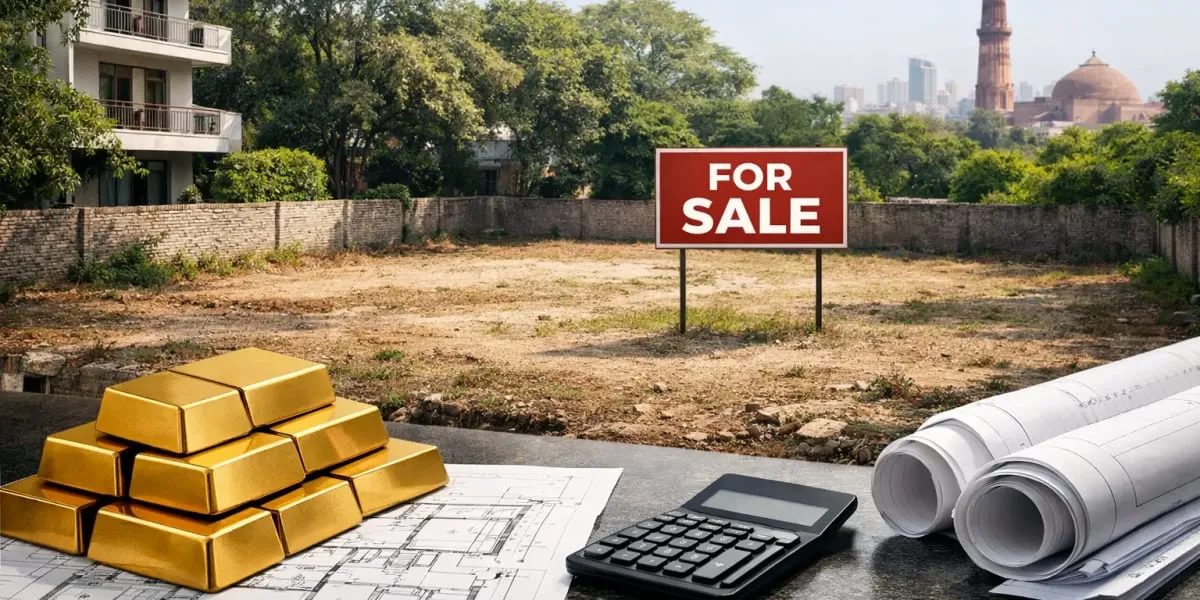
Golden Growth Fund has acquired a 500 sq yards land parcel in South Delhi's Gulmohar Park and expects to generate Rs one billion (bn) in revenue from the site. The acquisition is part of the fund's strategy to invest in centrally located, high value city plots and to redevelop them for premium residential demand in the capital. The parcel is situated in a well established neighbourhood known for tree lined streets and close proximity to schools and retail hubs. The fund indicated that it will proceed with planning and regulatory clearances before commencing redevelopment.

The fund plans to undertake a redevelopment programme that seeks to optimise the plot for contemporary housing, targeting buyers and investors seeking premium addresses in South Delhi. The project is intended to unlock value through careful design and phasing while aligning with local zoning norms. The fund expects market interest to be driven by limited supply of large plots in the area and steady demand for quality housing. The approach is consistent with institutional investors focusing on core city assets.

The revenue projection equates to a conversion of the reported 100 crore estimate into one billion (bn) and is framed as a gross target rather than a net return. The fund has allowed for the need to secure statutory approvals, complete design and obtain market clearances, noting that timelines will depend on these processes. Financial realisation will therefore be influenced by construction costs, sales pace and broader market conditions in the city. The fund will monitor interest from buyers and may adjust phasing to match demand.

Industry observers note that South Delhi locations continue to command premium pricing and that centrally located redevelopment opportunities remain limited, which could support the fund's revenue aspirations. The outcome will hinge on execution, regulatory timelines and prevailing market sentiment in the next phases of the project. The fund's move underscores ongoing investor appetite for scarce city land parcels as a route to generate institutional scale returns.

Golden Growth Fund has acquired a 500 sq yards land parcel in South Delhi's Gulmohar Park and expects to generate Rs one billion (bn) in revenue from the site. The acquisition is part of the fund's strategy to invest in centrally located, high value city plots and to redevelop them for premium residential demand in the capital. The parcel is situated in a well established neighbourhood known for tree lined streets and close proximity to schools and retail hubs. The fund indicated that it will proceed with planning and regulatory clearances before commencing redevelopment. The fund plans to undertake a redevelopment programme that seeks to optimise the plot for contemporary housing, targeting buyers and investors seeking premium addresses in South Delhi. The project is intended to unlock value through careful design and phasing while aligning with local zoning norms. The fund expects market interest to be driven by limited supply of large plots in the area and steady demand for quality housing. The approach is consistent with institutional investors focusing on core city assets. The revenue projection equates to a conversion of the reported 100 crore estimate into one billion (bn) and is framed as a gross target rather than a net return. The fund has allowed for the need to secure statutory approvals, complete design and obtain market clearances, noting that timelines will depend on these processes. Financial realisation will therefore be influenced by construction costs, sales pace and broader market conditions in the city. The fund will monitor interest from buyers and may adjust phasing to match demand. Industry observers note that South Delhi locations continue to command premium pricing and that centrally located redevelopment opportunities remain limited, which could support the fund's revenue aspirations. The outcome will hinge on execution, regulatory timelines and prevailing market sentiment in the next phases of the project. The fund's move underscores ongoing investor appetite for scarce city land parcels as a route to generate institutional scale returns.

Next Story
Infrastructure Transport

Contracts, Corridors and Cash Flows

India’s roads sector enters 2026 at a decisive junction, where the conversation is no longer about kilometres alone but contracts that allocate risk wisely, corridors that unlock economic value, and cash flows that remain credible over the long term. After more than a decade of relentless expansion, India’s road-building ecosystem is moving into a phase of maturity – where engineering complexity, financial discipline and institutional coordination matter more than sheer scale.Between 2014 and 2024, India built highways at a pace few nations have ever matched. National Highway length expa..

Next Story
Real Estate

The Walled Garden

I am not suggesting Indian architects are inadequate. The profession has produced extraordinary work – from Charles Correa's quiet humanism to Balkrishna Doshi's Nobel-recognised genius. However, the regulatory barriers meant to protect the profession are holding it back. It is time for an honest conversation about this.The Architects Act of 1972 established the Council of Architecture (COA) as the statutory body regulating architecture practice in India. Its founding logic was sound: to ensure those calling themselves architects meet a minimum standard of competence and to protect the publi..

Next Story
Real Estate

We completed a 1BHK home on a private island in 7 days!

Reimagining construction through a ‘War on Waste’, Circato founders T Paul Koshy, Sushma Joseph and Praveen Crasta speak to CW on turning single-use plastic into high-performance building systems – demonstrated at Bengaluru International Airport with a 16-ft wall installed in just 48 hours.What specific gap in the construction ecosystem led to the creation of Circato?Sushma Joseph: We felt the industry had normalised inefficiency. In construction, timelines, costs and outcomes often remain uncertain, yet that is widely accepted. We wanted to show that inefficiencies can be..

Advertisement

Subscribe to Our Newsletter

Get daily newsletters around different themes from Construction world.

STAY CONNECTED

Advertisement

Advertisement

Advertisement