GST Council Proposes 5 Per Cent Rate for EV Transport
ECONOMY & POLICY

GST Council Proposes 5 Per Cent Rate for EV Transport

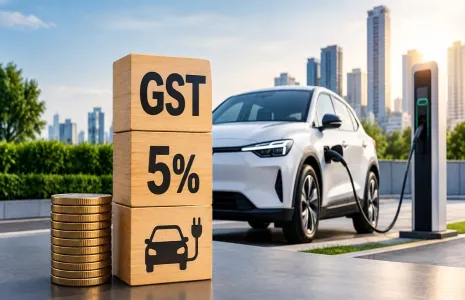
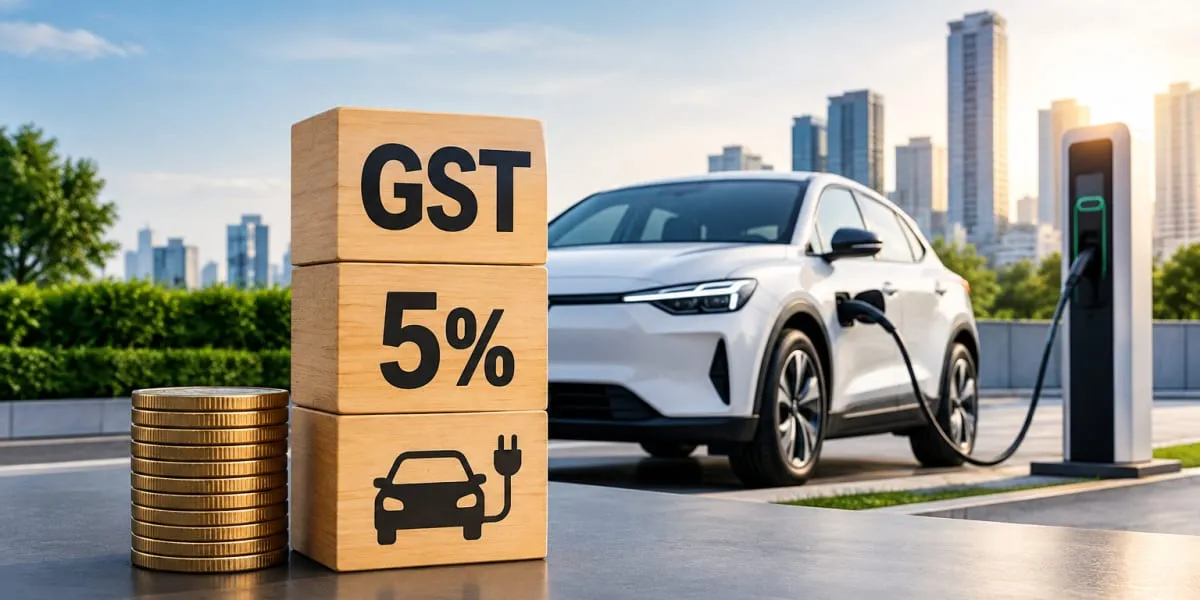
The Goods and Services Tax (GST) Council has recommended an optional 5 per cent GST rate for passenger transport and rental services using electric vehicles (EVs). The proposal is subject to restrictions on input tax credit and seeks to clarify the tax treatment of electric mobility services where battery charging costs are included in the overall price.

The recommendation covers services provided using an EV with an operator. It applies to passenger transport, including eligible commercial operations, and to rental services in which an electric vehicle is supplied along with an operator. The proposed rate would cover the bundled transport or rental service when vehicle charging is included in the total amount charged.

Standalone electric vehicle charging services would remain outside the proposal and continue to attract 18 per cent GST. The distinction means the recommended rate would not apply to every activity connected with electric vehicles, but specifically to qualifying passenger transport and operator-assisted rental services.

The 5 per cent option would restrict input tax credit, which enables businesses to offset GST paid on eligible expenses. Operators choosing the lower rate would therefore be unable to claim back taxes paid on business costs, meaning the reduced rate may not necessarily lower their overall expenses. The recommendation may affect fleet operators, app-based mobility platforms, corporate transport providers and other businesses using EVs for passenger services.

The proposal was considered at the Council’s 57th meeting as electric mobility adoption increases in India. EV retail sales rose 74 per cent year-on-year to a record 333,000 units in September 2026, according to the Federation of Automobile Dealers Associations. The recommendation now provides a proposed framework for taxation of selected EV-based services, while its practical impact will depend on implementation and the final conditions governing eligibility and credit restrictions.

The Goods and Services Tax (GST) Council has recommended an optional 5 per cent GST rate for passenger transport and rental services using electric vehicles (EVs). The proposal is subject to restrictions on input tax credit and seeks to clarify the tax treatment of electric mobility services where battery charging costs are included in the overall price. The recommendation covers services provided using an EV with an operator. It applies to passenger transport, including eligible commercial operations, and to rental services in which an electric vehicle is supplied along with an operator. The proposed rate would cover the bundled transport or rental service when vehicle charging is included in the total amount charged. Standalone electric vehicle charging services would remain outside the proposal and continue to attract 18 per cent GST. The distinction means the recommended rate would not apply to every activity connected with electric vehicles, but specifically to qualifying passenger transport and operator-assisted rental services. The 5 per cent option would restrict input tax credit, which enables businesses to offset GST paid on eligible expenses. Operators choosing the lower rate would therefore be unable to claim back taxes paid on business costs, meaning the reduced rate may not necessarily lower their overall expenses. The recommendation may affect fleet operators, app-based mobility platforms, corporate transport providers and other businesses using EVs for passenger services. The proposal was considered at the Council’s 57th meeting as electric mobility adoption increases in India. EV retail sales rose 74 per cent year-on-year to a record 333,000 units in September 2026, according to the Federation of Automobile Dealers Associations. The recommendation now provides a proposed framework for taxation of selected EV-based services, while its practical impact will depend on implementation and the final conditions governing eligibility and credit restrictions.

Related Stories

Gold Stories

Next Story
Resources

Kalpataru Projects International elevates Amit Uplenchwar as Joint MD and CEO

Kalpataru Projects International (KPIL) has elevated Amit Uplenchwar as Joint Managing Director and CEO (designate), following approval by its board on 5 November 2026. He will take charge as Additional Director, Joint Managing Director and CEO from 1 January 2027 for a five-year term ending 31 December 2031, subject to shareholders' approval.Uplenchwar brings over three decades of experience in corporate strategy, business operations, business development, mergers and acquisitions, and international business management. His experience spans transportation, power, water, oil and gas, aerospace..

Next Story
Resources

HCC appoints Vivek Singhal as CEO

Hindustan Construction Company (HCC) has appointed Vivek Singhal as Chief Executive Officer, effective 5 November 2026. He brings over four decades of experience in infrastructure and engineering, procurement and construction (EPC), covering project execution, business leadership, business development and profit and loss management.Singhal has spent 16 years in international markets, delivering projects and managing assets worth approximately Rs 285 billion across five countries. His experience spans airports, metro rail, urban transport, hydropower, bridges and other infrastructure sectors.He..

Next Story
Infrastructure Energy

Essar Signs PPA for 300 MW Hybrid Renewable Energy Project

Essar Renewables, the renewable energy arm of Essar Power, has signed a Power Purchase Agreement (PPA) with NHPC for a 300 MW renewable energy project in Andhra Pradesh. The agreement follows the company’s successful bid for the project two years ago. Essar Power will invest approximately Rs. 45 bn in the development. The project will combine solar and wind generation with Battery Energy Storage Systems (BESS), enabling the supply of reliable and dispatchable renewable power. It forms part of Essar Power’s plan to build a diversified energy portfolio of approximately 5 GW across renewable,..

Advertisement

Subscribe to Our Newsletter

Get daily newsletters around different themes from Construction world.

STAY CONNECTED

Advertisement

SPECIAL OFFER
QR Code