




+
Haryana Clears 64 km Namo Bharat RRTS Linking NCR
ECONOMY & POLICY

Haryana Clears 64 km Namo Bharat RRTS Linking NCR

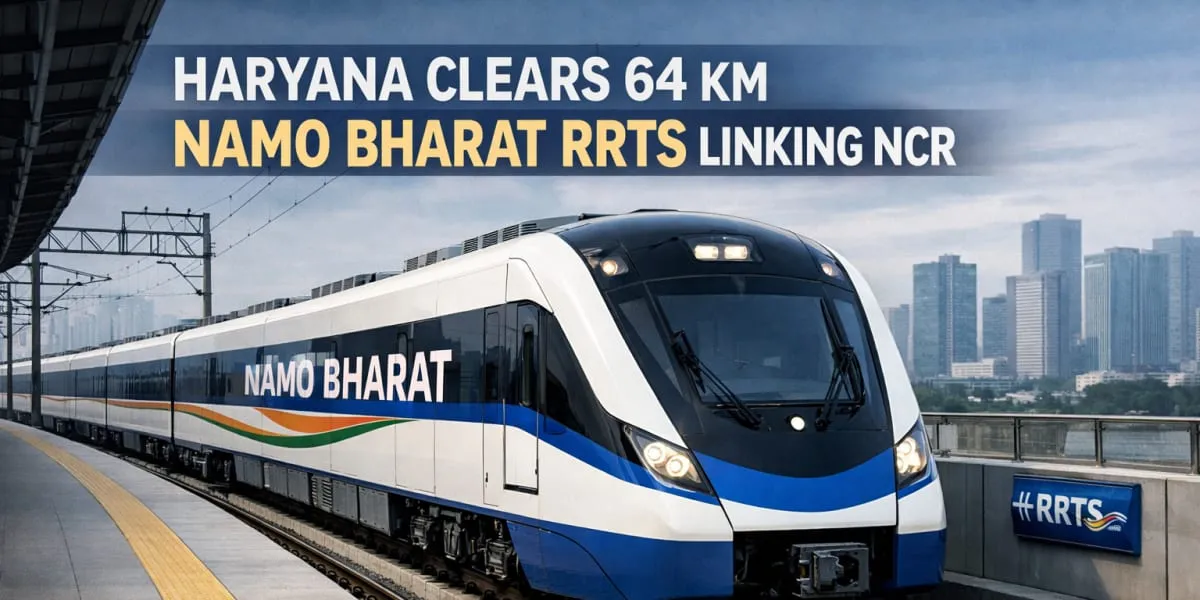
Haryana has cleared a 64 km Namo Bharat rapid rail transit system linking cities in the National Capital Region. The state authority granted approval for the dedicated corridor intended to improve intercity connectivity and streamline commuter movement across the region. Officials indicated that the project forms part of broader efforts to expand regional public transport infrastructure and to offer a high capacity alternative to road travel.

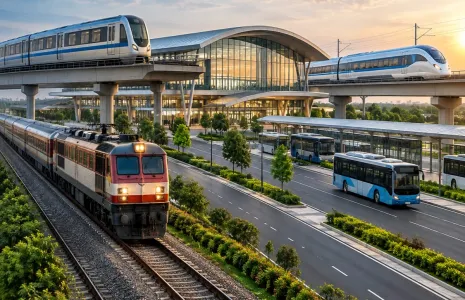
The Namo Bharat rapid rail transit system is designed to carry large numbers of daily commuters on segregated tracks, reducing surface congestion and improving journey predictability. The corridor will integrate with existing metropolitan transit hubs and complement local bus and metro services to facilitate first and last mile connectivity. Observers expect the corridor to reduce travel times significantly for intercity commuters and to support a modal shift from private vehicles to public transport.

The approval is expected to lead to phased implementation overseen by state and national agencies, with detailed engineering and environment assessments to follow. Construction activity is likely to generate employment opportunities and to stimulate ancillary industries engaged in civil works and systems installation. Planners have indicated that careful coordination will be required with municipal authorities to manage land acquisition and utility relocation while minimising disruption to local communities.

Supporters of the corridor say that improved public transport capacity will strengthen regional economic integration by making commutes more reliable and by expanding access to employment and services. The project is also expected to contribute to environmental objectives by lowering road traffic and associated emissions as commuters shift to rail. Stakeholders now await publication of the implementation schedule and procurement details that will determine the timing and pace of delivery.

Haryana has cleared a 64 km Namo Bharat rapid rail transit system linking cities in the National Capital Region. The state authority granted approval for the dedicated corridor intended to improve intercity connectivity and streamline commuter movement across the region. Officials indicated that the project forms part of broader efforts to expand regional public transport infrastructure and to offer a high capacity alternative to road travel. The Namo Bharat rapid rail transit system is designed to carry large numbers of daily commuters on segregated tracks, reducing surface congestion and improving journey predictability. The corridor will integrate with existing metropolitan transit hubs and complement local bus and metro services to facilitate first and last mile connectivity. Observers expect the corridor to reduce travel times significantly for intercity commuters and to support a modal shift from private vehicles to public transport. The approval is expected to lead to phased implementation overseen by state and national agencies, with detailed engineering and environment assessments to follow. Construction activity is likely to generate employment opportunities and to stimulate ancillary industries engaged in civil works and systems installation. Planners have indicated that careful coordination will be required with municipal authorities to manage land acquisition and utility relocation while minimising disruption to local communities. Supporters of the corridor say that improved public transport capacity will strengthen regional economic integration by making commutes more reliable and by expanding access to employment and services. The project is also expected to contribute to environmental objectives by lowering road traffic and associated emissions as commuters shift to rail. Stakeholders now await publication of the implementation schedule and procurement details that will determine the timing and pace of delivery.

Next Story
Infrastructure Urban

Implementation Status of Jal Jeevan Mission

Since August 2019 the Government has implemented Jal Jeevan Mission to provide assured potable water through household tap connections in rural India. At the start of the mission only 32.3 million (mn) rural households, representing 16.7 per cent, were reported to have tap water connections. States and union territories have reported that 125.8 mn additional rural households have since been provided with tap connections. As a result, of about 193.6 mn rural households roughly 158.2 mn, or 81.71 per cent, are reported to have tap water supply at home.\n\nThe State, district and village level st..

Next Story
Infrastructure Urban

Jal Jeevan Mission Reaches Eighty One Per Cent Rural Coverage

The Government reported substantial progress under the Jal Jeevan Mission, launched in August 2019 to provide tap water to every rural household. At launch only 32.3 million (mn) rural households had tap connections and states and Union territories reported provision of 125.8 mn additional households by March 2026. Consequently, out of about 193.6 mn rural households around 158.2 mn, or 81.71 per cent, are reported to have tap water at home. The Finance Minister announced extension of the mission until 2028 in the 2025-26 budget speech. The Swachh Bharat Mission Grameen, launched in October 20..

Next Story
Infrastructure Urban

Empowering Local Governance for Sustainable Rural Water Supply

The Ministry of Jal Shakti has aligned the Jal Jeevan Mission (JJM) with the 73rd Amendment to strengthen village level planning and community ownership of water supply. Gram Panchayats, village water and sanitation committees and Pani Samitis are to plan, implement, manage and maintain piped water systems, with gram sabha processes formalising handover and oversight. Implementation support agencies including non government organisations, community based organisations and self help groups have been empanelled to train local committees and promote women participation. Under JJM, the department ..

Advertisement

Subscribe to Our Newsletter

Get daily newsletters around different themes from Construction world.

STAY CONNECTED

Advertisement

Advertisement

Advertisement














