Himachal To Offer 50 Per Cent Subsidy On Electric 30 Per Cent On Diesel Buses
ECONOMY & POLICY

Himachal To Offer 50 Per Cent Subsidy On Electric 30 Per Cent On Diesel Buses

The Himachal Pradesh government will launch the Rajiv Gandhi Swarozgaar Start-up Yojana Phase-IV to create self-employment among unemployed youth while strengthening public transport and promoting environmentally sustainable mobility across the state. The scheme is designed to enable eligible individuals to establish bus operations with reduced financial burden. The chief minister, Sukhvinder Singh Sukhu, described the programme as reflecting the state government's commitment to empowering youth.

Under the scheme, the government will grant a 50 per cent capital subsidy for the purchase of electric buses and a 30 per cent capital subsidy for diesel buses for operations on 1,000 routes. Beneficiaries will also receive a monthly operational incentive of Rs 65,000 for electric buses and Rs 50,000 for diesel buses for a period of five years. Passenger buses with a minimum seating capacity of 32 passengers will be eligible for support.

Applicants must be bonafide residents of Himachal Pradesh, aged between 25 and 50 years, and hold a valid heavy driving licence with at least three years' experience. They are expected to operate the vehicle personally and preference will be given to candidates registered with employment exchanges in the state. The selection process will primarily consider annual family income to prioritise economically weaker applicants.

To ensure efficient and transparent service delivery, all buses will be fitted with global positioning system (GPS)-based vehicle tracking systems and operations will be monitored regularly. Women passengers travelling on buses under the scheme will receive a 50 per cent concession in fare and school students up to Class 12 will be eligible for concessional travel through a special pass system. The authorities will oversee compliance with safety and service standards throughout operations.

Officials said the initiative aims to expand connectivity in rural and urban areas while encouraging cleaner mobility through support for electric vehicles. The scheme is expected to reduce entry barriers for young entrepreneurs and to provide predictable income support during the initial years of operation. Administrative guidelines and application procedures will be published by the state government in due course.

The Himachal Pradesh government will launch the Rajiv Gandhi Swarozgaar Start-up Yojana Phase-IV to create self-employment among unemployed youth while strengthening public transport and promoting environmentally sustainable mobility across the state. The scheme is designed to enable eligible individuals to establish bus operations with reduced financial burden. The chief minister, Sukhvinder Singh Sukhu, described the programme as reflecting the state government's commitment to empowering youth. Under the scheme, the government will grant a 50 per cent capital subsidy for the purchase of electric buses and a 30 per cent capital subsidy for diesel buses for operations on 1,000 routes. Beneficiaries will also receive a monthly operational incentive of Rs 65,000 for electric buses and Rs 50,000 for diesel buses for a period of five years. Passenger buses with a minimum seating capacity of 32 passengers will be eligible for support. Applicants must be bonafide residents of Himachal Pradesh, aged between 25 and 50 years, and hold a valid heavy driving licence with at least three years' experience. They are expected to operate the vehicle personally and preference will be given to candidates registered with employment exchanges in the state. The selection process will primarily consider annual family income to prioritise economically weaker applicants. To ensure efficient and transparent service delivery, all buses will be fitted with global positioning system (GPS)-based vehicle tracking systems and operations will be monitored regularly. Women passengers travelling on buses under the scheme will receive a 50 per cent concession in fare and school students up to Class 12 will be eligible for concessional travel through a special pass system. The authorities will oversee compliance with safety and service standards throughout operations. Officials said the initiative aims to expand connectivity in rural and urban areas while encouraging cleaner mobility through support for electric vehicles. The scheme is expected to reduce entry barriers for young entrepreneurs and to provide predictable income support during the initial years of operation. Administrative guidelines and application procedures will be published by the state government in due course.

Related Stories

Gold Stories

Next Story
Resources

Schindler named among Forbes’ World’s Best Employers 2026

Schindler has been named among Forbes’ World’s Best Employers 2026, a global ranking recognising companies for their workplace environments.Compiled by Forbes in partnership with Statista, the ranking is based on independent employee feedback, including whether employees would recommend their organisation to friends and family.The company said the recognition reflected its focus on creating a workplace where employees can develop their expertise and build careers. ..
Next Story
Infrastructure Urban

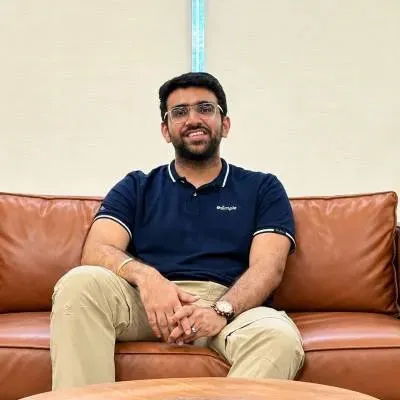
India needs an export-execution mindset: Vishesh Jain

Interview with Vishesh Jain, Founder & CEO, EximpleWhat gaps in India’s global trade ecosystem led you to build Eximple, and what problem did you see businesses struggling with most?Eximple came out of a problem that all three founders had seen from different choke points in the trade ecosystem. India has millions of MSMEs and manufacturers, and many of them can make products that are genuinely competitive on quality. Yet only a small fraction is able to build meaningful international businesses. In our experience, the gap is usually not manufacturing capability; it is the ability to exe..

Next Story
Building Material

Nuvoco reports 13.5% revenue growth in Q2 FY27

Nuvoco Vistas Corp. Ltd. reported consolidated revenue of Rs 27.9 billion for Q2 FY27, up 13.5% year on year. Cement sales volume rose 9% to 4.7 million tonnes (MMT), while EBITDA increased 11% to Rs 4.11 billion.The company said it began its cement operations in 2014 with a 2.3 MMT per annum (MMTPA) operation at Nimbol. It now aims to reach 35 MMTPA of cement capacity by FY28, nearly 15 times its initial capacity. Its portfolio spans cement, ready-mix concrete and modern building materials.On sustainability and cost efficiency, Nuvoco partnered with CleanMax for a 46.4 MW wind-solar hybrid re..

Advertisement

Subscribe to Our Newsletter

Get daily newsletters around different themes from Construction world.

STAY CONNECTED

Advertisement

SPECIAL OFFER
QR Code