+
Panel Urges Zone-Wise Freight Plans and Crew Strengthening
ECONOMY & POLICY

Panel Urges Zone-Wise Freight Plans and Crew Strengthening

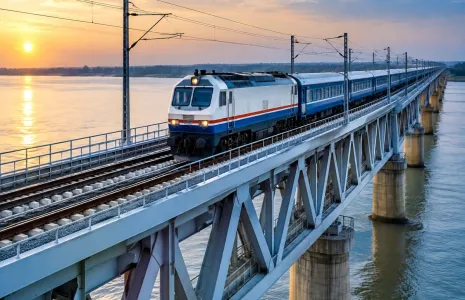
A Parliamentary Standing Committee has urged the Railway Ministry to prepare zone-wise plans to enhance freight traffic in regions with limited mineral movement and industrial activity, according to its ninth report tabled in Parliament on 10 August. The Committee commended efforts to augment network capacity through multitracking, operationalisation of Dedicated Freight Corridors (DFC) and modernisation of yards. It noted that the Ministry has said periodic data-driven assessments are carried out with inputs from Zonal Railways, Divisional Railways and Business Development Units to support policy interventions and incentive schemes.

The Committee asked that the Railways institutionalise a structured annual review of freight rates, accompanied by a comprehensive analysis of commodity-wise demand, market competition, logistics costs and operational expenditure. It noted that the organisation prioritises coal transportation by ensuring availability of rakes and wagons and welcomed facilitation of private investment under the Private Wagon Investment Scheme. The panel also sought clarity on whether the National Coal Logistics Plan and Policy framework will be applied to modernise coal movement through an interconnected multimodal network.

The Committee requested an update on the Public Private Partnership policy for Rail Connectivity and Capacity Augmentation introduced in 2012, which is under revision. It recalled that twelve observations were made in its sixth report on increasing freight related earnings and development of Dedicated Freight Corridors and that the Railway Ministry furnished action taken notes on those points. The latest report contains further comments based on the Ministry responses and recommends urgent operational measures.

The Ministry informed the Committee that the average number of freight trains per day rose from 4,968 in 2021-22 to 6,789 in 2024-25 and said Indian Railways is strengthening feeder routes to ensure seamless movement between major industrial hubs and the DFC network. The Committee emphasised that crew shortages must be resolved to minimise delays and improve throughput, and noted that vacancies of Assistant Loco Pilot (ALP) totalling 28,769 and 6,560 Goods Train Manager roles have been notified in 2024 and 2025, with many ALPs selected against 18,799 advertised posts.

A Parliamentary Standing Committee has urged the Railway Ministry to prepare zone-wise plans to enhance freight traffic in regions with limited mineral movement and industrial activity, according to its ninth report tabled in Parliament on 10 August. The Committee commended efforts to augment network capacity through multitracking, operationalisation of Dedicated Freight Corridors (DFC) and modernisation of yards. It noted that the Ministry has said periodic data-driven assessments are carried out with inputs from Zonal Railways, Divisional Railways and Business Development Units to support policy interventions and incentive schemes. The Committee asked that the Railways institutionalise a structured annual review of freight rates, accompanied by a comprehensive analysis of commodity-wise demand, market competition, logistics costs and operational expenditure. It noted that the organisation prioritises coal transportation by ensuring availability of rakes and wagons and welcomed facilitation of private investment under the Private Wagon Investment Scheme. The panel also sought clarity on whether the National Coal Logistics Plan and Policy framework will be applied to modernise coal movement through an interconnected multimodal network. The Committee requested an update on the Public Private Partnership policy for Rail Connectivity and Capacity Augmentation introduced in 2012, which is under revision. It recalled that twelve observations were made in its sixth report on increasing freight related earnings and development of Dedicated Freight Corridors and that the Railway Ministry furnished action taken notes on those points. The latest report contains further comments based on the Ministry responses and recommends urgent operational measures. The Ministry informed the Committee that the average number of freight trains per day rose from 4,968 in 2021-22 to 6,789 in 2024-25 and said Indian Railways is strengthening feeder routes to ensure seamless movement between major industrial hubs and the DFC network. The Committee emphasised that crew shortages must be resolved to minimise delays and improve throughput, and noted that vacancies of Assistant Loco Pilot (ALP) totalling 28,769 and 6,560 Goods Train Manager roles have been notified in 2024 and 2025, with many ALPs selected against 18,799 advertised posts.

Related Stories

Gold Stories

Next Story
Infrastructure Energy

Alternative Fuels Overtake Petrol As August Retail Peaks

The Indian automobile industry recorded its best-ever August retail as alternative fuels such as compressed natural gas, hybrid and electric vehicles combined overtook petrol in the passenger vehicle segment for the first time. The shift coincided with oil price rises linked to the war in the Middle East and a cooled public response to higher ethanol content in petrol. Dealers attributed stronger demand to lower running costs and concerns over the E20 petrol transition. Data released by the Federation of Automobile Dealers Associations (FADA) showed total vehicle retail registrations in August..

Next Story
Infrastructure Urban

Singapore Minister Defends SIA Investment In Air India

Singapore government defended Singapore Airlines' investment in Air India after two weeks of public scrutiny over a funding request, saying the flag carrier must expand overseas and that outcomes are for the company and its shareholders to judge. The remarks in parliament followed reports that Air India had sought about US$1.5 billion (US$1.5 bn) of fresh equity from owners Tata Sons and Singapore Airlines. The issue drew attention because Singapore Airlines is majority-owned by Temasek and raised questions about Temasek's role. Officials framed the matter as a commercial decision rather than ..

Next Story
Infrastructure Transport

IndiGo To Begin Guwahati Bangkok Flights

IndiGo will launch non-stop flights between Guwahati and Bangkok from 27 October 2026, marking the carrier's first international operations from the city. A special inaugural service will operate on 27 October, with regular twice a week flights scheduled from 31 October on Wednesdays and Saturdays, subject to regulatory approvals. The new link will provide direct connectivity between Northeast India and Thailand and expand the airline's India–Thailand network. The inaugural Bangkok to Guwahati sector, flight 6E1086, is scheduled to depart Bangkok at 8:50 am and arrive in Guwahati at 10:25 am..

Advertisement

Subscribe to Our Newsletter

Get daily newsletters around different themes from Construction world.

STAY CONNECTED

Advertisement

SPECIAL OFFER
QR Code