HP govt focuses on business-friendly environment and investment
ECONOMY & POLICY

HP govt focuses on business-friendly environment and investment

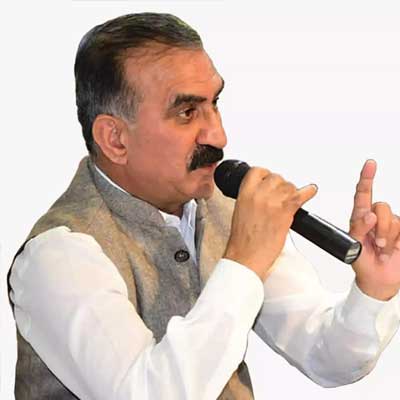
Chief Minister Sukhvinder Singh Sukhu stressed that the highest priority of the Himachal Pradesh state government is to create a business-friendly environment. In a recent statement, he revealed the government's aim to attract an investment of approximately Rs 200 billion in various sectors including manufacturing, tourism, energy, construction, and housing. This investment has the potential to generate direct employment for around 40,000 individuals and indirect employment for approximately 50,000 people.

To position Himachal Pradesh as an appealing destination for investment in the country, the state government has implemented several new policies. These policies include the provision of incentives such as discounted power rates, simplified credit facilities through the State Finance Corporation and nationalised banks for establishing new industries. Additionally, the government is offering land on lease at affordable rates, exempting new industries from sales or purchase tax, and granting concessions on transportation charges for raw materials. Various marginal benefits are also being provided.

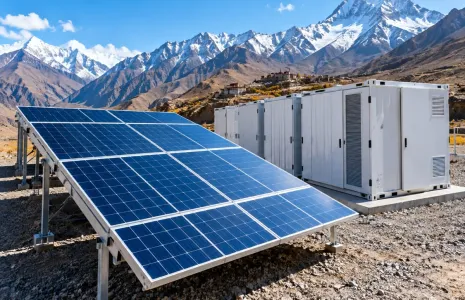
The government plans to extend financial assistance for dental clinics, e-taxi purchases, solar power projects up to 1 MW, fisheries projects, and other enterprises under the Rajiv Gandhi Swarozgaar Yojana. A uniform subsidy of 50 per cent will be offered to eligible sections for e-taxi purchases.

Chief Minister Sukhu noted that 99 per cent of enterprises in the state fall under the Micro, Small, and Medium Enterprises (MSME) category. The Industries Department will conduct a comprehensive survey of these enterprises to identify their issues and address them appropriately. The establishment of Unity Mall is proposed to promote the One District One Product concept.

The state government is also considering eliminating the requirement of an Essentiality Certificate from industrialists to encourage more investments. This provision will be included in the upcoming New Industrial Policy.

Furthermore, the government is establishing the Bureau of Investment Promotion within the Industries Department, which will replace the current single-window system. This Bureau aims to streamline the process for potential investors by providing all necessary clearances through a single platform.

The state government will address the delays in obtaining permissions under Section-118 of the HP Tenancy and Land Reforms Act, 1972. Major industrial areas will witness improved infrastructure to facilitate industrialists, and power supply in these areas will be enhanced to ensure uninterrupted electricity for industries, as stated by the chief minister.

Also Read
India and EFTA take steps towards new trade agreement
India's new Foreign Trade Policy aims for $2 trillion in exports by 2030


Chief Minister Sukhvinder Singh Sukhu stressed that the highest priority of the Himachal Pradesh state government is to create a business-friendly environment. In a recent statement, he revealed the government's aim to attract an investment of approximately Rs 200 billion in various sectors including manufacturing, tourism, energy, construction, and housing. This investment has the potential to generate direct employment for around 40,000 individuals and indirect employment for approximately 50,000 people. To position Himachal Pradesh as an appealing destination for investment in the country, the state government has implemented several new policies. These policies include the provision of incentives such as discounted power rates, simplified credit facilities through the State Finance Corporation and nationalised banks for establishing new industries. Additionally, the government is offering land on lease at affordable rates, exempting new industries from sales or purchase tax, and granting concessions on transportation charges for raw materials. Various marginal benefits are also being provided. The government plans to extend financial assistance for dental clinics, e-taxi purchases, solar power projects up to 1 MW, fisheries projects, and other enterprises under the Rajiv Gandhi Swarozgaar Yojana. A uniform subsidy of 50 per cent will be offered to eligible sections for e-taxi purchases. Chief Minister Sukhu noted that 99 per cent of enterprises in the state fall under the Micro, Small, and Medium Enterprises (MSME) category. The Industries Department will conduct a comprehensive survey of these enterprises to identify their issues and address them appropriately. The establishment of Unity Mall is proposed to promote the One District One Product concept. The state government is also considering eliminating the requirement of an Essentiality Certificate from industrialists to encourage more investments. This provision will be included in the upcoming New Industrial Policy. Furthermore, the government is establishing the Bureau of Investment Promotion within the Industries Department, which will replace the current single-window system. This Bureau aims to streamline the process for potential investors by providing all necessary clearances through a single platform. The state government will address the delays in obtaining permissions under Section-118 of the HP Tenancy and Land Reforms Act, 1972. Major industrial areas will witness improved infrastructure to facilitate industrialists, and power supply in these areas will be enhanced to ensure uninterrupted electricity for industries, as stated by the chief minister. Also Read India and EFTA take steps towards new trade agreementIndia's new Foreign Trade Policy aims for $2 trillion in exports by 2030

Next Story
Infrastructure Urban

Implementation Status of Jal Jeevan Mission

Since August 2019 the Government has implemented Jal Jeevan Mission to provide assured potable water through household tap connections in rural India. At the start of the mission only 32.3 million (mn) rural households, representing 16.7 per cent, were reported to have tap water connections. States and union territories have reported that 125.8 mn additional rural households have since been provided with tap connections. As a result, of about 193.6 mn rural households roughly 158.2 mn, or 81.71 per cent, are reported to have tap water supply at home.\n\nThe State, district and village level st..

Next Story
Infrastructure Urban

Jal Jeevan Mission Reaches Eighty One Per Cent Rural Coverage

The Government reported substantial progress under the Jal Jeevan Mission, launched in August 2019 to provide tap water to every rural household. At launch only 32.3 million (mn) rural households had tap connections and states and Union territories reported provision of 125.8 mn additional households by March 2026. Consequently, out of about 193.6 mn rural households around 158.2 mn, or 81.71 per cent, are reported to have tap water at home. The Finance Minister announced extension of the mission until 2028 in the 2025-26 budget speech. The Swachh Bharat Mission Grameen, launched in October 20..

Next Story
Infrastructure Urban

Empowering Local Governance for Sustainable Rural Water Supply

The Ministry of Jal Shakti has aligned the Jal Jeevan Mission (JJM) with the 73rd Amendment to strengthen village level planning and community ownership of water supply. Gram Panchayats, village water and sanitation committees and Pani Samitis are to plan, implement, manage and maintain piped water systems, with gram sabha processes formalising handover and oversight. Implementation support agencies including non government organisations, community based organisations and self help groups have been empanelled to train local committees and promote women participation. Under JJM, the department ..

Advertisement

Subscribe to Our Newsletter

Get daily newsletters around different themes from Construction world.

STAY CONNECTED

Advertisement

Advertisement

Advertisement