+
India AI Summit Shifts Focus From Compute To Capability
ECONOMY & POLICY

India AI Summit Shifts Focus From Compute To Capability

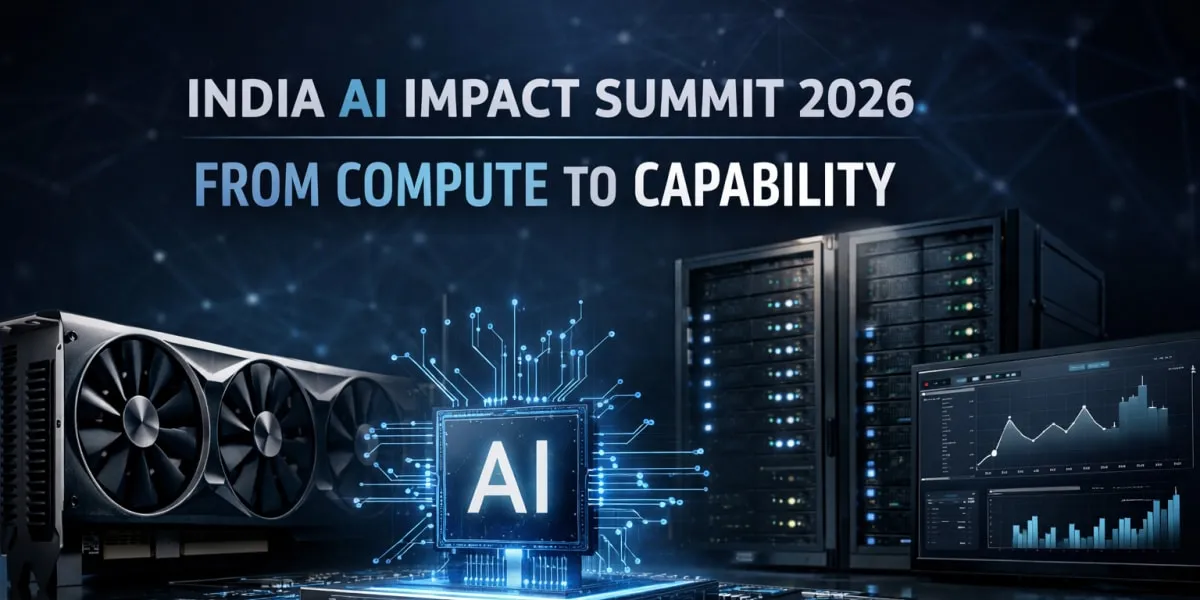
The India AI Impact Summit 2026 session on building AI readiness examined how ecosystems must move from securing peak compute to developing capability for market deployment. Presenters argued that converting access to graphics processing units (GPU) into scalable innovation requires integration of infrastructure, software environments and business strategy tailored to specific AI workloads. The discussion marked a clear shift from focusing on raw processing power to designing pathways that connect technology to customers and use cases.

For startups and developers using the IndiaAI compute platform (IndiaAI), speakers said the challenge is increasingly about deciding what to build and how to optimise and scale solutions sustainably. GPU choice is now linked to memory architecture, interconnect efficiency, cost economics and deployment model, making technical decision making central to readiness. Organisational change emerged as equally important as hardware availability for operationalising models in production.

Dr Panneerselvam M, chief executive of the MeitY Startup Hub, Ministry of Electronics and Information Technology, said that AI adoption also requires structured change management, especially among small and medium enterprises and legacy family businesses. He argued that these firms face a different adoption cycle and must recognise opportunities while adapting governance and processes. Support measures, he added, should address the ownership patterns of such enterprises to enable practical implementation.

Industry representatives highlighted the need for informed investment decisions, accessible experimentation environments and stronger research foundations to enhance competitiveness. Advanced Micro Devices (AMD) outlined support through developer cloud services and free compute hours to lower barriers to testing, together with a total cost of ownership advantage for scaling. The session concluded that as sovereign compute capacity expands, India will need to convert these resources into globally competitive solutions through research depth, startup participation and organisational readiness.

The India AI Impact Summit 2026 session on building AI readiness examined how ecosystems must move from securing peak compute to developing capability for market deployment. Presenters argued that converting access to graphics processing units (GPU) into scalable innovation requires integration of infrastructure, software environments and business strategy tailored to specific AI workloads. The discussion marked a clear shift from focusing on raw processing power to designing pathways that connect technology to customers and use cases. For startups and developers using the IndiaAI compute platform (IndiaAI), speakers said the challenge is increasingly about deciding what to build and how to optimise and scale solutions sustainably. GPU choice is now linked to memory architecture, interconnect efficiency, cost economics and deployment model, making technical decision making central to readiness. Organisational change emerged as equally important as hardware availability for operationalising models in production. Dr Panneerselvam M, chief executive of the MeitY Startup Hub, Ministry of Electronics and Information Technology, said that AI adoption also requires structured change management, especially among small and medium enterprises and legacy family businesses. He argued that these firms face a different adoption cycle and must recognise opportunities while adapting governance and processes. Support measures, he added, should address the ownership patterns of such enterprises to enable practical implementation. Industry representatives highlighted the need for informed investment decisions, accessible experimentation environments and stronger research foundations to enhance competitiveness. Advanced Micro Devices (AMD) outlined support through developer cloud services and free compute hours to lower barriers to testing, together with a total cost of ownership advantage for scaling. The session concluded that as sovereign compute capacity expands, India will need to convert these resources into globally competitive solutions through research depth, startup participation and organisational readiness.

Next Story
Equipment

Kabelschlepp India Installs Robotic VMC in Bengaluru

Kabelschlepp India, part of the Tsubaki Group, has installed a state-of-the-art Vertical Machining Center (VMC) integrated with robotic automation at its Bengaluru facility. The inauguration was held in the presence of Henning Preis, President & CEO, Kabelschlepp Group, Jörg Schulz, Vice President – Production, and Srinivas P. Kamisetty, Managing Director, Kabelschlepp India.The high-precision CNC VMC is designed for advanced milling, drilling, tapping and multi-axis machining. Equipped with a vertical spindle orientation, automatic tool changer and intelligent CNC control system, it en..

Next Story
Infrastructure Transport

Highway Delivery Reset!

Project delays and inefficiencies continue to bedevil the progress of India’s National Highways network. A multi-pronged reform agenda is needed to inject greater transparency and accountability at every stage – from planning and procurement to execution, maintenance and oversight. This article offers key recommendations and reform strategies that government stakeholders – from the Ministry of Road Transport & Highways (MoRTH) and the National Highways Authority of India (NHAI) to state agencies and oversight bodies – should pursue to put highway development on a better track.Decen..

Next Story
Infrastructure Transport

MSIDC Executes ₹37,000 Crore Road Programme

With Rs 37,000 crore worth of road projects under execution across Maharashtra, Maharashtra State Infrastructure Development Corporation (MSIDC) is driving one of the state’s largest infrastructure programmes. Dr Brijesh Dixit, Managing Director, discusses the institutional reforms, execution frameworks, financing strategies and technology adoption enabling timely, high-quality delivery, in conversation with PRATAP PADODE, Editor-in-Chief, CW.With over Rs 37,000 crore worth of road projects underway across districts – many under tight timelines – what institutional and executio..

Advertisement

Subscribe to Our Newsletter

Get daily newsletters around different themes from Construction world.

STAY CONNECTED

Advertisement

Advertisement

Advertisement

Open In App