
India BTM Storage Market To Reach 39 GWh By 2033
ECONOMY & POLICY

India BTM Storage Market To Reach 39 GWh By 2033

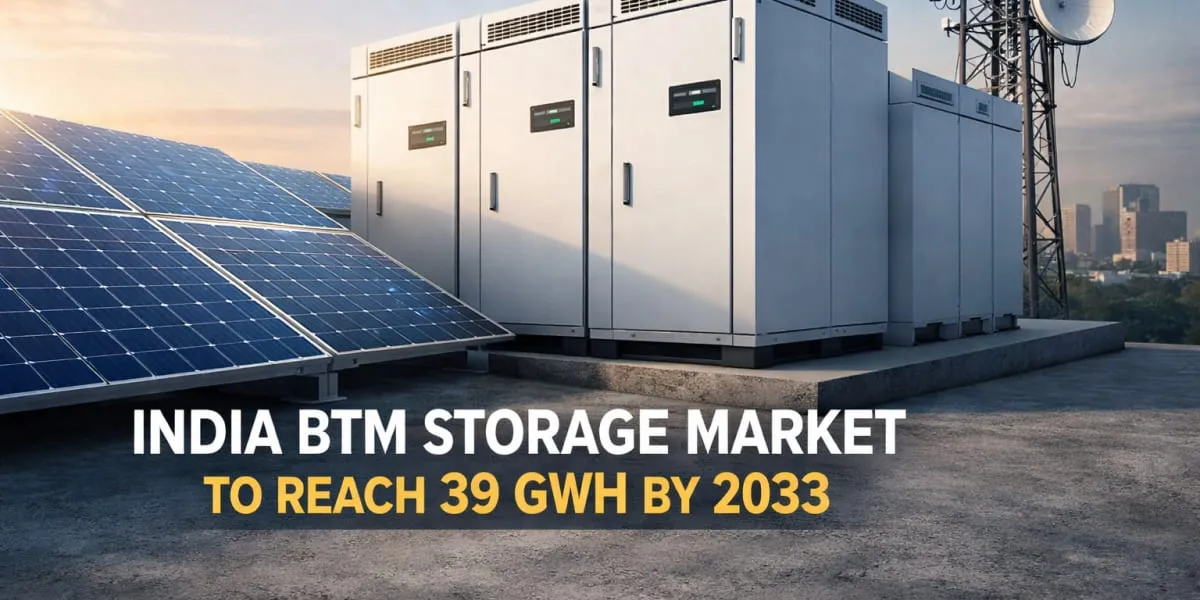
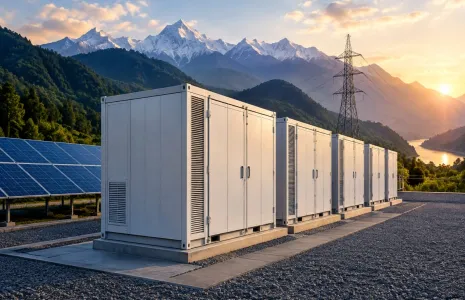
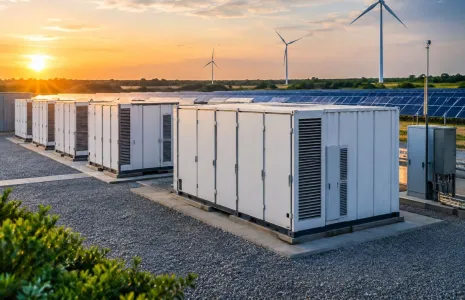
India's behind-the-meter (BTM) stationary storage market is projected to reach 39 GWh by 2033, up from roughly 32 GWh annual demand in 2025. The projection appears in a report by the India Energy Storage Alliance (IESA), which defines BTM systems as on-site energy generation and storage located on the customer's side of the utility meter. These systems include rooftop solar, battery storage for backup and load shifting, uninterruptible power supplies and inverters, and installations at telecom towers.

Falling costs of lithium-ion batteries and integrated solar-plus-storage are driving adoption among businesses and consumers seeking to manage rising grid tariffs and improve reliability. The report notes that in 2024 the levelised cost of energy from a rooftop solar system with storage hovered around Rs six to seven per kWh, approaching parity with average commercial grid tariffs in Maharashtra, Tamil Nadu and Karnataka. Analysts expect solar-plus-storage to be cost-competitive for many commercial users by 2026, with industrial uptake following.

The report finds that lead acid batteries still held more than 85 per cent of the BTM market in 2025, while lithium-ion technology is gaining share as prices fall and performance improves. In the telecom sector lithium-ion batteries accounted for about 77 per cent of new installations, and the uninterruptible power supply and rooftop solar segments are also recording increased lithium penetration. Industry participants noted that improved economics are making solar-plus-storage an attractive option for commercial and industrial customers.

IESA president Debmalya Sen and analysts characterised the projected growth as indicative of a shift towards greater on-site energy management. The report states that as power reliability improves, drivers of the BTM storage market are moving towards use cases such as tariff arbitrage and peak shaving. Continued technology improvements and cost declines are expected to sustain the market expansion through the next decade.

India's behind-the-meter (BTM) stationary storage market is projected to reach 39 GWh by 2033, up from roughly 32 GWh annual demand in 2025. The projection appears in a report by the India Energy Storage Alliance (IESA), which defines BTM systems as on-site energy generation and storage located on the customer's side of the utility meter. These systems include rooftop solar, battery storage for backup and load shifting, uninterruptible power supplies and inverters, and installations at telecom towers. Falling costs of lithium-ion batteries and integrated solar-plus-storage are driving adoption among businesses and consumers seeking to manage rising grid tariffs and improve reliability. The report notes that in 2024 the levelised cost of energy from a rooftop solar system with storage hovered around Rs six to seven per kWh, approaching parity with average commercial grid tariffs in Maharashtra, Tamil Nadu and Karnataka. Analysts expect solar-plus-storage to be cost-competitive for many commercial users by 2026, with industrial uptake following. The report finds that lead acid batteries still held more than 85 per cent of the BTM market in 2025, while lithium-ion technology is gaining share as prices fall and performance improves. In the telecom sector lithium-ion batteries accounted for about 77 per cent of new installations, and the uninterruptible power supply and rooftop solar segments are also recording increased lithium penetration. Industry participants noted that improved economics are making solar-plus-storage an attractive option for commercial and industrial customers. IESA president Debmalya Sen and analysts characterised the projected growth as indicative of a shift towards greater on-site energy management. The report states that as power reliability improves, drivers of the BTM storage market are moving towards use cases such as tariff arbitrage and peak shaving. Continued technology improvements and cost declines are expected to sustain the market expansion through the next decade.

Next Story
Real Estate

Integrated Waterproofing Strategies

Waterproofing buildings used to be an annual pre-monsoon affair but the evolution of real-estate development has changed that approach. In new developments, developers are weaving waterproofing solutions into both the design and construction phases, an approach that Nikhil Madan, Managing Director, Mahima Group, says, “is all about ensuring lasting durability [of the building] and keeping lifecycle risks including water seepage and extensive maintenance to a minimum.”Watertight by designAluminium formwork systems aren’t commonly thought of as a waterproofing tool but at the Mahima Group,..

Next Story
Infrastructure Urban

GROHE Showcases Water-Led Design At Milan

GROHE unveiled its GROHE SPA Aqua Sanctuary at Milan Design Week 2026, transforming Piccolo Teatro Studio Melato into an immersive showcase of water, design and wellbeing. Built on the philosophy of ‘Wellbeing Through Water’, the installation reimagined bathrooms as holistic spaces for relaxation, rejuvenation and self-care.The Aqua Sanctuary was presented through three interconnected sanctums. The first showcased the 3D-printed GROHE SPA AquaTree shower and faucet, highlighting bespoke innovation and biophilic design. The second featured the Atrio Private Collection and GROHE SPA x Buster..

Next Story
Infrastructure Transport

Rahee Group Expands Rail Manufacturing Capacity

Rahee Group has outlined a multi-year investment roadmap to expand its operational footprint and strengthen manufacturing capabilities for India’s growing railway and urban transit sector. The Group is expanding in Odisha with a new Track Component Casting Unit, for which the groundbreaking ceremony was held on 8 April 2026 in the presence of Odisha Chief Minister Mohan Charan Majhi.The Group’s flagship EPC arm, Rahee Infratech Ltd, continues to focus on complex rail infrastructure projects, including track systems, bridges, viaducts and ballastless infrastructure. Its wholly owned subsidi..

Advertisement

Subscribe to Our Newsletter

Get daily newsletters around different themes from Construction world.

STAY CONNECTED

Advertisement

Advertisement

Advertisement