




India Canada Conclude Second Round Of CEPA Talks
ECONOMY & POLICY

India Canada Conclude Second Round Of CEPA Talks

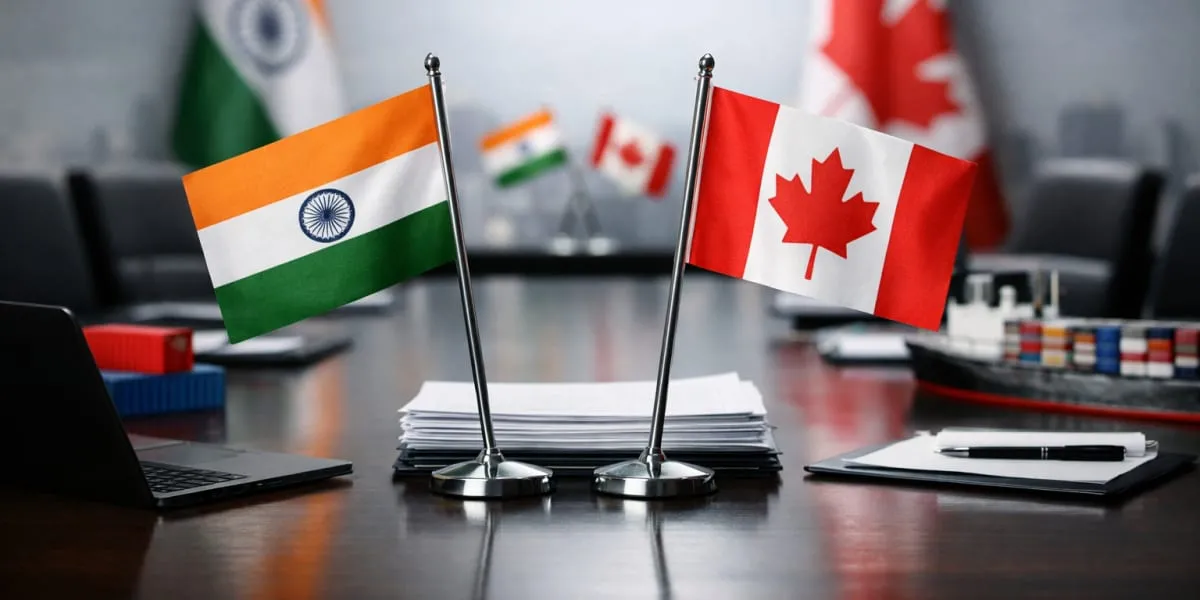
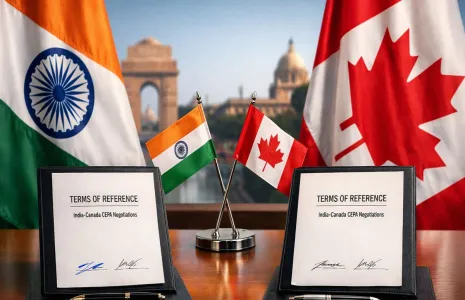
India and Canada successfully concluded the second round of negotiations for the proposed Comprehensive Economic Partnership Agreement, held from four to eight May, 2026, at Vanijya Bhawan in New Delhi and hosted by the Department of Commerce, Government of India. The talks proceeded under the Terms of Reference that the trade ministers of both countries signed on two March 2026, providing the framework for structured discussions and ministerial engagement.

The negotiations involved sustained technical exchanges and interdepartmental coordination as officials from both sides advanced text in multiple areas. Delegations reaffirmed their commitment to pursue a balanced, ambitious and mutually beneficial agreement that seeks to deepen bilateral trade and economic ties while addressing contemporary regulatory and commercial concerns.

Detailed discussions were held across chapters, including Trade in Goods, Trade in Services, Intellectual Property, Rules of Origin, Sanitary and Phytosanitary Measures and Technical Barriers to Trade, with negotiators exchanging proposals and refining wording on market access, regulatory cooperation and protection of innovations. Workstreams addressed procedural modalities for customs facilitation and mechanisms to enhance predictability for businesses on both sides.

Both sides agreed to continue negotiations in a constructive and cooperative spirit and planned to meet for the next round in July 2026 in Ottawa, Canada, with intersessional engagements to continue in the interim. Officials indicated that subsequent rounds would build on the technical work completed and aim to bring the process closer to a comprehensive outcome acceptable to both parties within a realistic timetable.

Observers noted the talks aimed to address issues affecting exporters and service providers, with an emphasis on ensuring rules of origin and intellectual property provisions support innovation and small and medium-sized enterprises. Both sides planned to maintain regular intersessional engagement to resolve technical issues and prepare negotiating texts ahead of ministerial consultations.

India and Canada successfully concluded the second round of negotiations for the proposed Comprehensive Economic Partnership Agreement, held from four to eight May, 2026, at Vanijya Bhawan in New Delhi and hosted by the Department of Commerce, Government of India. The talks proceeded under the Terms of Reference that the trade ministers of both countries signed on two March 2026, providing the framework for structured discussions and ministerial engagement. The negotiations involved sustained technical exchanges and interdepartmental coordination as officials from both sides advanced text in multiple areas. Delegations reaffirmed their commitment to pursue a balanced, ambitious and mutually beneficial agreement that seeks to deepen bilateral trade and economic ties while addressing contemporary regulatory and commercial concerns. Detailed discussions were held across chapters, including Trade in Goods, Trade in Services, Intellectual Property, Rules of Origin, Sanitary and Phytosanitary Measures and Technical Barriers to Trade, with negotiators exchanging proposals and refining wording on market access, regulatory cooperation and protection of innovations. Workstreams addressed procedural modalities for customs facilitation and mechanisms to enhance predictability for businesses on both sides. Both sides agreed to continue negotiations in a constructive and cooperative spirit and planned to meet for the next round in July 2026 in Ottawa, Canada, with intersessional engagements to continue in the interim. Officials indicated that subsequent rounds would build on the technical work completed and aim to bring the process closer to a comprehensive outcome acceptable to both parties within a realistic timetable. Observers noted the talks aimed to address issues affecting exporters and service providers, with an emphasis on ensuring rules of origin and intellectual property provisions support innovation and small and medium-sized enterprises. Both sides planned to maintain regular intersessional engagement to resolve technical issues and prepare negotiating texts ahead of ministerial consultations.

Next Story
Technology

AI-Enabled Workflows Lift Profitability and Productivity

Organisations modernising frontline workflows with artificial intelligence, automation and real-time data are reporting stronger financial performance, higher productivity and improved employee engagement, according to a global study by Zebra Technologies and Oxford Economics.The research covered 1,000 senior leaders across retail, manufacturing, transportation and logistics in the US, Mexico, the UK, Germany, India, Japan, Australia and New Zealand.In transportation and logistics, 54 per cent of companies that improved picking and packing operations reported faster operational performance, wh..

Next Story
Real Estate

India Leads Global AI Readiness but Implementation Lags

Indian companies lead global averages across all eight artificial intelligence readiness indicators tracked by JLL, but only 19 per cent have started making changes to their workplaces, according to the JLL 2026 Future of Work Survey.The study found that 77 per cent of Indian business leaders expect AI to change their office requirements, creating a 58-percentage-point gap between awareness and implementation. The survey covered more than 2,200 CEOs, CFOs and real estate leaders across 21 countries during the first quarter of 2026.Despite concerns over automation, 58 per cent of Indian leaders..

Next Story
Equipment

Three WOLFF Cranes Build Riyadh Cable-Stayed Bridges

Three WOLFF 180 B luffing jib cranes are supporting the construction of two cable-stayed bridges alongside the existing Wadi Laban Bridge in Riyadh, Saudi Arabia. The project is being developed for the Royal Commission for Riyadh City and executed by the ICRC joint venture comprising IC Ictas and Al Rashid Trading & Contracting Company.The cranes are handling lifting operations including formwork, reinforcement, concrete placement, work platforms, surveying equipment and other construction materials. Each crane is fitted with a 40 m jib, reaches a hook height of 157 m and offers a maximum ..

Advertisement

Subscribe to Our Newsletter

Get daily newsletters around different themes from Construction world.

STAY CONNECTED

Advertisement

Advertisement

Advertisement















