CERC Proposes Relief For Stalled Renewable Projects
POWER & RENEWABLE ENERGY

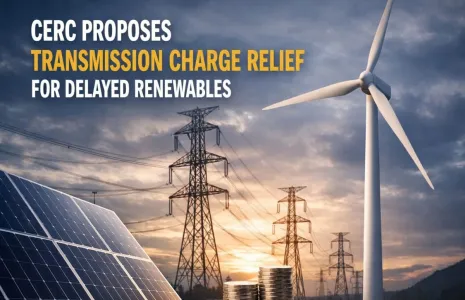
CERC Proposes Relief For Stalled Renewable Projects

The Central Electricity Regulatory Commission (CERC) has proposed a one-time relief mechanism for renewable energy developers whose projects have stalled after securing interstate transmission connectivity but failing to sign power purchase agreements. The draft seeks to unlock large amounts of unused grid capacity tied to delayed solar, wind and hybrid projects and to allow developers to retain or repurpose connectivity rights.

Over recent years, many developers secured connectivity based on Letters of Award (LoAs) issued by implementation agencies such as SECI, NTPC, NHPC and SJVN, but in many cases, PPAs were not executed, leaving transmission capacity stranded. The regulator has proposed three pathways for affected developers, including a route enabling continuation of projects with a fresh performance bank guarantee of Rs one million (mn) per Megawatt (MW) and revised timelines for land acquisition, financial closure and commissioning.

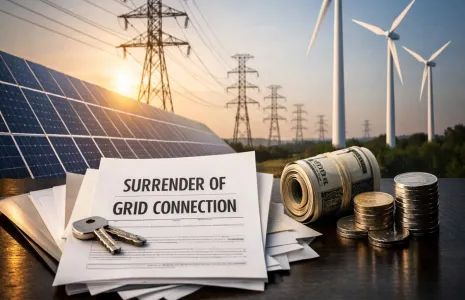
A second pathway would permit substitution of the original LoA with a different PPA obtained under another renewable tender, while a third would allow surrender of connectivity so the Central Transmission Utility of India Ltd (CTUIL) can reallocate or auction the capacity. The draft introduces auction-based allocation after initial reallocation, with a proposed base auction price of Rs three lakh per MW, equivalent to Rs zero point three million (mn) per MW, linked to guarantees otherwise encashed when connectivity is revoked.

Successful bidders for operational connectivity may be required to commission projects within 12 months, while projects tied to under-construction transmission links may receive up to 24 months, and failure to meet milestones could trigger cancellation and encashment of guarantees. The Ministry of Power had earlier recommended one-time relaxation for legacy projects and industry reaction has been mixed, with some developers warning that additional guarantees could strain smaller firms, while others welcome measures that may improve transmission utilisation. CERC has invited comments on the draft by May 15 and plans a public hearing before finalising the mechanism.

The Central Electricity Regulatory Commission (CERC) has proposed a one-time relief mechanism for renewable energy developers whose projects have stalled after securing interstate transmission connectivity but failing to sign power purchase agreements. The draft seeks to unlock large amounts of unused grid capacity tied to delayed solar, wind and hybrid projects and to allow developers to retain or repurpose connectivity rights. Over recent years, many developers secured connectivity based on Letters of Award (LoAs) issued by implementation agencies such as SECI, NTPC, NHPC and SJVN, but in many cases, PPAs were not executed, leaving transmission capacity stranded. The regulator has proposed three pathways for affected developers, including a route enabling continuation of projects with a fresh performance bank guarantee of Rs one million (mn) per Megawatt (MW) and revised timelines for land acquisition, financial closure and commissioning. A second pathway would permit substitution of the original LoA with a different PPA obtained under another renewable tender, while a third would allow surrender of connectivity so the Central Transmission Utility of India Ltd (CTUIL) can reallocate or auction the capacity. The draft introduces auction-based allocation after initial reallocation, with a proposed base auction price of Rs three lakh per MW, equivalent to Rs zero point three million (mn) per MW, linked to guarantees otherwise encashed when connectivity is revoked. Successful bidders for operational connectivity may be required to commission projects within 12 months, while projects tied to under-construction transmission links may receive up to 24 months, and failure to meet milestones could trigger cancellation and encashment of guarantees. The Ministry of Power had earlier recommended one-time relaxation for legacy projects and industry reaction has been mixed, with some developers warning that additional guarantees could strain smaller firms, while others welcome measures that may improve transmission utilisation. CERC has invited comments on the draft by May 15 and plans a public hearing before finalising the mechanism.

Next Story
Infrastructure Urban

Greenply Launches Ecotec Prime Plywood

Greenply Industries has launched Ecotec Prime, strengthening its economy plywood portfolio with a product designed to offer both fire and water protection. The plywood combines IS 5509 certified fire-retardant technology with Boiling Waterproof grade performance.The company said the launch addresses a gap in the affordable plywood segment, where safety-led features have largely been limited to premium categories. Backed by a 20-year warranty, Ecotec Prime is positioned for homes, offices, commercial spaces, hospitals, hotels, malls and government projects.Greenply said the product aims to make..

Next Story
Infrastructure Energy

BorgWarner Wins Two Asian Powertrain Orders

BorgWarner has secured two new conquest programme awards in Asia, strengthening its propulsion and drivetrain business. The awards include a latest-generation wet dual clutch for a Chinese OEM’s SUV platform and a torsional assist variable cam timing system for a Japanese OEM’s next-generation hybrid engine.The wet dual clutch combines high-performance wet friction materials with an optimised groove design to reduce drag torque, improving transmission efficiency and fuel economy. It also offers smoother launch and shift performance at lower actuation pressure, while an integrated wave spri..

Next Story
Real Estate

42MM Designs Climate-Responsive Summer Home

42MM Architecture has introduced Spaces That Breathe: Designing Homes Around Summer Rhythms, a residence designed around the realities of Indian summers. The home responds to heat through built form, orientation, shading and material use rather than relying primarily on applied systems.The design is arranged as layered volumes, with projecting upper floors, recessed glazing, shaded edges, vertical fins and screened facades helping reduce heat gain while supporting controlled ventilation. A central landscaped court brings light and air into the house, while living areas are oriented towards thi..

Advertisement

Subscribe to Our Newsletter

Get daily newsletters around different themes from Construction world.

STAY CONNECTED

Advertisement

Advertisement

Advertisement