



India Caps Refinery Margins To Cushion Fuel Losses
ECONOMY & POLICY

India Caps Refinery Margins To Cushion Fuel Losses

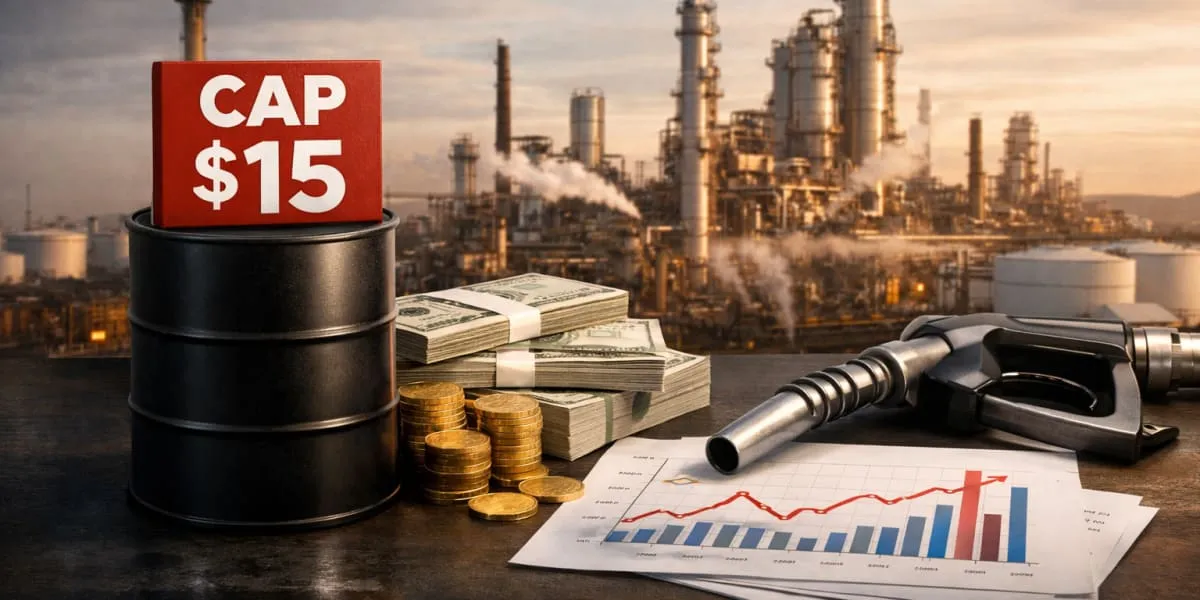
India has capped refinery margins and tightened transfer pricing after imposing a windfall levy on fuel exports to cushion losses on domestic petrol and diesel sales. The government imposed a Special Additional Excise Duty (SAED) on exports of diesel and aviation turbine fuel and capped refinery margins at 15 dollars per barrel, with earnings above that treated as a discount on fuel supplied to state-run oil marketing companies (OMCs). The measure is intended to transfer excess gains to offset retail under-recoveries.

OMCs fixed discounts on the refinery transfer price (RTP) to pay refineries less than import parity cost and lower internal transfer rates. For the second half of March a discount of Rs 22,342 per kilolitre (kl), or Rs 22.34 per litre, reduced diesel RTP from Rs 85,349 per kl to Rs 63,007 per kl. The discount mechanism is intended to reduce the import-parity component of pricing.

In the first fortnight of April a discount of Rs 60,239 per kl lowered diesel RTP from Rs 146,243 per kl to Rs 86,004 per kl. Aviation turbine fuel RTP fell to Rs 76,923 per kl from Rs 127,486 per kl after a discount of Rs 50,564 per kl, while kerosene RTP was set at Rs 77,534 per kl following a discount of Rs 46,311 per kl from Rs 123,845 per kl. These adjustments have sharply narrowed transfer rates for major auto fuels.

Petrol and diesel were historically priced on an import parity basis and refinery transfers used import parity pricing until June 2006. The government then adopted trade parity pricing, assigning 80 per cent weight to import parity and 20 per cent to export parity, a change that protected refinery margins, especially for standalone refiners without marketing arms.

Prices at the pump have been effectively frozen since April 2022 and marketing companies have absorbed losses when crude costs rose, creating under-recoveries. The ministry reported under-recoveries of Rs 24.40 per litre on petrol and Rs 104.99 per litre on diesel as on 01.04.2026, and sources said the discount on RTP will distribute the financial burden across the refining ecosystem while potentially hitting independent refiners hardest.

India has capped refinery margins and tightened transfer pricing after imposing a windfall levy on fuel exports to cushion losses on domestic petrol and diesel sales. The government imposed a Special Additional Excise Duty (SAED) on exports of diesel and aviation turbine fuel and capped refinery margins at 15 dollars per barrel, with earnings above that treated as a discount on fuel supplied to state-run oil marketing companies (OMCs). The measure is intended to transfer excess gains to offset retail under-recoveries. OMCs fixed discounts on the refinery transfer price (RTP) to pay refineries less than import parity cost and lower internal transfer rates. For the second half of March a discount of Rs 22,342 per kilolitre (kl), or Rs 22.34 per litre, reduced diesel RTP from Rs 85,349 per kl to Rs 63,007 per kl. The discount mechanism is intended to reduce the import-parity component of pricing. In the first fortnight of April a discount of Rs 60,239 per kl lowered diesel RTP from Rs 146,243 per kl to Rs 86,004 per kl. Aviation turbine fuel RTP fell to Rs 76,923 per kl from Rs 127,486 per kl after a discount of Rs 50,564 per kl, while kerosene RTP was set at Rs 77,534 per kl following a discount of Rs 46,311 per kl from Rs 123,845 per kl. These adjustments have sharply narrowed transfer rates for major auto fuels. Petrol and diesel were historically priced on an import parity basis and refinery transfers used import parity pricing until June 2006. The government then adopted trade parity pricing, assigning 80 per cent weight to import parity and 20 per cent to export parity, a change that protected refinery margins, especially for standalone refiners without marketing arms. Prices at the pump have been effectively frozen since April 2022 and marketing companies have absorbed losses when crude costs rose, creating under-recoveries. The ministry reported under-recoveries of Rs 24.40 per litre on petrol and Rs 104.99 per litre on diesel as on 01.04.2026, and sources said the discount on RTP will distribute the financial burden across the refining ecosystem while potentially hitting independent refiners hardest.

Next Story
Equipment

Kirloskar Brothers supports INS Taragiri with pump systems

Kirloskar Brothers (KBL) has contributed to INS Taragiri, the Indian Navy’s stealth-guided missile frigate, supporting India’s indigenous defence manufacturing programme. KBL has supplied precision-engineered Canned Motor Pumps (CMPs), critical to the vessel’s onboard systems. These pumps are designed for leak-proof operation, high reliability and low maintenance, with compact, low-noise and low-vibration performance suited for naval environments. INS Taragiri is part of India’s indigenisation drive in defence, representing advanced naval engineering and self-reliance in shipbui..

Next Story
Infrastructure Energy

Power Mech Secures Mumbai Monorail Operations Contract

Power Mech Projects Limited (Power Mech) has secured an order from Maha Mumbai Metro Operation Corporation Limited (MMMOC) to undertake the operations and maintenance of the Mumbai Monorail. The contract pertains to a corridor of 19.54 km featuring 17 stations and will connect Sant Gadge Maharaj Chowk to Chembur. The award was disclosed to stock exchanges in a filing that conforms to SEBI master circular requirements. Under the terms the scope comprises routine operations, system upkeep, signalling and traction oversight, station management and other allied services necessary for continuous se..

Next Story
Infrastructure Urban

UK Awards Rs380 Mn To Tata's Agratas For Somerset Gigafactory

The UK government has awarded Rs380 mn in funding to Agratas Energy Storage Solutions Private Limited (Agratas), the battery arm of the Tata Group, to support a planned electric vehicle battery gigafactory in Somerset. The Advanced Propulsion Centre (APC) said the grant forms part of a broader Rs470 mn government package intended to bolster domestic manufacture of batteries and strengthen supply chains for zero emission transport. The funding allocation was announced as part of efforts to accelerate the transition to zero emission vehicles and attract industrial investment. Agratas is developi..

Advertisement

Subscribe to Our Newsletter

Get daily newsletters around different themes from Construction world.

STAY CONNECTED

Advertisement

Advertisement

Advertisement














