India Data Centre Market To More Than Double To 22 Bn Dollars By 2030
ECONOMY & POLICY

India Data Centre Market To More Than Double To 22 Bn Dollars By 2030

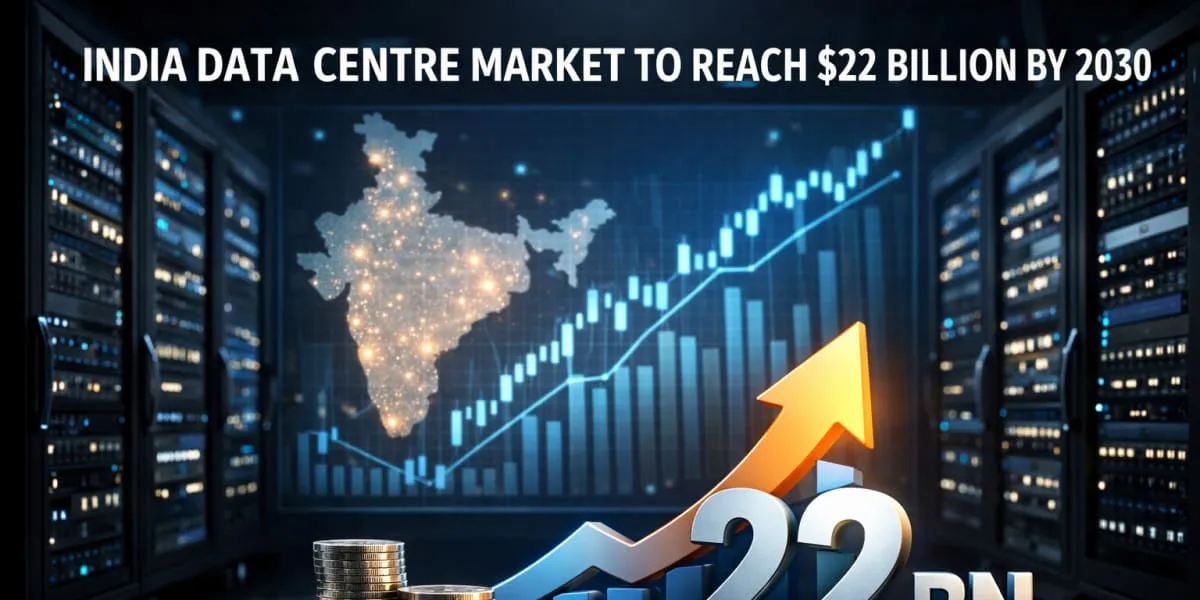
Bengaluru reporting indicates that India’s data centre market is projected to reach 22 billion dollars (22 bn) by 2030, up from 10 billion dollars (10 bn) in 2025, driven by rising adoption of artificial intelligence, growing demand for cloud infrastructure and rapid expansion of digital platforms. Workplace solutions firm Vestian projects strong momentum and increased infrastructure opportunities. The assessment underlines a substantial scaling of capacity and capital deployment across the sector.

Vestian expects installed capacity to expand from around one point seven to two point zero gigawatts (GW) by the end of 2026 to about four to five gigawatts (GW) by 2030, supported by cumulative investments approaching 30 billion dollars (30 bn). Mumbai is anticipated to retain a majority share of operational capacity owing to robust subsea cable connectivity, an established ecosystem and strong interest from hyperscale operators. Secondary markets such as Bengaluru, Hyderabad and Pune are identified as key expansion centres.

The firm notes that tier two cities are gradually emerging, with operational capacity in these markets currently estimated at 60 to 80 megawatts (MW) and expected to exceed 100 megawatts (MW) by the end of this year. The data centre sector attracted about 13 to 15 billion dollars (13-15 bn) in investments between 2020 and 2024, with approximately 80 per cent participation from foreign institutional investors. Developers are prioritising energy sourcing and cooling technologies to serve power intensive artificial intelligence workloads.

Vestian outlines an investment pipeline of nearly 60 to 70 billion dollars (60-70 bn) over the next five years, with joint venture led platforms helping to accelerate hyperscale campus development and capacity expansion across major markets. The company observes that policy measures such as single window clearances, 20 year tax exemptions, GST benefits and incentives extending to 2047 enhance the country’s competitiveness as a potential global data centre and artificial intelligence hub. Market participants are preparing expanded capacity plans and focusing on regulatory and power procurement strategies.

Bengaluru reporting indicates that India’s data centre market is projected to reach 22 billion dollars (22 bn) by 2030, up from 10 billion dollars (10 bn) in 2025, driven by rising adoption of artificial intelligence, growing demand for cloud infrastructure and rapid expansion of digital platforms. Workplace solutions firm Vestian projects strong momentum and increased infrastructure opportunities. The assessment underlines a substantial scaling of capacity and capital deployment across the sector. Vestian expects installed capacity to expand from around one point seven to two point zero gigawatts (GW) by the end of 2026 to about four to five gigawatts (GW) by 2030, supported by cumulative investments approaching 30 billion dollars (30 bn). Mumbai is anticipated to retain a majority share of operational capacity owing to robust subsea cable connectivity, an established ecosystem and strong interest from hyperscale operators. Secondary markets such as Bengaluru, Hyderabad and Pune are identified as key expansion centres. The firm notes that tier two cities are gradually emerging, with operational capacity in these markets currently estimated at 60 to 80 megawatts (MW) and expected to exceed 100 megawatts (MW) by the end of this year. The data centre sector attracted about 13 to 15 billion dollars (13-15 bn) in investments between 2020 and 2024, with approximately 80 per cent participation from foreign institutional investors. Developers are prioritising energy sourcing and cooling technologies to serve power intensive artificial intelligence workloads. Vestian outlines an investment pipeline of nearly 60 to 70 billion dollars (60-70 bn) over the next five years, with joint venture led platforms helping to accelerate hyperscale campus development and capacity expansion across major markets. The company observes that policy measures such as single window clearances, 20 year tax exemptions, GST benefits and incentives extending to 2047 enhance the country’s competitiveness as a potential global data centre and artificial intelligence hub. Market participants are preparing expanded capacity plans and focusing on regulatory and power procurement strategies.

Next Story
Infrastructure Energy

Power Mech Enters Urban Mobility With Rs 2.96 bn Mumbai Monorail Contract

Power Mech said it has secured a contract worth Rs 2.96 billion (Rs 2.96 bn) to deliver work on the Mumbai Monorail, marking the company's formal entry into urban mobility. The award was described as a significant contract for the firm and follows its focus on infrastructure projects. Shares of the company rose on the announcement as investors reacted to the new order. The contract will expand Power Mech's engineering and construction portfolio into urban transit systems and provides the company with exposure to the fast growing urban mobility segment in metropolitan areas. The work is expecte..

Next Story
Infrastructure Urban

Yogi Orders Expert Panel On Smart Meter Overbilling

The Uttar Pradesh chief minister ordered the formation of an expert panel to investigate widespread complaints of overbilling linked to newly installed smart meters. The panel was instructed to review meter data, examine installation practices and identify technical or procedural causes behind discrepancies in consumer bills. The state energy department was asked to prioritise the inquiry and to coordinate with distribution companies to ensure rapid access to required records and equipment. The committee was directed to conduct technical audits of meters and to establish whether faults, calibr..

Next Story
Infrastructure Energy

Power Firms Seek Relaxation Of HERC Fuel Surcharge Rules

Uttar Haryana Bijli Vitran Nigam (UHBVN) and Dakshin Haryana Bijli Vitran Nigam (DHBVN) have approached the Haryana Electricity Regulatory Commission (HERC) seeking relaxation of rules that govern recovery of fuel and power purchase costs. The distribution companies have filed petitions proposing amendments to Regulation sixty eight of the Multi-Year Tariff (MYT) Regulations, 2024 for financial year 2025-26, and have asked the regulator to consider alternative recovery mechanisms to the current monthly arrangement. Under the existing framework, additional costs arising from fuel and power purc..

Advertisement

Subscribe to Our Newsletter

Get daily newsletters around different themes from Construction world.

STAY CONNECTED

Advertisement

Advertisement

Advertisement