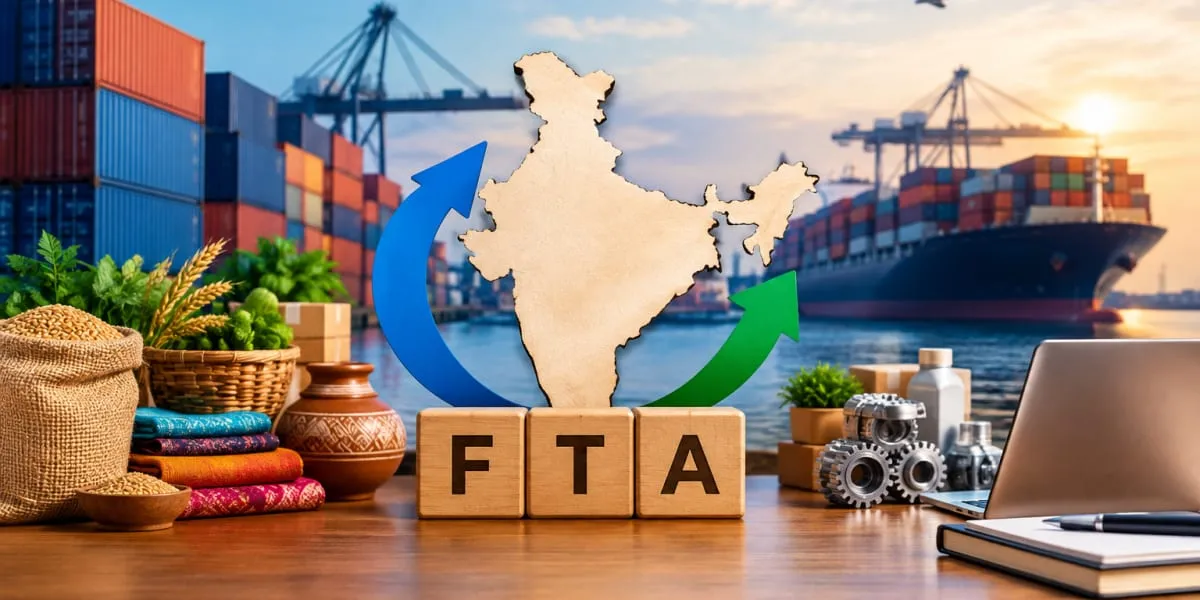
India Expands State Outreach to Improve MSME Access to FTA Markets
ECONOMY & POLICY

India Expands State Outreach to Improve MSME Access to FTA Markets

The Centre has intensified engagement with state governments to improve the use of India’s free trade agreements (FTAs) by domestic businesses. The initiative is aimed at farmers, workers, women, young entrepreneurs, micro, small and medium enterprises (MSMEs) and other small businesses seeking access to overseas markets.

Commerce and Industry Minister Piyush Goyal has stressed coordination between the Department of Commerce and state administrations to increase awareness of preferential trade provisions. Goa has participated in the initiative, with Chief Minister Pramod Sawant encouraging local businesses to examine international market opportunities.

Preferential tariffs under FTAs can improve the competitiveness of Indian products, but businesses must understand the provisions of individual agreements and meet eligibility requirements. Smaller exporters often face difficulties identifying suitable markets, securing certifications, meeting product standards and preparing customs documentation.

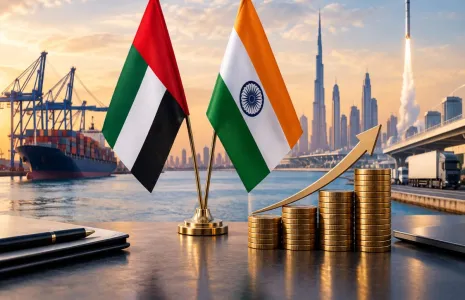
According to the Ministry of Commerce and Industry, India has nine FTAs covering 38 countries. These include the India-Mauritius agreement signed in 2021, the India-UAE Comprehensive Economic Partnership Agreement, which took effect in May 2022, and the India-Australia Economic Cooperation and Trade Agreement, which came into force in December 2022.

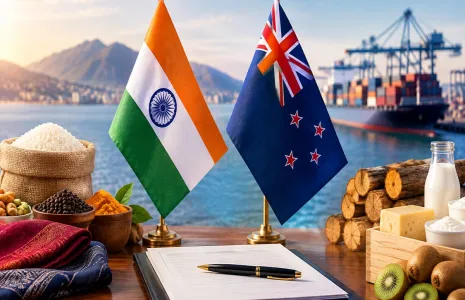
India signed the Trade and Economic Partnership Agreement with the European Free Trade Association on March 10, 2024, and it entered into force on October 1, 2025. The country signed trade agreements with the United Kingdom in July 2025 and Oman in December 2025, while agreements with New Zealand and the European Union were announced in December 2025 and January 2026 respectively. The New Zealand agreement entered into force on October 20, 2026, while India and the United States announced a framework for an interim trade agreement in February 2026.

The outreach programme is intended to extend export information beyond established trading centres. Greater coordination among state governments, export promotion councils and industry associations may help identify products and industrial clusters with export potential, while regional-language guidance and e-commerce access may assist smaller businesses despite continuing logistics, compliance and fulfilment challenges.

The Centre has intensified engagement with state governments to improve the use of India’s free trade agreements (FTAs) by domestic businesses. The initiative is aimed at farmers, workers, women, young entrepreneurs, micro, small and medium enterprises (MSMEs) and other small businesses seeking access to overseas markets. Commerce and Industry Minister Piyush Goyal has stressed coordination between the Department of Commerce and state administrations to increase awareness of preferential trade provisions. Goa has participated in the initiative, with Chief Minister Pramod Sawant encouraging local businesses to examine international market opportunities. Preferential tariffs under FTAs can improve the competitiveness of Indian products, but businesses must understand the provisions of individual agreements and meet eligibility requirements. Smaller exporters often face difficulties identifying suitable markets, securing certifications, meeting product standards and preparing customs documentation. According to the Ministry of Commerce and Industry, India has nine FTAs covering 38 countries. These include the India-Mauritius agreement signed in 2021, the India-UAE Comprehensive Economic Partnership Agreement, which took effect in May 2022, and the India-Australia Economic Cooperation and Trade Agreement, which came into force in December 2022. India signed the Trade and Economic Partnership Agreement with the European Free Trade Association on March 10, 2024, and it entered into force on October 1, 2025. The country signed trade agreements with the United Kingdom in July 2025 and Oman in December 2025, while agreements with New Zealand and the European Union were announced in December 2025 and January 2026 respectively. The New Zealand agreement entered into force on October 20, 2026, while India and the United States announced a framework for an interim trade agreement in February 2026. The outreach programme is intended to extend export information beyond established trading centres. Greater coordination among state governments, export promotion councils and industry associations may help identify products and industrial clusters with export potential, while regional-language guidance and e-commerce access may assist smaller businesses despite continuing logistics, compliance and fulfilment challenges.

Related Stories

Gold Stories

Next Story
Equipment

TIL Revenue Surges 143% to Rs 1.98 Billion in Q2 FY27

TIL Limited, a manufacturer of material handling and infrastructure equipment, has reported a 143 per cent year-on-year increase in consolidated revenue to Rs 1.98 billion for the second quarter of FY27, compared with Rs 814.5 million in the corresponding period last year. Consolidated EBITDA surged 433 per cent to Rs 173.7 million, while EBITDA margin improved to 8.8 per cent from 4 per cent.The performance was supported by equipment deliveries, defence contracts, aftermarket services and the contribution of Tulip Compression Private Limited (TCPL), which became a majority-owned subsidiary in..

Next Story
Infrastructure Transport

India to Develop Civil Aircraft Within Two Years, Build 100 Airports

India aims to develop its own civil aircraft within the next two years as it seeks to strengthen domestic aerospace capabilities and reduce dependence on foreign aircraft manufacturers, Civil Aviation Minister Ram Mohan Naidu said on November 12. He said the ambition extended beyond assembling aircraft to developing expertise in aircraft design and production. Speaking at the inaugural session of the Confederation of Indian Industry (CII) Partnership Summit 2026 in Visakhapatnam, Naidu said India wanted to establish itself as a major aerospace manufacturing hub. The government’s approach is ..

Next Story
Infrastructure Urban

Two Korean Firms to Invest Rs. 13.7 bn in Tamil Nadu

Two South Korean automotive component suppliers to Hyundai and Kia plan to invest a combined Rs. 13.7 bn in Tamil Nadu over the next five years, according to sources in the state industries department. The proposed investments come after a political dispute over the reported movement of some automotive investments to Andhra Pradesh. The state government has received letters of intent (LoIs) from Hwashin and Seoyon, while memorandums of understanding (MoUs) are expected to be signed shortly. Both companies communicated their investment plans in letters dated November 11, reaffirming their inten..

Advertisement

Subscribe to Our Newsletter

Get daily newsletters around different themes from Construction world.

STAY CONNECTED

Advertisement

SPECIAL OFFER
QR Code