+
India Eyes $200 Billion in Data Centres to Become Global AI Hub
ECONOMY & POLICY

India Eyes $200 Billion in Data Centres to Become Global AI Hub

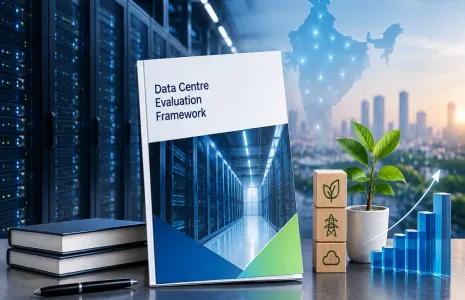
India has set out plans to attract 200 billion (bn) dollars of investment in data centres as part of a drive to become a global artificial intelligence hub. The initiative is intended to build a resilient digital infrastructure and to support domestic and international technology firms. Officials have described the effort as central to wider industrial and economic strategy.

New partnerships include membership of the Pax Silica alliance on AI and supply chain resilience, which India joined as part of broader international cooperation. The alliance is expected to strengthen component sourcing and reduce vulnerabilities in critical electronics and semiconductor supply chains. Policymakers plan to align regulatory frameworks and incentives to attract anchor investors and hyperscalers.

Building a data centre ecosystem at scale will require significant land, consistent power supplies and a skilled workforce. Industry studies indicate that hyperscale facilities consume power measured in megawatts (MW) and that grid upgrades and renewable energy integration will be priorities. The government is expected to consider fiscal incentives, streamlined approvals and public land allocation to lower development time and cost. Training programmes and partnerships with universities are planned to develop the necessary technical talent.

Analysts expect the project to spur ancillary industries, including cooling, power equipment and logistics, and to create employment across manufacturing and services. The ambition to host large data centre clusters is intended to position India competitively for AI research and deployment while addressing data sovereignty concerns. Officials say the effort will be monitored to balance growth with environmental and grid stability considerations.

Private and public investors are expected to assess regional competitiveness, connectivity and the ease of doing business when choosing locations for new facilities. Efforts to promote renewable energy use and circular cooling technologies are likely to form part of approval criteria. The strategy aims to attract sustained investment while meeting climate commitments.

India has set out plans to attract 200 billion (bn) dollars of investment in data centres as part of a drive to become a global artificial intelligence hub. The initiative is intended to build a resilient digital infrastructure and to support domestic and international technology firms. Officials have described the effort as central to wider industrial and economic strategy. New partnerships include membership of the Pax Silica alliance on AI and supply chain resilience, which India joined as part of broader international cooperation. The alliance is expected to strengthen component sourcing and reduce vulnerabilities in critical electronics and semiconductor supply chains. Policymakers plan to align regulatory frameworks and incentives to attract anchor investors and hyperscalers. Building a data centre ecosystem at scale will require significant land, consistent power supplies and a skilled workforce. Industry studies indicate that hyperscale facilities consume power measured in megawatts (MW) and that grid upgrades and renewable energy integration will be priorities. The government is expected to consider fiscal incentives, streamlined approvals and public land allocation to lower development time and cost. Training programmes and partnerships with universities are planned to develop the necessary technical talent. Analysts expect the project to spur ancillary industries, including cooling, power equipment and logistics, and to create employment across manufacturing and services. The ambition to host large data centre clusters is intended to position India competitively for AI research and deployment while addressing data sovereignty concerns. Officials say the effort will be monitored to balance growth with environmental and grid stability considerations. Private and public investors are expected to assess regional competitiveness, connectivity and the ease of doing business when choosing locations for new facilities. Efforts to promote renewable energy use and circular cooling technologies are likely to form part of approval criteria. The strategy aims to attract sustained investment while meeting climate commitments.

Next Story
Equipment

Kabelschlepp India Installs Robotic VMC in Bengaluru

Kabelschlepp India, part of the Tsubaki Group, has installed a state-of-the-art Vertical Machining Center (VMC) integrated with robotic automation at its Bengaluru facility. The inauguration was held in the presence of Henning Preis, President & CEO, Kabelschlepp Group, Jörg Schulz, Vice President – Production, and Srinivas P. Kamisetty, Managing Director, Kabelschlepp India.The high-precision CNC VMC is designed for advanced milling, drilling, tapping and multi-axis machining. Equipped with a vertical spindle orientation, automatic tool changer and intelligent CNC control system, it en..

Next Story
Infrastructure Transport

Highway Delivery Reset!

Project delays and inefficiencies continue to bedevil the progress of India’s National Highways network. A multi-pronged reform agenda is needed to inject greater transparency and accountability at every stage – from planning and procurement to execution, maintenance and oversight. This article offers key recommendations and reform strategies that government stakeholders – from the Ministry of Road Transport & Highways (MoRTH) and the National Highways Authority of India (NHAI) to state agencies and oversight bodies – should pursue to put highway development on a better track.Decen..

Next Story
Infrastructure Transport

MSIDC Executes ₹37,000 Crore Road Programme

With Rs 37,000 crore worth of road projects under execution across Maharashtra, Maharashtra State Infrastructure Development Corporation (MSIDC) is driving one of the state’s largest infrastructure programmes. Dr Brijesh Dixit, Managing Director, discusses the institutional reforms, execution frameworks, financing strategies and technology adoption enabling timely, high-quality delivery, in conversation with PRATAP PADODE, Editor-in-Chief, CW.With over Rs 37,000 crore worth of road projects underway across districts – many under tight timelines – what institutional and executio..

Advertisement

Subscribe to Our Newsletter

Get daily newsletters around different themes from Construction world.

STAY CONNECTED

Advertisement

Advertisement

Advertisement

Open In App