India Positions Itself as a Global AI Talent Powerhouse
ECONOMY & POLICY

India Positions Itself as a Global AI Talent Powerhouse

"India is emerging as a major force in the global AI race, backed by a young workforce, rising AI adoption and strong talent momentum. According to the Stanford HAI 2025 AI Index Report, India leads the world in AI talent acquisition with an annual hiring rate of about 33 per cent, strengthening its position as a key market for AI-led growth.
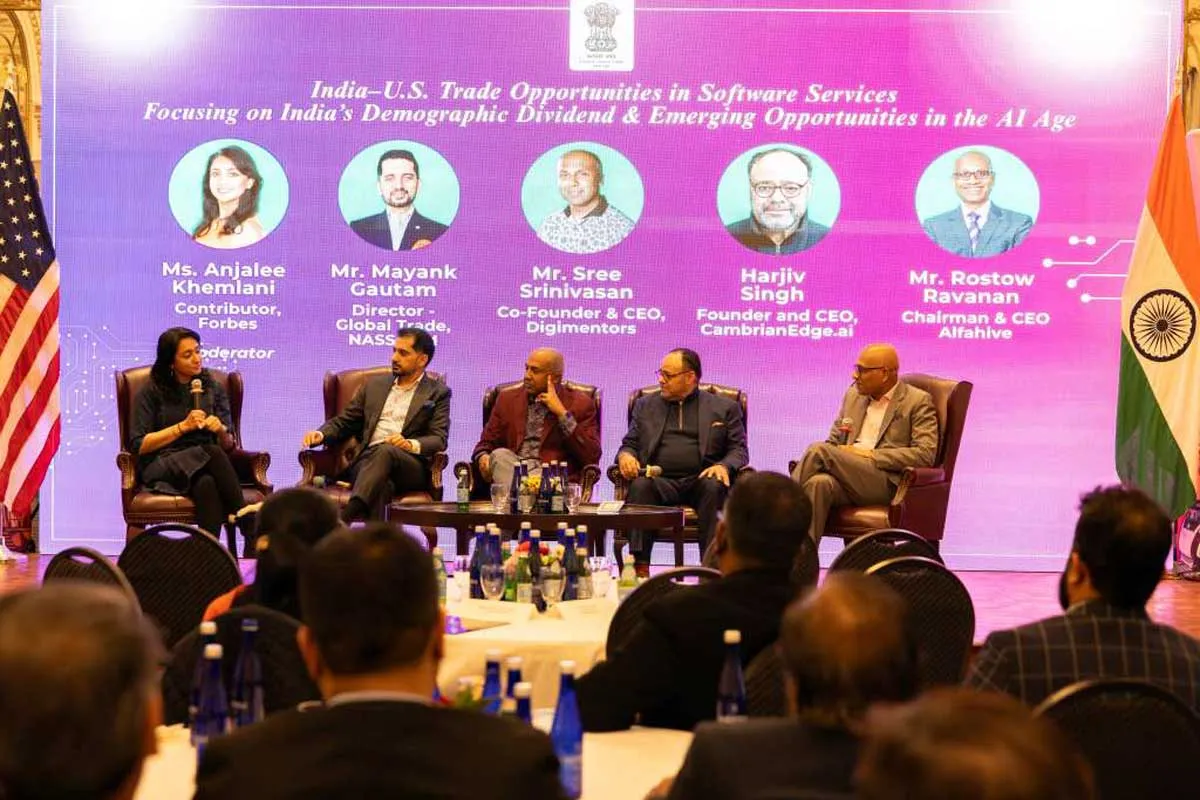
The Consulate General of India in New York recently hosted an invite-only roundtable, organised with NASSCOM and CambrianEdge.ai, to examine how India can convert its demographic advantage into long-term leadership in the AI age. The discussion, held on 7 April 2026, brought together senior leaders from business, trade and digital sectors.
Moderated by Forbes Contributor Anjalee Khemlani, the panel was titled ‘India-U.S. Trade Opportunities in Software Services: Focusing on India’s Demographic Dividend & Emerging Opportunities in the AI Age’. Speakers included Harjiv Singh, Founder & CEO, CambrianEdge.ai; Mayank Gautam, Director of Global Trade, NASSCOM; Sree Srinivasan, Co-founder & CEO, DigiMentors; and Rostow Ravanan, Chairman & CEO, Alfahive.
The panel noted that global AI business adoption rose from 55 per cent to 78 per cent of organisations in one year, as per Stanford HAI’s 2025 report. Against this backdrop, India’s young, English-speaking and technically trained population was presented as a major competitive strength. Mayank Gautam said, ‘AI is the biggest opportunity for democratization of this generation.’
Harjiv Singh stressed the immediate need for AI literacy across organisations, while Sree Srinivasan pointed to the rise of ‘vibe coding’ as a significant shift that reduces the barrier between idea generation and application development. With India already the second-largest contributor to global AI projects on GitHub at 19.9 per cent, the development could widen the country’s innovation capacity.
Rostow Ravanan said the pace of AI investment must be matched by infrastructure, regulatory clarity and deeper talent pipelines. A Deloitte-NASSCOM report projects India’s AI talent demand will rise from 650,000 to 1.25 million professionals by 2027, while the AI market is expected to grow by 25–35 per cent, underscoring the need for large-scale upskilling.
With a median age of 28 and more than 16 lakh candidates already enrolled in AI and digital fluency programmes through FutureSkills PRIME, India’s demographic dividend is increasingly being viewed as an operational advantage. Closing the discussion, Anjalee Khemlani said AI has become an unavoidable reality and that society’s response to this shift will shape future generations.

India is emerging as a major force in the global AI race, backed by a young workforce, rising AI adoption and strong talent momentum. According to the Stanford HAI 2025 AI Index Report, India leads the world in AI talent acquisition with an annual hiring rate of about 33 per cent, strengthening its position as a key market for AI-led growth.The Consulate General of India in New York recently hosted an invite-only roundtable, organised with NASSCOM and CambrianEdge.ai, to examine how India can convert its demographic advantage into long-term leadership in the AI age. The discussion, held on 7 April 2026, brought together senior leaders from business, trade and digital sectors.Moderated by Forbes Contributor Anjalee Khemlani, the panel was titled ‘India-U.S. Trade Opportunities in Software Services: Focusing on India’s Demographic Dividend & Emerging Opportunities in the AI Age’. Speakers included Harjiv Singh, Founder & CEO, CambrianEdge.ai; Mayank Gautam, Director of Global Trade, NASSCOM; Sree Srinivasan, Co-founder & CEO, DigiMentors; and Rostow Ravanan, Chairman & CEO, Alfahive.The panel noted that global AI business adoption rose from 55 per cent to 78 per cent of organisations in one year, as per Stanford HAI’s 2025 report. Against this backdrop, India’s young, English-speaking and technically trained population was presented as a major competitive strength. Mayank Gautam said, ‘AI is the biggest opportunity for democratization of this generation.’Harjiv Singh stressed the immediate need for AI literacy across organisations, while Sree Srinivasan pointed to the rise of ‘vibe coding’ as a significant shift that reduces the barrier between idea generation and application development. With India already the second-largest contributor to global AI projects on GitHub at 19.9 per cent, the development could widen the country’s innovation capacity.Rostow Ravanan said the pace of AI investment must be matched by infrastructure, regulatory clarity and deeper talent pipelines. A Deloitte-NASSCOM report projects India’s AI talent demand will rise from 650,000 to 1.25 million professionals by 2027, while the AI market is expected to grow by 25–35 per cent, underscoring the need for large-scale upskilling.With a median age of 28 and more than 16 lakh candidates already enrolled in AI and digital fluency programmes through FutureSkills PRIME, India’s demographic dividend is increasingly being viewed as an operational advantage. Closing the discussion, Anjalee Khemlani said AI has become an unavoidable reality and that society’s response to this shift will shape future generations.

Next Story
Infrastructure Urban

Jyoti Structures FY26 profit rises 56.5%

Jyoti Structures (JSL) recently reported strong financial results for the quarter and year ended 31 March 2026, driven by disciplined execution, cost management and steady progress across its order book.For Q4 FY2025-26, total income rose 44.2 per cent to Rs 2.41 billion from Rs 1.67 billion in Q4 FY2024-25. EBITDA increased 58.6 per cent to Rs 237 million, while EBITDA margin improved by 89 basis points to 9.84 per cent. Profit before tax grew 53.3 per cent to Rs 188.5 million, and net profit rose 51.9 per cent to Rs 181.4 million.For FY2025-26, total income grew 53.1 per cent to Rs 7.72 bill..

Next Story
Infrastructure Energy

Cat BEPU to Power Doppstadt Separator at IFAT 2026

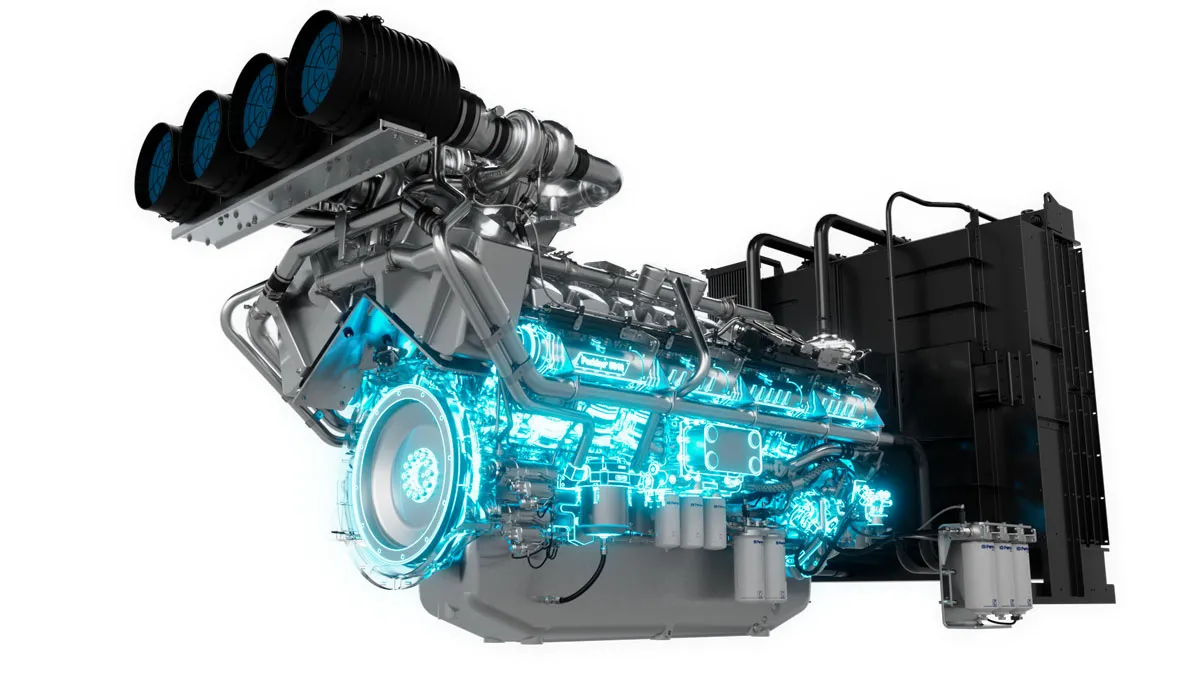
Caterpillar’s Cat Battery Electric Power Unit (BEPU) has been selected by Doppstadt to power its SWS 6 Spiral Shaft Separator, which will be showcased for the first time at IFAT 2026 in Munich, Germany, from 4–7 May.The compact plug-and-play BEPU is designed to replace a diesel engine within the same space, using the same mounting locations and relative machine position. It integrates the battery, motor, inverter, onboard charging, cooling and controls, enabling OEMs to electrify existing chassis platforms without extensive redesign.Caterpillar and Cat dealer Zeppelin Power Systems have be..

Next Story
Infrastructure Urban

VECV sales rise 6.9% in April 2026

VE Commercial Vehicles, a joint venture between Volvo Group and Eicher Motors, recorded sales of 7,318 units in April 2026, compared to 6,846 units in April 2025, registering 6.9 per cent growth. The total included 7,159 units under the Eicher brand and 159 units under the Volvo brand.Eicher branded trucks and buses reported sales of 7,159 units during the month, up 6.6 per cent from 6,717 units in April 2025. In the domestic commercial vehicle market, Eicher sales rose 8.6 per cent to 6,797 units from 6,257 units a year earlier.Exports declined 21.3 per cent, with VECV recording 362 units in ..

Advertisement

Subscribe to Our Newsletter

Get daily newsletters around different themes from Construction world.

STAY CONNECTED

Advertisement

Advertisement

Advertisement