

India Targets 10 bn Tonnes of Port Capacity by 2047
ECONOMY & POLICY

India Targets 10 bn Tonnes of Port Capacity by 2047

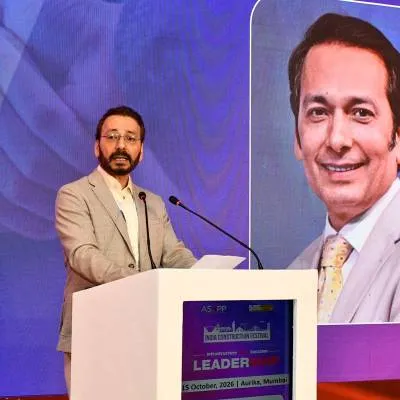
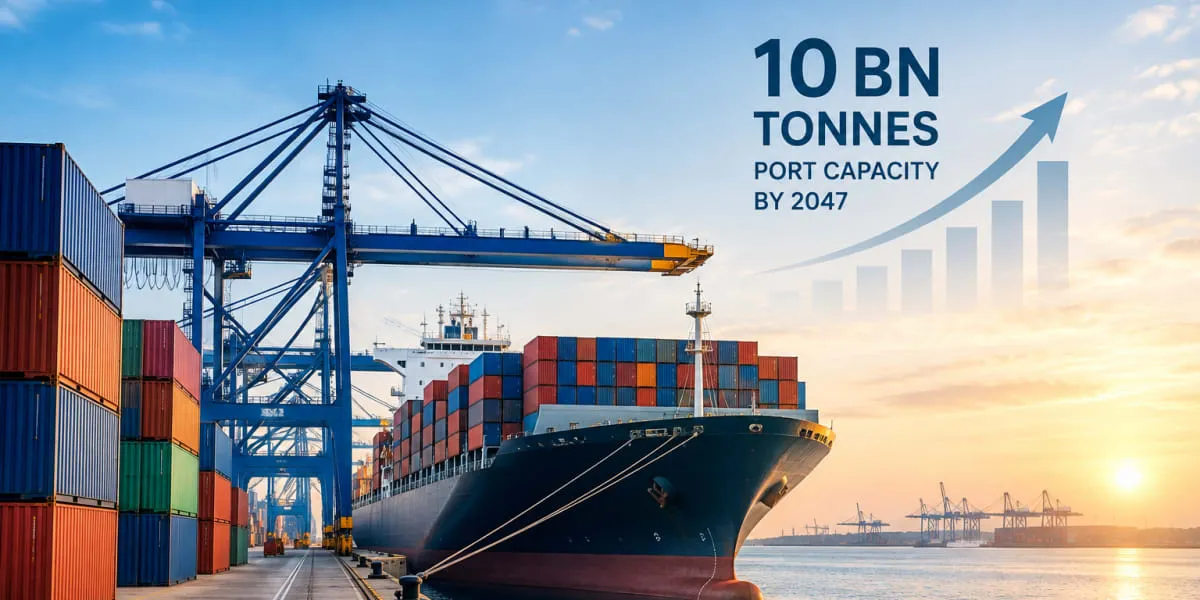
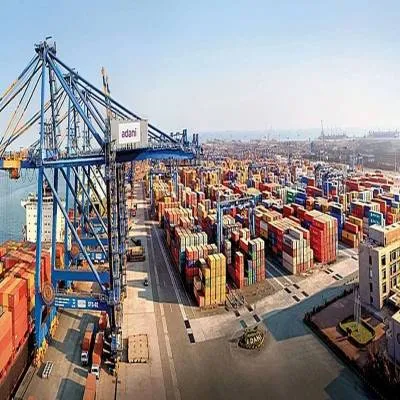
India is targeting a fourfold increase in port capacity to 10 bn tonnes per annum by 2047 as it seeks to strengthen its position in the global maritime economy. Vijay Kumar, Secretary, Ministry of Ports, Shipping and Waterways, outlined the plan at Sagarmanthan in New Delhi.

The government has identified more than 300 initiatives under Maritime India Vision 2030 and Maritime Amrit Kaal Vision 2047, involving an estimated investment of USD 800 bn, or about Rs. 66.4 tn. The programme covers port infrastructure, shipping, shipbuilding, inland waterways, green energy, maritime logistics and human resource development.

India currently has around 12 major ports administered by the Centre and more than 200 non-major ports governed by state governments. Their combined capacity is approximately 2.5 bn tonnes per annum, with an interim target of 3.5 bn tonnes before the longer-term goal is reached. Expansion of existing facilities, development of Vadhavan Port, mechanisation, automation and public-private partnerships are central to the programme.

The share of cargo handled through public-private partnership projects has risen from 63 per cent to 66 per cent. India has also increased its deep-draft ports from one a decade ago to seven. The government aims to meet 60 per cent of port energy requirements through renewable sources by 2030 and almost all requirements by 2047, while expanding electric equipment, green trucks, shore-to-ship power and green hydrogen hubs.

The inland waterways network has expanded from five operational routes a decade ago to 116 notified waterways. More than 50 are planned for cargo and passenger movement, with inland cargo transportation targeted at 500 mn tonnes by 2047, compared with more than 218 mn tonnes currently. India also aims to become one of the top 10 shipbuilding nations by 2030 and among the top five by 2047, while establishing a domestic container shipping line, ordering more than 400 ships and reducing reliance on overseas transhipment hubs. Cooperation with South Korea, Singapore, Rotterdam and other partners is intended to support shipbuilding, green corridors and digital maritime connectivity.

India is targeting a fourfold increase in port capacity to 10 bn tonnes per annum by 2047 as it seeks to strengthen its position in the global maritime economy. Vijay Kumar, Secretary, Ministry of Ports, Shipping and Waterways, outlined the plan at Sagarmanthan in New Delhi. The government has identified more than 300 initiatives under Maritime India Vision 2030 and Maritime Amrit Kaal Vision 2047, involving an estimated investment of USD 800 bn, or about Rs. 66.4 tn. The programme covers port infrastructure, shipping, shipbuilding, inland waterways, green energy, maritime logistics and human resource development. India currently has around 12 major ports administered by the Centre and more than 200 non-major ports governed by state governments. Their combined capacity is approximately 2.5 bn tonnes per annum, with an interim target of 3.5 bn tonnes before the longer-term goal is reached. Expansion of existing facilities, development of Vadhavan Port, mechanisation, automation and public-private partnerships are central to the programme. The share of cargo handled through public-private partnership projects has risen from 63 per cent to 66 per cent. India has also increased its deep-draft ports from one a decade ago to seven. The government aims to meet 60 per cent of port energy requirements through renewable sources by 2030 and almost all requirements by 2047, while expanding electric equipment, green trucks, shore-to-ship power and green hydrogen hubs. The inland waterways network has expanded from five operational routes a decade ago to 116 notified waterways. More than 50 are planned for cargo and passenger movement, with inland cargo transportation targeted at 500 mn tonnes by 2047, compared with more than 218 mn tonnes currently. India also aims to become one of the top 10 shipbuilding nations by 2030 and among the top five by 2047, while establishing a domestic container shipping line, ordering more than 400 ships and reducing reliance on overseas transhipment hubs. Cooperation with South Korea, Singapore, Rotterdam and other partners is intended to support shipbuilding, green corridors and digital maritime connectivity.

Related Stories

Gold Stories
Next Story
Infrastructure Transport

India to Develop Civil Aircraft Within Two Years, Build 100 Airports

India aims to develop its own civil aircraft within the next two years as it seeks to strengthen domestic aerospace capabilities and reduce dependence on foreign aircraft manufacturers, Civil Aviation Minister Ram Mohan Naidu said on November 12. He said the ambition extended beyond assembling aircraft to developing expertise in aircraft design and production. Speaking at the inaugural session of the Confederation of Indian Industry (CII) Partnership Summit 2026 in Visakhapatnam, Naidu said India wanted to establish itself as a major aerospace manufacturing hub. The government’s approach is ..

Next Story
Infrastructure Urban

Two Korean Firms to Invest Rs. 13.7 bn in Tamil Nadu

Two South Korean automotive component suppliers to Hyundai and Kia plan to invest a combined Rs. 13.7 bn in Tamil Nadu over the next five years, according to sources in the state industries department. The proposed investments come after a political dispute over the reported movement of some automotive investments to Andhra Pradesh. The state government has received letters of intent (LoIs) from Hwashin and Seoyon, while memorandums of understanding (MoUs) are expected to be signed shortly. Both companies communicated their investment plans in letters dated November 11, reaffirming their inten..

Next Story
Building Material

Cement Makers See Margin Relief as Oil Prices Lower Fuel Costs

Cement makers are set to see a significant improvement in profitability in the second half of FY27 as falling global oil prices reduce the cost of key fuels, including petcoke and coal. Higher cement prices are also expected to support earnings, according to a report by Systematix Group. The cement sector remained resilient in Q2 FY27, with volumes across the companies covered by the brokerage rising 7.2 per cent year-on-year. Higher sales volumes and improved realisations contributed to top-line growth during the quarter, although fuel and packaging expenses remained near-term concerns for ma..

Advertisement

Subscribe to Our Newsletter

Get daily newsletters around different themes from Construction world.

STAY CONNECTED

Advertisement

SPECIAL OFFER
QR Code