India Unifies EPR Portal To Strengthen Recycling Framework
ECONOMY & POLICY

India Unifies EPR Portal To Strengthen Recycling Framework

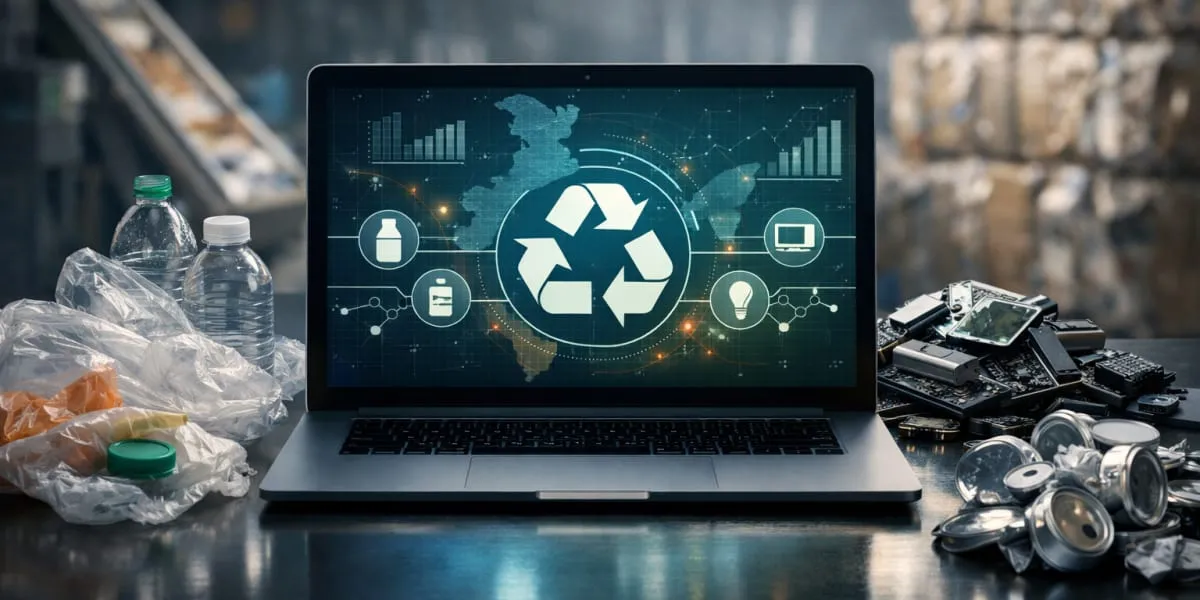
The Union Ministry of Environment, Forest and Climate Change is preparing a common Extended Producer Responsibility portal to streamline compliance, improve traceability and scale India's recycling ecosystem. The unified platform is being developed to integrate multiple waste streams and to address operational bottlenecks identified through stakeholder consultations. It is expected to be more user friendly and responsive to producers, recyclers and regulators.

The EPR framework now spans plastics, e-waste, batteries and tyres, with digital certification systems intended to improve transparency and the tracking of recycling outcomes. Officials at the Central Pollution Control Board have outlined a shift under the E-Waste Management Rules, 2022 from a collection based approach to a recycling based system covering 100 categories of electronic equipment. The shift is presented as part of a broader move to deepen reliance on EPR as a central policy tool to advance a circular economy.

Stakeholders expect the portal to expand participation, with estimates suggesting it could onboard up to five million (mn) users across the solid waste management ecosystem, representing a major step in digitising compliance and market mechanisms. The Centre for Science and Environment welcomed the integration of GST and EPR while urging that the system provide public access so researchers and think tanks can independently assess progress and identify implementation challenges. The portal's success is described as dependent on transparency and effective data access.

Industry bodies urged a dedicated national framework or a nodal authority to tackle structural inefficiencies, citing frequent administrative transfers, fragmented governance and inconsistent regulatory interpretation as barriers to implementation. NITI Aayog emphasised institutionalisation, stable demand for recycled materials and better integration of the informal sector as priorities for resource efficiency and industrial competitiveness. Officials and industry agree that execution, enforcement and ecosystem development must now follow policy design if the portal is to address fragmentation and improve accountability.

The Union Ministry of Environment, Forest and Climate Change is preparing a common Extended Producer Responsibility portal to streamline compliance, improve traceability and scale India's recycling ecosystem. The unified platform is being developed to integrate multiple waste streams and to address operational bottlenecks identified through stakeholder consultations. It is expected to be more user friendly and responsive to producers, recyclers and regulators. The EPR framework now spans plastics, e-waste, batteries and tyres, with digital certification systems intended to improve transparency and the tracking of recycling outcomes. Officials at the Central Pollution Control Board have outlined a shift under the E-Waste Management Rules, 2022 from a collection based approach to a recycling based system covering 100 categories of electronic equipment. The shift is presented as part of a broader move to deepen reliance on EPR as a central policy tool to advance a circular economy. Stakeholders expect the portal to expand participation, with estimates suggesting it could onboard up to five million (mn) users across the solid waste management ecosystem, representing a major step in digitising compliance and market mechanisms. The Centre for Science and Environment welcomed the integration of GST and EPR while urging that the system provide public access so researchers and think tanks can independently assess progress and identify implementation challenges. The portal's success is described as dependent on transparency and effective data access. Industry bodies urged a dedicated national framework or a nodal authority to tackle structural inefficiencies, citing frequent administrative transfers, fragmented governance and inconsistent regulatory interpretation as barriers to implementation. NITI Aayog emphasised institutionalisation, stable demand for recycled materials and better integration of the informal sector as priorities for resource efficiency and industrial competitiveness. Officials and industry agree that execution, enforcement and ecosystem development must now follow policy design if the portal is to address fragmentation and improve accountability.

Next Story
Infrastructure Transport

Shivraj Chouhan Launches PMGSY IV and Announces Package for Madhya Pradesh

Union Minister Shivraj Singh Chouhan launched the Pradhan Mantri Gram Sadak Yojana (PMGSY) IV at Bhairunda in Sehore district during the 25 year celebrations and announced a development package for Madhya Pradesh. The programme was organised by the Union Ministry of Rural Development and attended by Chief Minister Dr Mohan Yadav, ministers of state, state ministers, legislators and senior officials from the centre and the state. The minister said the central government under the Prime Minister is committed to strengthening rural livelihoods through improved connectivity, housing and women's in..

Next Story
Infrastructure Urban

DMR Engineering Reports FY 25-26 Financial Results

DMR Engineering reported its half year results for the financial year ended 31 March 2026 and published full year figures on a standalone basis. Standalone revenue from operations decreased by 2.01 per cent year-over-year to Rs 102.58 million (mn), while profit after tax declined by 43.94 per cent to nine point five six mn, leaving a profit after tax margin of nine point zero five per cent. Earnings per share stood at Rs zero point nine two, a fall of 44.71 per cent year-over-year. The company attributed part of the decline to one-off provisioning for bad debts and additional financing charges..

Next Story
Infrastructure Urban

Atlanta Electricals Posts Strong FY26 Growth And Debt Free Finish

Atlanta Electricals reported audited consolidated results for the quarter and year ended 31 March 2026. The company recorded significant year-on-year revenue growth driven by capacity ramp-up at new facilities and higher utilisation at legacy plants. The announcement summarised operating improvements and strategic milestones achieved during the year. For Q4 the company reported revenue of Rs 7.48 bn and for FY26 revenue of Rs 18.52 bn, representing robust growth versus the prior year. EBITDA in Q4 was Rs. 1.49 bn and Rs. 3.44 bn for the full year, with margins expanding to 20 per cent in the q..

Advertisement

Subscribe to Our Newsletter

Get daily newsletters around different themes from Construction world.

STAY CONNECTED

Advertisement

Advertisement

Advertisement