India, US In Talks On Pax Silica Supply Chain Alliance
ECONOMY & POLICY

India, US In Talks On Pax Silica Supply Chain Alliance

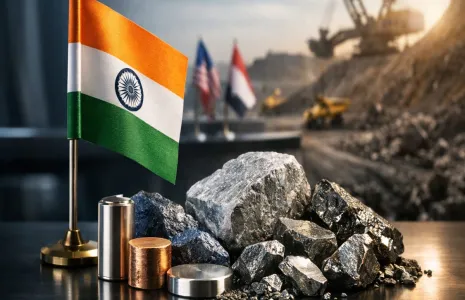
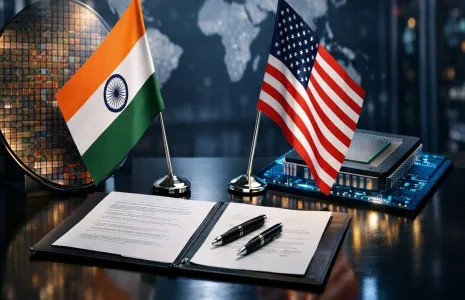
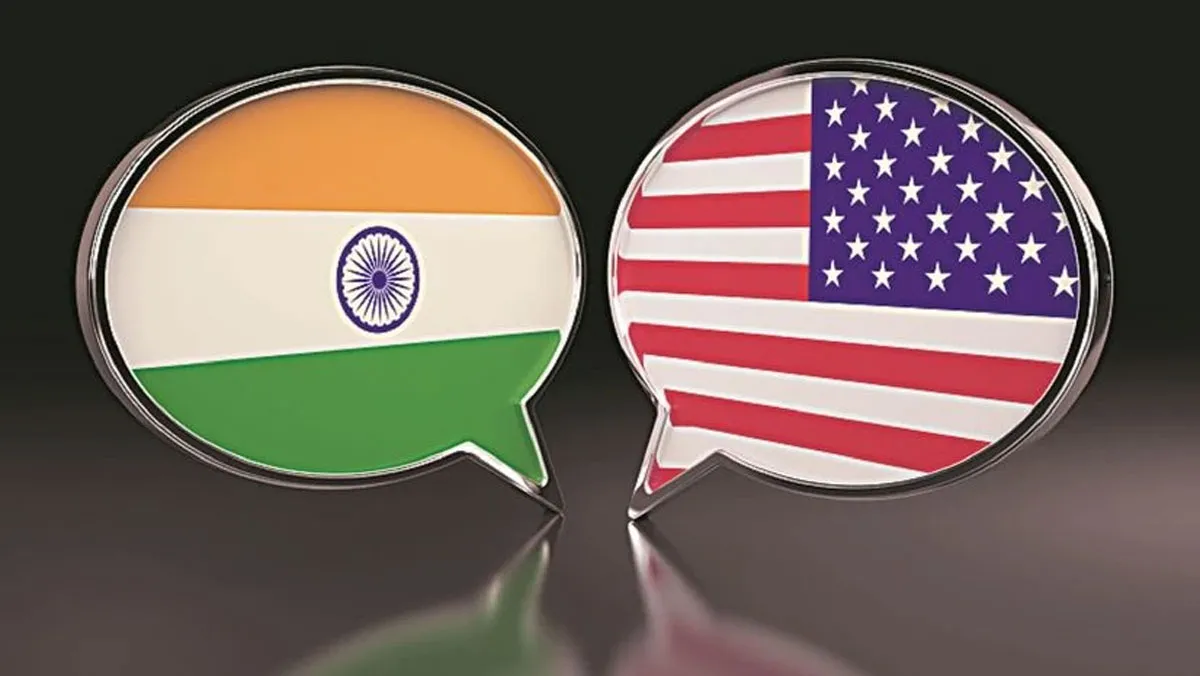
India and the United States are holding discussions on New Delhi’s potential entry into Pax Silica, a US-backed silicon supply chain alliance focused on critical minerals and advanced technologies, according to US Undersecretary of State for Economic Affairs Jacob Helberg. He said India could join the initiative in the first half of 2026, alongside other prospective partners, as the US-led framework expands. Pax Silica has been positioned as a strategic response to China’s growing influence in artificial intelligence and semiconductor manufacturing.

Speaking to Bloomberg, Helberg also indicated the likely participation of the European Union and Taiwan in the broader global supply chain arrangement for critical minerals. He further confirmed that the US will take part in the IndiaAI Impact Summit scheduled to be held in New Delhi in February next year, as reported by The Economic Times. India has not yet issued an official statement on Pax Silica.

Pax Silica is a strategic initiative led by the United States to create a secure, resilient and innovation-driven silicon supply chain. The alliance spans the entire value chain, covering critical minerals, energy inputs, semiconductor manufacturing, artificial intelligence infrastructure and logistics networks. On December 12, Japan, South Korea, Singapore, the Netherlands, the United Kingdom, Israel, the UAE and Australia formally signed the Pax Silica declaration at a summit in Washington DC. The move was widely seen as a coordinated effort to counter China’s expanding footprint in the global semiconductor industry. The US State Department has said the initiative aims to reduce coercive dependencies, protect materials and capabilities critical for artificial intelligence, and help partner nations scale next-generation technologies.

Even as the framework takes shape, the US announced that it would defer the imposition of tariffs on Chinese semiconductor imports by at least 18 months, extending the deadline to June 2027. The tariff rate currently remains at zero. China reacted sharply, accusing Washington of misusing tariffs to unfairly suppress Chinese industries, according to The Economic Times.

Speculation over India’s initial exclusion from Pax Silica emerged as several countries, including Quad members Japan and Australia, joined the pact. However, Helberg clarified that India’s absence was not linked to trade disputes or diplomatic tensions. He said the US views India as a highly strategic potential partner on supply chain security and is keen to deepen engagement. Helberg added that he is in near-daily communication with Indian officials and that both sides are actively exploring ways to accelerate collaboration. He explained that countries such as Singapore, South Korea, Japan, Taiwan and the Netherlands were included at the outset because of their central role in global semiconductor manufacturing, with the framework deliberately designed to expand later to include partners such as India.

India and the United States are holding discussions on New Delhi’s potential entry into Pax Silica, a US-backed silicon supply chain alliance focused on critical minerals and advanced technologies, according to US Undersecretary of State for Economic Affairs Jacob Helberg. He said India could join the initiative in the first half of 2026, alongside other prospective partners, as the US-led framework expands. Pax Silica has been positioned as a strategic response to China’s growing influence in artificial intelligence and semiconductor manufacturing. Speaking to Bloomberg, Helberg also indicated the likely participation of the European Union and Taiwan in the broader global supply chain arrangement for critical minerals. He further confirmed that the US will take part in the IndiaAI Impact Summit scheduled to be held in New Delhi in February next year, as reported by The Economic Times. India has not yet issued an official statement on Pax Silica. Pax Silica is a strategic initiative led by the United States to create a secure, resilient and innovation-driven silicon supply chain. The alliance spans the entire value chain, covering critical minerals, energy inputs, semiconductor manufacturing, artificial intelligence infrastructure and logistics networks. On December 12, Japan, South Korea, Singapore, the Netherlands, the United Kingdom, Israel, the UAE and Australia formally signed the Pax Silica declaration at a summit in Washington DC. The move was widely seen as a coordinated effort to counter China’s expanding footprint in the global semiconductor industry. The US State Department has said the initiative aims to reduce coercive dependencies, protect materials and capabilities critical for artificial intelligence, and help partner nations scale next-generation technologies. Even as the framework takes shape, the US announced that it would defer the imposition of tariffs on Chinese semiconductor imports by at least 18 months, extending the deadline to June 2027. The tariff rate currently remains at zero. China reacted sharply, accusing Washington of misusing tariffs to unfairly suppress Chinese industries, according to The Economic Times. Speculation over India’s initial exclusion from Pax Silica emerged as several countries, including Quad members Japan and Australia, joined the pact. However, Helberg clarified that India’s absence was not linked to trade disputes or diplomatic tensions. He said the US views India as a highly strategic potential partner on supply chain security and is keen to deepen engagement. Helberg added that he is in near-daily communication with Indian officials and that both sides are actively exploring ways to accelerate collaboration. He explained that countries such as Singapore, South Korea, Japan, Taiwan and the Netherlands were included at the outset because of their central role in global semiconductor manufacturing, with the framework deliberately designed to expand later to include partners such as India.

Next Story
Infrastructure Urban

VECV Sales Rise 7.8 Per Cent In May 2026

VE Commercial Vehicles recorded sales of 7,978 units in May 2026, compared to 7,401 units in May 2025, registering growth of 7.8 per cent. This included 7,789 units from the Eicher brand and 189 units from the Volvo brand.Eicher branded trucks and buses reported sales of 7,789 units during the month, up 7.3 per cent from 7,258 units a year earlier. In the domestic commercial vehicle market, Eicher sales rose 9.1 per cent to 7,375 units from 6,758 units in May 2025.Exports declined 17.2 per cent to 414 units from 500 units in the corresponding month last year. Volvo Trucks and Volvo Buses recor..

Next Story
Infrastructure Urban

Table Space Strengthens DESYN Leadership Team

Table Space has announced strategic leadership appointments within DESYN, its integrated Design and Build business, as it looks to strengthen operations across key enterprise and GCC markets in India. DESYN was launched as a strategic extension of Table Space’s workspace solutions portfolio to meet rising demand for agile, high-quality and rapidly deployable enterprise workspaces.Shruti Ookabhoy has joined DESYN as Executive Director and will lead the Design vertical, focusing on design capability, operational excellence and team development across markets. She brings over 22 years of experi..

Next Story
Infrastructure Transport

Concord Associate Bags Rs 2.79 Bn Kavach Order

Concord Control Systems said its associate company, Progota India, has received a Rs 2.79 bn domestic order from Indian Railways for the supply, installation, testing and commissioning of on-board Kavach 4.0 loco equipment.The order is scheduled for execution within 12 months and strengthens Concord’s role in India’s railway safety and signalling ecosystem. Kavach is India’s indigenous automatic train protection system, designed to improve operational safety by helping prevent signal passing at danger and reducing collision risks.Gaurav Lath, Joint Managing Director, Concord Control Syst..

Advertisement

Subscribe to Our Newsletter

Get daily newsletters around different themes from Construction world.

STAY CONNECTED

Advertisement

Advertisement

Advertisement