



Indian HVAC Market To Double In Five Years
ECONOMY & POLICY

Indian HVAC Market To Double In Five Years

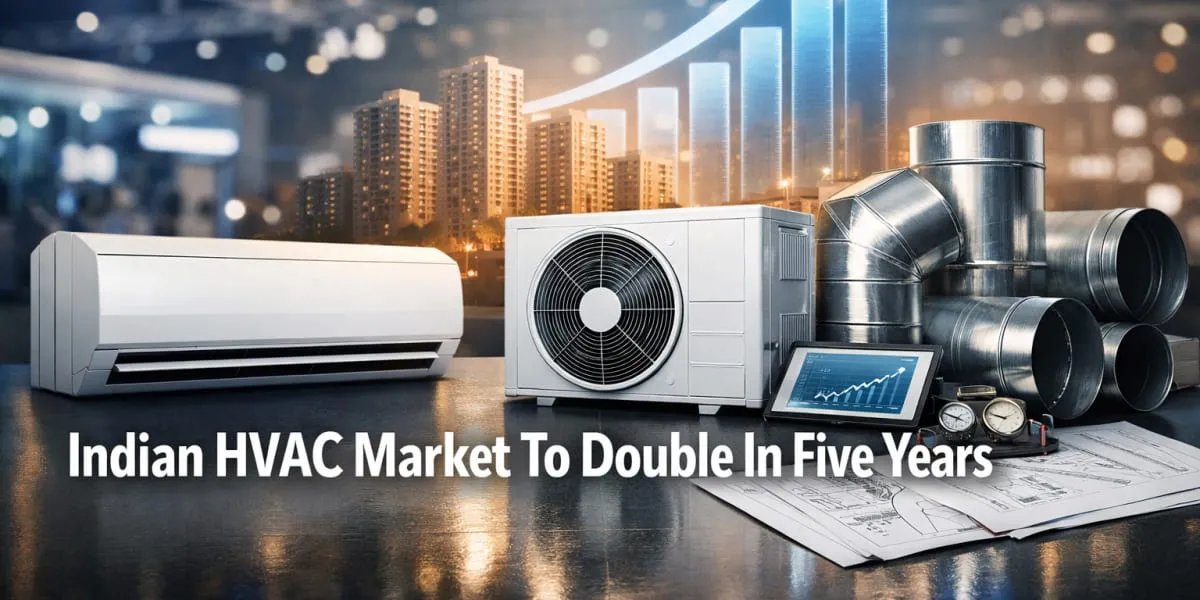
Industry leaders gathered at ACREX India 2026 said the Indian heating, ventilation and air conditioning market is set to grow at 15 per cent annually and could double within five years. Residential air conditioning penetration remains at 10 per cent, with sales expected to rise from 15 million (mn) units annually to 30 mn units by 2030, supported by policy measures such as a reduction in the goods and services tax. The sector is shifting focus from equipment sales to system lifecycles, prioritising energy efficiency, indoor air quality and environmental impact.

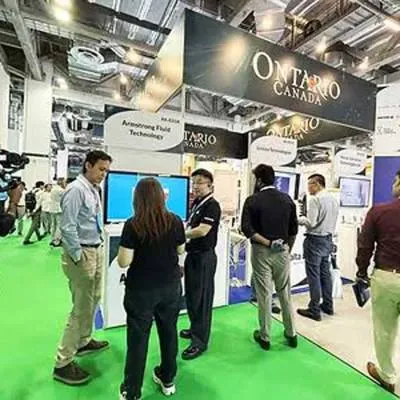
The exhibition, organised by ISHRAE, attracted more than 400 exhibitors from 40 nations and over 30,000 attendees and served as a hub for suppliers and policymakers. Delegates reported strong localisation trends and growing adoption of artificial intelligence driven predictive maintenance and smart controls to reduce downtime. Humidity optimised and super efficient cooling systems were cited as capable of cutting energy use by 60 per cent, supporting sustainability goals as housing and infrastructure expand.

Leaders from major manufacturers highlighted commercial and residential opportunities, noting that residential sales could rise from 15 mn to 30 mn units within the decade as demand expands. Statements from industry executives indicated that cooling demand in India could grow eightfold by 2038 and that installation, operation and maintenance account for nearly 90 per cent of total system costs, underscoring the value of lifecycle approaches. Manufacturers also emphasised localisation of component production to improve cost competitiveness and supply resilience.

Industry analysis pointed to technology innovations such as Tecumseh’s TC3 compressor platform delivering more than 30 per cent energy savings and the wider adoption of variable refrigerant flow systems and natural refrigerants. Organisers and companies said artificial intelligence enabled systems and predictive services are central to improving performance and reducing downtime while meeting indoor air quality standards. At the global level the HVAC market was reported to be projected to reach nearly 445 billion (bn) by 2033, with continued uptake of AI enabled systems and advanced cooling solutions.

Industry leaders gathered at ACREX India 2026 said the Indian heating, ventilation and air conditioning market is set to grow at 15 per cent annually and could double within five years. Residential air conditioning penetration remains at 10 per cent, with sales expected to rise from 15 million (mn) units annually to 30 mn units by 2030, supported by policy measures such as a reduction in the goods and services tax. The sector is shifting focus from equipment sales to system lifecycles, prioritising energy efficiency, indoor air quality and environmental impact. The exhibition, organised by ISHRAE, attracted more than 400 exhibitors from 40 nations and over 30,000 attendees and served as a hub for suppliers and policymakers. Delegates reported strong localisation trends and growing adoption of artificial intelligence driven predictive maintenance and smart controls to reduce downtime. Humidity optimised and super efficient cooling systems were cited as capable of cutting energy use by 60 per cent, supporting sustainability goals as housing and infrastructure expand. Leaders from major manufacturers highlighted commercial and residential opportunities, noting that residential sales could rise from 15 mn to 30 mn units within the decade as demand expands. Statements from industry executives indicated that cooling demand in India could grow eightfold by 2038 and that installation, operation and maintenance account for nearly 90 per cent of total system costs, underscoring the value of lifecycle approaches. Manufacturers also emphasised localisation of component production to improve cost competitiveness and supply resilience. Industry analysis pointed to technology innovations such as Tecumseh’s TC3 compressor platform delivering more than 30 per cent energy savings and the wider adoption of variable refrigerant flow systems and natural refrigerants. Organisers and companies said artificial intelligence enabled systems and predictive services are central to improving performance and reducing downtime while meeting indoor air quality standards. At the global level the HVAC market was reported to be projected to reach nearly 445 billion (bn) by 2033, with continued uptake of AI enabled systems and advanced cooling solutions.

Next Story
Infrastructure Urban

Greenply Advances Sustainability with ESG and Plantation Drive

Greenply Industries Limited has recently reinforced its sustainability commitment by integrating environmental, social and governance (ESG) principles across its operations. The company continues to align its growth strategy with environmental stewardship, resource efficiency and transparent governance.Guided by its ESG framework, Greenply focuses on measuring and managing its environmental and social impact while setting clear, measurable sustainability goals. This approach ensures transparency and drives continuous improvement across its business processes.A key highlight of its sustainabili..

Next Story
Infrastructure Urban

BIO-ROXX Boosts Efficiency at Mühlacker Biomethane Plant

The Mühlacker biomethane plant in Baden-Württemberg, Germany, has recently enhanced its operational efficiency by integrating the BIO-ROXX substrate preparation module from Wangen Pumps. The system improves substrate consistency, handles long fibres, and effectively removes solid contaminants, addressing the growing complexity of biogas feedstocks.The plant, established in 2007, processes around 30,000 tonnes of feedstock annually from over 120 suppliers, producing biomethane and fertilisers. With increasing use of long-fibre materials such as straw and manure, the existing dry infeed system..

Next Story
Infrastructure Urban

HIRECT Launches Copper Conductors for High-Power Transformers

Hind Rectifiers (HIRECT) has recently announced the commercial availability of advanced copper conductors from its expanded facility in Sinnar, Nashik. The new product portfolio includes Continuously Transposed Conductors (CTC), Paper Insulated Copper Conductors (PICC), and Enameled Paper Insulated Copper Conductors (EPICC), designed for high-power transformers, traction motors, and wound components.The conductors are engineered to support key infrastructure sectors such as power grids, railway systems, and industrial power networks, while also strengthening the company’s presence in global ..

Advertisement

Subscribe to Our Newsletter

Get daily newsletters around different themes from Construction world.

STAY CONNECTED

Advertisement

Advertisement

Advertisement