India's 17 Towns Host 575 Co-working Centres Amid Rising Demand
ECONOMY & POLICY

India's 17 Towns Host 575 Co-working Centres Amid Rising Demand

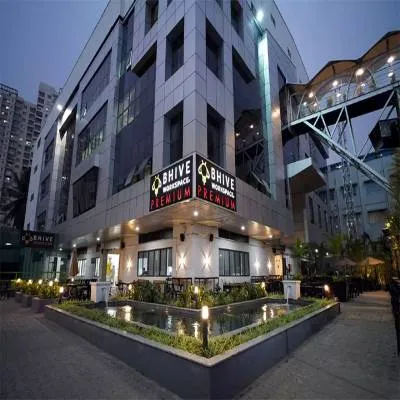
A report by Vestian, a US-based real estate consultant, finds that 17 towns in India host 575 co-working centres covering over eight point eight mn sq ft of flexible workspace. This concentration represents nearly 29 per cent of all such facilities across India and about nine per cent of pan-India flexible workspace stock. The average centre in these towns is 64 per cent smaller than centres in Tier I cities.

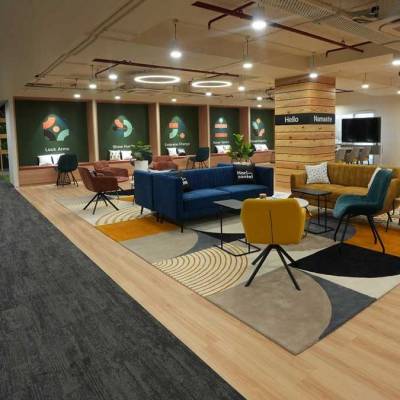
Vestian's study notes that co-working operators typically lease office space from developers and property owners and sub-lease workspaces to corporates, generally charging per desk. Operators are offering formats including dedicated desks, private offices, virtual offices and enterprise-grade managed office spaces to meet a range of corporate needs. The expansion reflects rising demand for managed office space outside metropolitan areas.

Industry executives cited by the report said that cost advantages, improving infrastructure and stronger connectivity are driving the shift to Tier II markets. Several established providers have expanded into locations such as Ahmedabad, Coimbatore, Jaipur, Kochi and Indore and continue to evaluate new opportunities in line with enterprise growth strategies. One provider reported occupancy levels of 90 per cent in its Tier II centres, indicating strong market acceptance. Reverse migration trends and lower cost of living were also identified as contributing factors.

Vestian observed that flex spaces in Tier II cities can deliver cost arbitrage of up to 50 per cent compared to metropolitan cities, with demand led by IT-ITeS followed by consulting, BFSI and engineering and manufacturing sectors. The report noted that more than 200 companies have established over 300 global capability centres across major Tier II cities, underlining the strategic appeal of these markets. Analysts expect Tier II towns to become important expansion hubs as flex ecosystems mature.

A report by Vestian, a US-based real estate consultant, finds that 17 towns in India host 575 co-working centres covering over eight point eight mn sq ft of flexible workspace. This concentration represents nearly 29 per cent of all such facilities across India and about nine per cent of pan-India flexible workspace stock. The average centre in these towns is 64 per cent smaller than centres in Tier I cities. Vestian's study notes that co-working operators typically lease office space from developers and property owners and sub-lease workspaces to corporates, generally charging per desk. Operators are offering formats including dedicated desks, private offices, virtual offices and enterprise-grade managed office spaces to meet a range of corporate needs. The expansion reflects rising demand for managed office space outside metropolitan areas. Industry executives cited by the report said that cost advantages, improving infrastructure and stronger connectivity are driving the shift to Tier II markets. Several established providers have expanded into locations such as Ahmedabad, Coimbatore, Jaipur, Kochi and Indore and continue to evaluate new opportunities in line with enterprise growth strategies. One provider reported occupancy levels of 90 per cent in its Tier II centres, indicating strong market acceptance. Reverse migration trends and lower cost of living were also identified as contributing factors. Vestian observed that flex spaces in Tier II cities can deliver cost arbitrage of up to 50 per cent compared to metropolitan cities, with demand led by IT-ITeS followed by consulting, BFSI and engineering and manufacturing sectors. The report noted that more than 200 companies have established over 300 global capability centres across major Tier II cities, underlining the strategic appeal of these markets. Analysts expect Tier II towns to become important expansion hubs as flex ecosystems mature.

Next Story
Infrastructure Transport

The Critical Path

In Ircon International Ltd v. Afcons Infrastructure Ltd, OMP (Comm) 279/2019, the Delhi High Court examined how delay and extension of time (‘EOT’) are to be assessed in construction contracts, particularly in the context of the ‘critical path’ while dealing with challenge to an arbitral award under Section 34 of the Arbitration and Conciliation Act 1996 (‘the Act’). The High Court’s observations regarding the critical path are of significant import for construction and infrastructure projects and related arbitration. The parties entered into a contract for construction of T..

Next Story
Infrastructure Urban

Urgently Wanted: 2 Million Workers!

Construction, India’s second largest employer by industry, employs about 50 million workers but could additionally absorb another 40 million workers, according to estimates shared by the Construction Skill Development Council of India (CSDCI) in 2023. Within this, citing trade estimates, Rahul Bahl, Managing Director, Krishna Buildestates, says the shortage of trained, skilled workers is currently about 2 million, and is expected to rise to 5 million by 2030.Not only is the construction industry struggling to find workers but construction labour productivity in India significantly trails g..

Next Story
Real Estate

144 Years in the Making!

1. A century-spanning construction storyConstruction began in 1882, making the Sagrada Família one of the longest-running architectural projects in modern history. Today, the project is overseen by the Fundació Junta Constructora del Temple Expiatori de la Sagrada Família, with Chief Architect Jordi Faulí leading its final construction phases.2. The world’s tallest church towerhe Sagrada Família in Barcelona reached its final height of 172.5 m (566 ft) on February 20, 2026, with the installation of the cross atop the Tower of Jesus Christ, making it the tallest church in the world...To ..

Advertisement

Subscribe to Our Newsletter

Get daily newsletters around different themes from Construction world.

STAY CONNECTED

Advertisement

Advertisement

Advertisement