India's Iron Ore Imports to Reach Seven-Year High in FY26
ECONOMY & POLICY

India's Iron Ore Imports to Reach Seven-Year High in FY26

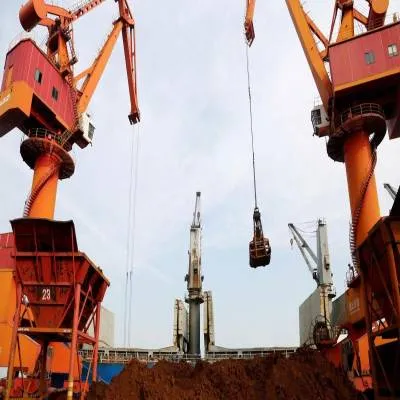
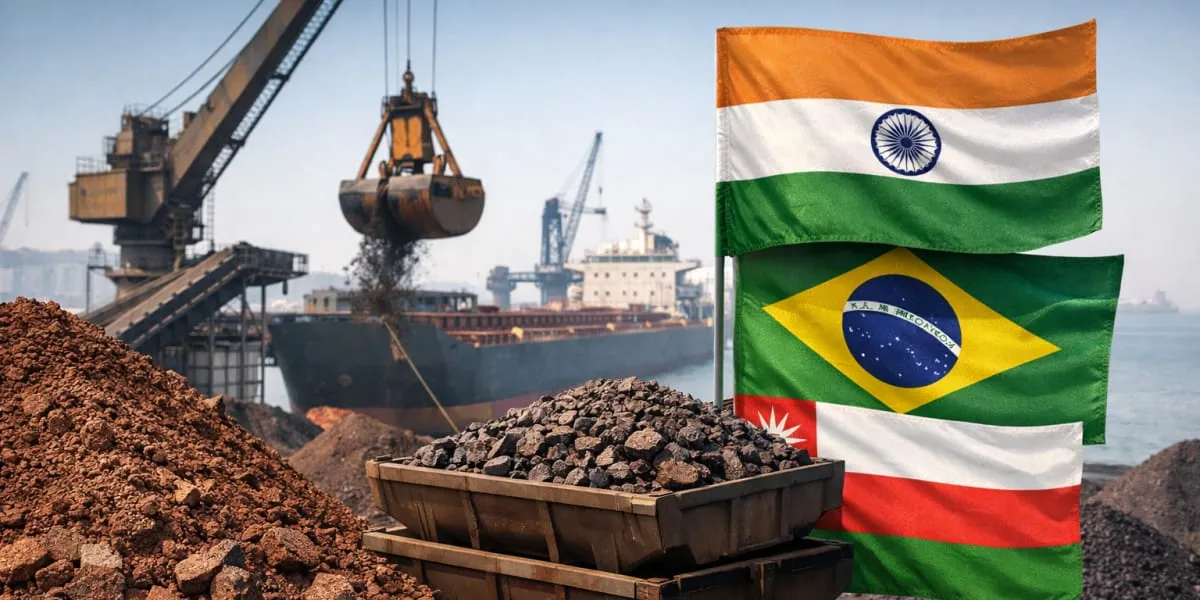
India's imports of iron ore are forecast to rise to a seven-year high in the fiscal year ending on March 31, with volumes seen at about 12 million (mn) to 14 million (mn) tonne (t) as a shortage of high-grade ore prompts additional shipments. The increase would more than double volumes from the previous year and reflects stronger procurement by JSW Steel for its mills in Maharashtra and Karnataka.\n\nIndustry sources said the bulk of imports this fiscal year came from Brazil and Oman, which together accounted for about 70 per cent of total shipments. Rare cargoes such as BHP's Jimblebar Fines were directed to India amid discounts and shifting Chinese demand, and market participants said opportunistic purchases supported higher volumes.\n\nDomestic iron ore output was expected to reach 305 mn t in 2025-26, up from 289 mn t in the prior year, as mines increased production. Exports were projected at about 29 mn t, up around 26 per cent, with roughly 85 per cent of shipments destined for China and largely comprising low-grade ore not used by domestic mills.\n\nPellet imports that had risen last year from Iran were expected to decline amid heightened geopolitical tensions in the Middle East and associated trade uncertainties. From April to February, pellet volumes were recorded at one point eight eight million (mn) t, about six times the level a year earlier, and analysts said ample domestic availability would constrain import demand.\n\nLooking ahead to the fiscal year beginning on April one, mines were expected to ramp up output while import needs would continue to depend on grade requirements and plant-level supply dynamics. Observers indicated that continued procurement by large mill groups and shifting global pellet flows would shape trade and influence price and supply stability across the steelmaking value chain.

India's imports of iron ore are forecast to rise to a seven-year high in the fiscal year ending on March 31, with volumes seen at about 12 million (mn) to 14 million (mn) tonne (t) as a shortage of high-grade ore prompts additional shipments. The increase would more than double volumes from the previous year and reflects stronger procurement by JSW Steel for its mills in Maharashtra and Karnataka.\n\nIndustry sources said the bulk of imports this fiscal year came from Brazil and Oman, which together accounted for about 70 per cent of total shipments. Rare cargoes such as BHP's Jimblebar Fines were directed to India amid discounts and shifting Chinese demand, and market participants said opportunistic purchases supported higher volumes.\n\nDomestic iron ore output was expected to reach 305 mn t in 2025-26, up from 289 mn t in the prior year, as mines increased production. Exports were projected at about 29 mn t, up around 26 per cent, with roughly 85 per cent of shipments destined for China and largely comprising low-grade ore not used by domestic mills.\n\nPellet imports that had risen last year from Iran were expected to decline amid heightened geopolitical tensions in the Middle East and associated trade uncertainties. From April to February, pellet volumes were recorded at one point eight eight million (mn) t, about six times the level a year earlier, and analysts said ample domestic availability would constrain import demand.\n\nLooking ahead to the fiscal year beginning on April one, mines were expected to ramp up output while import needs would continue to depend on grade requirements and plant-level supply dynamics. Observers indicated that continued procurement by large mill groups and shifting global pellet flows would shape trade and influence price and supply stability across the steelmaking value chain.

Next Story
Infrastructure Urban

Vedanta Reports Record Profit in FY26

Vedanta reported its best-ever financial performance in FY26, with profit after tax of Rs 250.96 billion and revenue of Rs 1.74 trillion, supported by operational excellence across businesses. The company delivered nearly 50 per cent total shareholder return and declared a dividend of Rs 34 per share.Vedanta said its net debt-to-EBITDA improved to 0.95x, strengthening financial flexibility. Its demerger, effective 1 May 2026, is aimed at unlocking value by creating focused businesses across aluminium, oil and gas, power, iron and steel, zinc, copper, nickel and ferro alloys.Vedanta Aluminium p..

Next Story
Infrastructure Energy

KEC Wins Orders Worth Rs 10.02 Billion

KEC International, an RPG Group company and global infrastructure EPC major, has secured new orders worth Rs 10.02 billion across its key businesses.In Transmission and Distribution, the company has won orders for projects in India and the Americas. These include ±500 kV HVDC transmission lines from a private developer in Western India, 132 kV cabling works from a steel producer in Eastern India, and the supply of towers, hardware and poles in the Americas.The renewables business has secured an order for a 100+ MW wind project in Southern India from a private developer. In transportation, KEC..

Next Story
Infrastructure Urban

Hindustan Zinc Opens Cath Lab in Udaipur

Hindustan Zinc recently inaugurated a state-of-the-art Cardiac Catheterisation Laboratory at Rabindranath Tagore Hospital, Udaipur. The facility was inaugurated by Gulab Chand Kataria, Governor of Punjab and Administrator of Chandigarh, in the presence of local MLAs, RNT Hospital leadership and senior Hindustan Zinc officials.The Cath Lab follows an MoU signed earlier between Hindustan Zinc and RNT Hospital for the redevelopment and upgradation of the hospital into a future-ready, multi-speciality healthcare facility. Equipped with advanced cardiac technology, it will support minimally invasiv..

Advertisement

Subscribe to Our Newsletter

Get daily newsletters around different themes from Construction world.

STAY CONNECTED

Advertisement

Advertisement

Advertisement