INS Taragiri Commissioned Into the Indian Navy
ECONOMY & POLICY

INS Taragiri Commissioned Into the Indian Navy

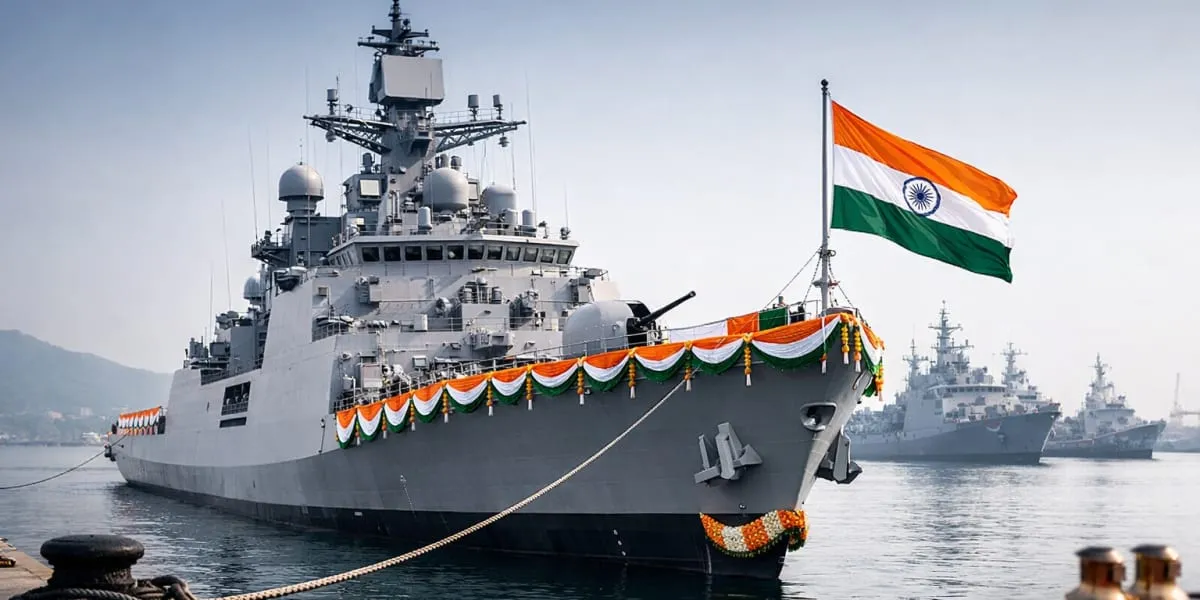
INS Taragiri was commissioned into the Indian Navy (IN) at Visakhapatnam on April three, 2026 by Raksha Mantri Rajnath Singh, marking a significant milestone for India's maritime security. The ship was indigenously built by Mazagon Dock Shipbuilders Limited (MDL) and represents a further step in naval modernisation. The commissioning ceremony underscored the government's focus on self-reliance in defence manufacturing.

Built as the third vessel in the Project 17A series, Taragiri reflects advances in indigenous warship design and construction led by the Warship Design Bureau and executed by MDL, Mumbai. MDL carried out the detailed design and construction while the Warship Overseeing Team, Mumbai supervised the build process. The collaborative effort involved the Indian Navy team and a broad industrial ecosystem.

The ship is 149.02 metre long and 17.8 metre wide with a displacement of 6400 t, and is propelled by two gas turbines and two main diesel engines in a combined diesel or gas configuration, enabling speeds of over 28 knots at design displacement. Taragiri incorporates stealth features, advanced weapon systems, modern sensors and high levels of automation to improve operational efficiency. As part of the Project 17A class, the vessel will enhance surveillance and operational reach across the Indian Ocean Region.

MDL achieved a reduction of 14 per cent in the build period compared with the first of class, completing sea trials and final machinery trials within three months of basin trials, supported by the Warship Overseeing Team and original equipment manufacturers. Combat systems including SRGM, AK 630, Kavach and IRL reached operational levels prior to delivery and the vessel completed a successful test firing of the Brahmos missile, a first for the class. The commissioning, with 75 per cent indigenisation, reinforces India's Aatmanirbhar Bharat objective and underlines the expanding capability of domestic shipbuilding and associated MSME supply chains to support national maritime power.

"Join industry leaders at RAHSTA Expo, India's premier platform for roads, highways and traffic infrastructure. Register now to explore innovations, network with experts and shape the future of mobility."

INS Taragiri was commissioned into the Indian Navy (IN) at Visakhapatnam on April three, 2026 by Raksha Mantri Rajnath Singh, marking a significant milestone for India's maritime security. The ship was indigenously built by Mazagon Dock Shipbuilders Limited (MDL) and represents a further step in naval modernisation. The commissioning ceremony underscored the government's focus on self-reliance in defence manufacturing. Built as the third vessel in the Project 17A series, Taragiri reflects advances in indigenous warship design and construction led by the Warship Design Bureau and executed by MDL, Mumbai. MDL carried out the detailed design and construction while the Warship Overseeing Team, Mumbai supervised the build process. The collaborative effort involved the Indian Navy team and a broad industrial ecosystem. The ship is 149.02 metre long and 17.8 metre wide with a displacement of 6400 t, and is propelled by two gas turbines and two main diesel engines in a combined diesel or gas configuration, enabling speeds of over 28 knots at design displacement. Taragiri incorporates stealth features, advanced weapon systems, modern sensors and high levels of automation to improve operational efficiency. As part of the Project 17A class, the vessel will enhance surveillance and operational reach across the Indian Ocean Region. MDL achieved a reduction of 14 per cent in the build period compared with the first of class, completing sea trials and final machinery trials within three months of basin trials, supported by the Warship Overseeing Team and original equipment manufacturers. Combat systems including SRGM, AK 630, Kavach and IRL reached operational levels prior to delivery and the vessel completed a successful test firing of the Brahmos missile, a first for the class. The commissioning, with 75 per cent indigenisation, reinforces India's Aatmanirbhar Bharat objective and underlines the expanding capability of domestic shipbuilding and associated MSME supply chains to support national maritime power.

Next Story
Real Estate

Pecan Realty Completes Rs 1.5 Billion Transactions

Pecan Realty has recently completed four institutional transactions worth over Rs 1.5 billion over the past two years, strengthening its position as an execution-led real estate platform. The deals include resolution-led acquisitions, structured finance transactions and capital partnerships across its development portfolio.The transactions covered acquisitions through the National Company Law Tribunal process and helped provide repayment or exits to both private and public sector lenders. The company said the deals demonstrate its ability to resolve complex project situations, work with instit..

Next Story
Real Estate

SNN Estates Expands North Bengaluru Housing Project

SNN Estates has announced an expansion of its SNN Estates Felicity residential project in North Bengaluru following strong buyer demand, with 75 per cent of the first-phase inventory sold within three days of launch.The developer will add 76 apartments in the new phase, taking the project's estimated revenue potential to around Rs 1,000 crore upon completion of Phase 2.Spread across 6.5 acres in Rachenahalli, near Manyata Tech Park, the project comprises 604 apartments in 1.5, 2, 2.5, 3 and 4 BHK configurations. The development includes a 50,000-sq-ft clubhouse with amenities such as sports co..

Next Story
Infrastructure Urban

SCG Drives ASEAN Industrial Transformation Strategy

SCG is strengthening its focus on ASEAN as a key growth region by advancing industrial transformation, enhancing competitiveness and building resilient regional value chains. Thammasak Sethaudom, President and Chief Executive Officer, SCG, highlighted the need for industries to continuously develop capabilities, strengthen resilience and deepen regional cooperation to achieve sustainable long-term growth.SCG views ASEAN as an important growth engine alongside China, supported by favourable demographics, trade connectivity and investment flows. With ASEAN’s GDP projected to grow by around 4.7..

Advertisement

Subscribe to Our Newsletter

Get daily newsletters around different themes from Construction world.

STAY CONNECTED

Advertisement

Advertisement

Advertisement