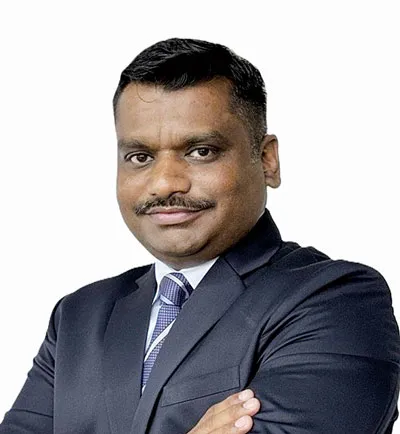
As infrastructure projects grow larger and more complex, their risk profiles are evolving beyond physical damage. Underinsurance, business interruption, supply-chain disruptions, climate volatility, surety and transactional exposures can all have significant financial consequences. Mohan Agrawal, Director and Business Lead - Construction, Infra & Warehousing, EDME Insurance Brokers, discusses these emerging risks and the gaps in conventional insurance practices in a conversation with KAVITA PARAB, CW. He explains why infrastructure players need to view insurance not merely as a cost, but as a strategic tool for protecting balance sheets and ensuring business continuity.It is often said that risk is unavoidable in infrastructure. In your experience, what is the single biggest indicator that a project developer is not financially prepared for a major setback?The biggest indicator is inadequate insurance coverage, particularly gaps in the scope of the policy or insufficient coverage for a major loss. An insurance programme should be designed to protect against a major loss, not just routine losses. We see policies where the sum insured, deductibles or critical extensions are inadequate. Specialised covers for complex risks, such as design defects and underground mining, are also often missing. These can become extremely important when a major loss occurs. Insurance is meant to protect the balance sheet at the end of the year or the project. Even some of the largest construction and infrastructure companies in the country lack critical coverages.Given EDME’s experience in managing insurance for major PSU power projects through UIB India, what are the most critical technical risks that developers overlook when structuring insurance for large-scale energy and infrastructure projects?Insurance is still often bought in a traditional manner, without adequately assessing the specific nature of the project and its risks. In the power sector, for instance, the type of power plant and fuel used can significantly influence the risk profile. At EDME, we first understand the project in detail – from the principal to the contractor and subcontractors, including their respective roles and responsibilities. We then assess the physical risks and structure the programme accordingly.The major areas often overlooked are design and technology failure, supply-chain and delay risks, and business interruption exposure. Many projects do not opt for Advance Loss of Profits (ALOP) or business interruption covers, despite their importance.Surety bonds are a key part of EDME’s Financial & Credit Specialty offering. How can contractors use surety bonds to optimise their balance sheets and preserve working capital compared with traditional bank guarantees?Surety has become an important product for India’s infrastructure sector. Earlier, contractors had to provide significant bank guarantees for bids, performance, advance mobilisation and other contractual requirements, which blocked substantial capital. Surety bonds reduce dependence on bank guarantees and bank limits, freeing up capacity and allowing contractors to deploy capital more efficiently, support new project opportunities and maintain stronger liquidity.It is difficult to quantify adoption because the market includes both large and small players, including unrated contractors. Insurance companies generally do not extend surety bonds to unrated players, while contractors with ratings of BBB and above have better access.There is significant demand because contractors want to avoid tying up capital through bank guarantees. Pricing is also becoming more competitive, as the industry has not seen significant claims in this line of business.With rising climate volatility, how are Indian infrastructure players beginning to adopt parametric insurance? Is the industry ready to move beyond traditional indemnity-based claims for weather-related disruptions?Parametric insurance is still relatively new for contractors. It provides a quick, predictable payout based on predefined weather triggers and can help manage cash-flow disruptions. However, contractors often see insurance as an expense, and parametric covers can be comparatively more expensive. Despite increasingly erratic weather conditions, some clients remain reluctant to spend on such covers because they believe their major risks are already covered under conventional policies. There is, however, considerable potential. We are in discussions with several states looking at parametric insurance at the state level. For individual contractors working on highly competitive bids – perhaps at a discount of 12 per cent or 30 per cent – the additional cost of a parametric cover can be difficult to absorb.Infrastructure projects depend on complex and time-sensitive supply chains. How can business interruption and marine & cargo covers be structured to ensure that a disruption – whether a delay in critical equipment or a bottleneck at a warehouse – does not escalate into a project-wide financial crisis?Marine or cargo insurance is critical because infrastructure projects often depend on imported raw materials, equipment and finished goods. International covers such as ‘delay in start-up’ (DSU) and other extensions can be associated with a marine policy to provide protection against delays caused by disruptions. Every infrastructure project has a different risk profile. Roads, underground mining, tunnelling, bridges and dams cannot be assessed with the same approach, particularly when specialised equipment is involved.Tunnel boring machines (TBMs) are one example. Where equipment is imported, a transit delay can have significant financial consequences. Appropriate extensions can provide protection for losses arising from such delays, including loss of profits or advance loss of profits exposure under the project policy.With developers and investors increasingly acquiring ongoing or distressed projects, inherited legal and contractual liabilities can pose significant risks. What transactional risk solutions can help protect buyers against exposures that may surface after an acquisition?Products covering mergers & acquisitions, tax liabilities and contingent risks can protect buyers against unknown or inherent liabilities acquired as part of a transaction. They provide greater certainty and protect the buyer’s balance sheet against unexpected post-acquisition costs or previously undisclosed liabilities. EDME has a dedicated vertical with specialists handling this line of business. As contractors seek funds to sustain operations or continue projects, they may sell ongoing or completed projects. M&A and related transactional risk insurance can provide protection to the buyer against covered undisclosed liabilities.When a project is underinsured or a critical exposure falls outside its insurance programme, where does the financial impact typically surface first – in cash flows, debt servicing?It typically hits cash flow first, because the project has to fund the uninsured or underinsured loss. This can subsequently affect business continuity, debt servicing and contractual obligations. Underinsurance is a very relevant issue today. Contractors sometimes reduce the sum insured or exclude certain values to bring down the premium. We advise clients to ensure adequate coverage because the incremental premium is relatively small compared with the potential financial impact of a major loss. The policy period is equally important. If a project is scheduled for completion in 18 months, we advise clients to consider a longer policy period – around 22-24 months, where appropriate. Extending a policy can become difficult and more expensive after a claim. It is therefore better to build adequate time into the original insurance programme.How does the role of an insurance broker evolve when advising clients on increasingly complex infrastructure risks? As an independent firm like EDME, how do you translate that complexity into greater clarity and better risk outcomes for the client?I believe the role of an insurance broker has changed significantly. Infrastructure risks today are not limited to just property damage or construction delays. Projects are larger, contracts are more complex, financing structures are tighter, and one incident can have a much wider financial impact. Therefore, the broker has to understand the project and the client’s business first, and then look at insurance.At EDME, we try to keep this approach simple. Our job is to take a complex risk and explain it to the client in terms that are practical and relevant to their business—what can go wrong, what the financial impact could be, what is covered, and where the gaps may be.Being independent also helps us take an objective view. We are not trying to fit a client into a particular insurance product. We look at the risk first and then work with the market to structure the most appropriate programme, while keeping the client’s contractual, financial and operational requirements in mind.For me, the real test of an insurance programme is not how good it looks at renewal or how low the premium is. It is how effectively it responds when a major loss happens. If the client is able to understand the protection they have and recover quickly after an incident, that is where the broker has genuinely added value.So, our role at EDME is essentially to bring clarity to complexity and make insurance a meaningful part of the client’s overall risk management, rather than just another procurement exercise.The real value of an insurance programme is tested when a major incident occurs. What determines whether the claims process helps a project recover and resume operations quickly, rather than turning the loss into a prolonged financial and operational crisis?From an insurance broker/consultant perspective, the claims process starts much before a loss occurs. The first thing is to structure the insurance programme properly—clear coverage, appropriate limits, realistic deductibles and policy wordings that reflect the actual risks and contractual obligations of the project.When a major incident happens, the consultant’s role is to bring structure to what can otherwise become a very difficult situation. There are usually multiple stakeholders involved—the client, insurer, surveyor, contractors, lenders and sometimes several insurers. Our job is to ensure that everyone is working with the same understanding of the loss and that the claim is supported with the right information and documentation.For an infrastructure project, speed is particularly important because a delay in restoration can itself create a significant financial impact. We therefore focus not only on establishing the quantum of the physical loss, but also on understanding the wider business interruption and project impact.In my experience, the best claims outcomes come when the insurance programme has been designed with the claim scenario in mind, rather than simply with the objective of getting the most competitive premium. Good preparation, clear policy language, proper documentation and active coordination during the claim can make the difference between a smooth recovery and a prolonged dispute.Ultimately, our responsibility as consultants is to stand alongside the client when the policy is actually tested and make sure the insurance programme delivers the protection that was intended.