IATA Seeks Transparency, Consultation over Mumbai Airport Plan
AVIATION & AIRPORTS

IATA Seeks Transparency, Consultation over Mumbai Airport Plan

The International Air Transport Association (IATA) has called for consultation and transparency in preparing a revised plan for the partial transfer of international flights from Mumbai airport to Navi Mumbai International Airport. The appeal followed a meeting between the airport operator, airlines and the civil aviation ministry on Tuesday.

Adani Airport Holdings, which operates Mumbai and Navi Mumbai airports, had asked carriers to cut 33 per cent of their international services at Mumbai or discontinue them from October 25. Airlines opposed the proposal, which is linked to the planned redevelopment of Terminal 1 (T1) at Mumbai airport from January 2027.

The ministry has proposed deferring the shift by a few weeks and asked airlines and the operator to submit a firm transition plan. Representatives of the parties are scheduled to meet on October 13. IATA said any revised approach should be agreed through consultation, after stakeholders assess capacity requirements, the basis for any reduction and alternatives to limit disruption to passengers and airline operations.

IATA represents more than 370 airlines, including Indian carriers, and said it supports T1 redevelopment, modernisation of Mumbai airport and development of Navi Mumbai International Airport. It said decisions affecting capacity should rely on a transparent demand-capacity assessment, meaningful consultation with affected airlines and adequate time for workable arrangements. These principles are reflected in Ministry of Civil Aviation slot allocation guidelines and worldwide airport slot guidance.

Mumbai airport has two terminals, with T1 handling domestic operations and T2 serving international flights. Mumbai International Airport (MIAL) communicated to 46 airlines that 265 weekly overseas services would be temporarily discontinued from the start of the winter schedule on October 25, compared with 770 weekly international flights currently operated from T2. The vacated slots are intended to support the transition of domestic traffic from T1. Adani Airport Holdings said 91 per cent of passenger traffic would remain unaffected, while redevelopment would raise T1 capacity from 15 mn to 20 mn passengers per annum.

The International Air Transport Association (IATA) has called for consultation and transparency in preparing a revised plan for the partial transfer of international flights from Mumbai airport to Navi Mumbai International Airport. The appeal followed a meeting between the airport operator, airlines and the civil aviation ministry on Tuesday. Adani Airport Holdings, which operates Mumbai and Navi Mumbai airports, had asked carriers to cut 33 per cent of their international services at Mumbai or discontinue them from October 25. Airlines opposed the proposal, which is linked to the planned redevelopment of Terminal 1 (T1) at Mumbai airport from January 2027. The ministry has proposed deferring the shift by a few weeks and asked airlines and the operator to submit a firm transition plan. Representatives of the parties are scheduled to meet on October 13. IATA said any revised approach should be agreed through consultation, after stakeholders assess capacity requirements, the basis for any reduction and alternatives to limit disruption to passengers and airline operations. IATA represents more than 370 airlines, including Indian carriers, and said it supports T1 redevelopment, modernisation of Mumbai airport and development of Navi Mumbai International Airport. It said decisions affecting capacity should rely on a transparent demand-capacity assessment, meaningful consultation with affected airlines and adequate time for workable arrangements. These principles are reflected in Ministry of Civil Aviation slot allocation guidelines and worldwide airport slot guidance. Mumbai airport has two terminals, with T1 handling domestic operations and T2 serving international flights. Mumbai International Airport (MIAL) communicated to 46 airlines that 265 weekly overseas services would be temporarily discontinued from the start of the winter schedule on October 25, compared with 770 weekly international flights currently operated from T2. The vacated slots are intended to support the transition of domestic traffic from T1. Adani Airport Holdings said 91 per cent of passenger traffic would remain unaffected, while redevelopment would raise T1 capacity from 15 mn to 20 mn passengers per annum.

Related Stories

Gold Stories

Next Story
Equipment

“Road maintenance technologies will play a bigger role in India.”

Interview with Magesh Swaminathan, CEO, Infraserve GlobalInfraserve Global was recently launched as a separate brand. Could you tell us more about the company and its journey?InfraServe Global (ISG) is part of the Gainwell Group, which carries an 82-year legacy in the construction equipment sector through its Caterpillar dealership, TIL cranes and other product lines. ISG earlier operated as the Allied Business division out of our Pune facility and has now been carved out into a dedicated business entity — InfraServe Global.ISG has been officially launched at bauma CONEXPO India, marking a n..

Next Story
Real Estate

India's Real Estate Investment Shifts to Income Growth: JLL

India's commercial real estate market is entering a new phase of value creation, with investor returns increasingly driven by rental income growth, operational efficiency and strategic asset selection rather than capitalisation rate compression, according to JLL's report, A Decade of Change: The Institutionalization of Commercial Real Estate in India.The report indicates that high-quality office assets can continue to deliver double-digit unlevered internal rates of return (IRR) over a typical five-year investment period, supported by resilient net operating income (NOI) growth and sustained o..
Next Story
Infrastructure Urban

Copeland Expands Scroll Compressor Manufacturing in India

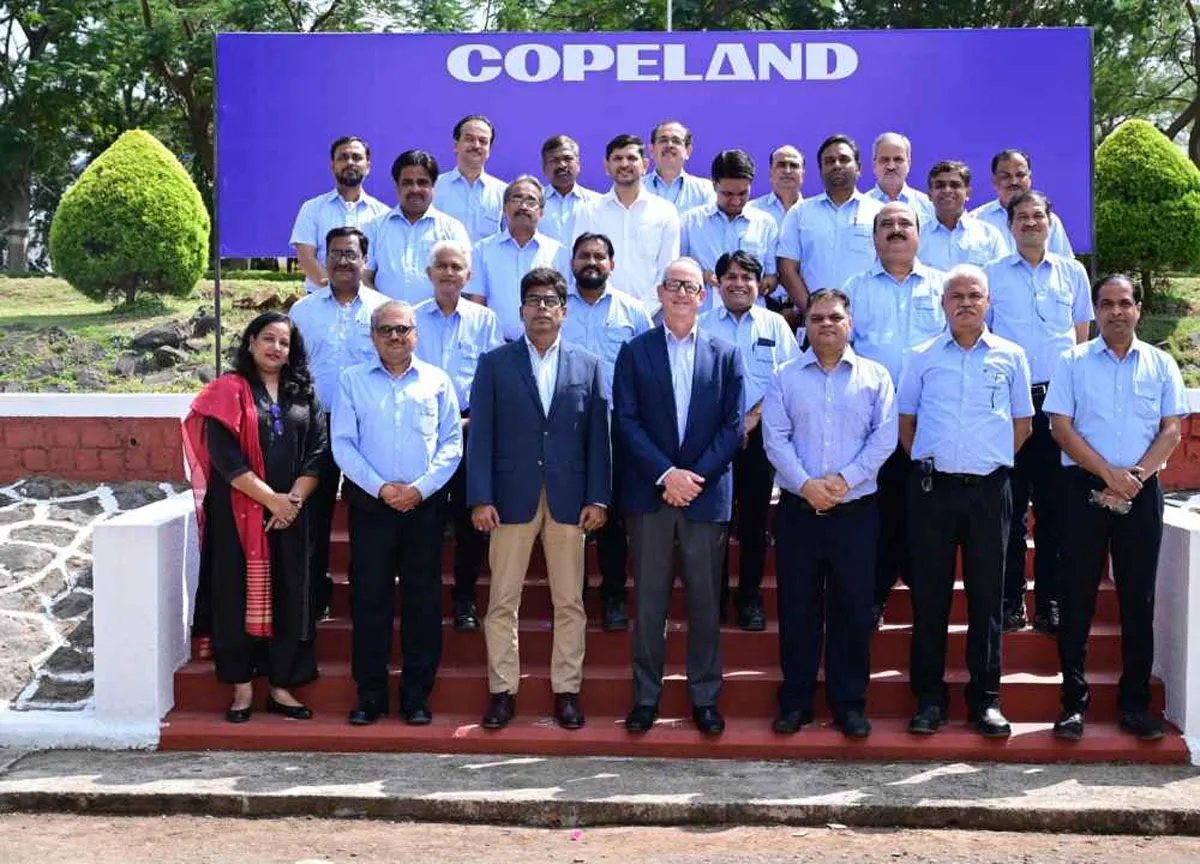
Copeland has expanded its manufacturing capabilities in Atit, Maharashtra, becoming the first company to manufacture scroll compressors in India. Production began in December 2025, marking a significant milestone in strengthening domestic manufacturing capabilities for heating, ventilation, air conditioning and refrigeration (HVACR) applications.The expansion forms part of Copeland's Rs 5 billion investment initiative announced in 2024, which also includes strengthening its engineering and innovation capabilities in Pune. The investment aims to support India's growing HVACR market while enhanc..

Advertisement

Subscribe to Our Newsletter

Get daily newsletters around different themes from Construction world.

STAY CONNECTED

Advertisement

SPECIAL OFFER
QR Code