ITA launches India programme to boost clean industry projects
ECONOMY & POLICY

ITA launches India programme to boost clean industry projects

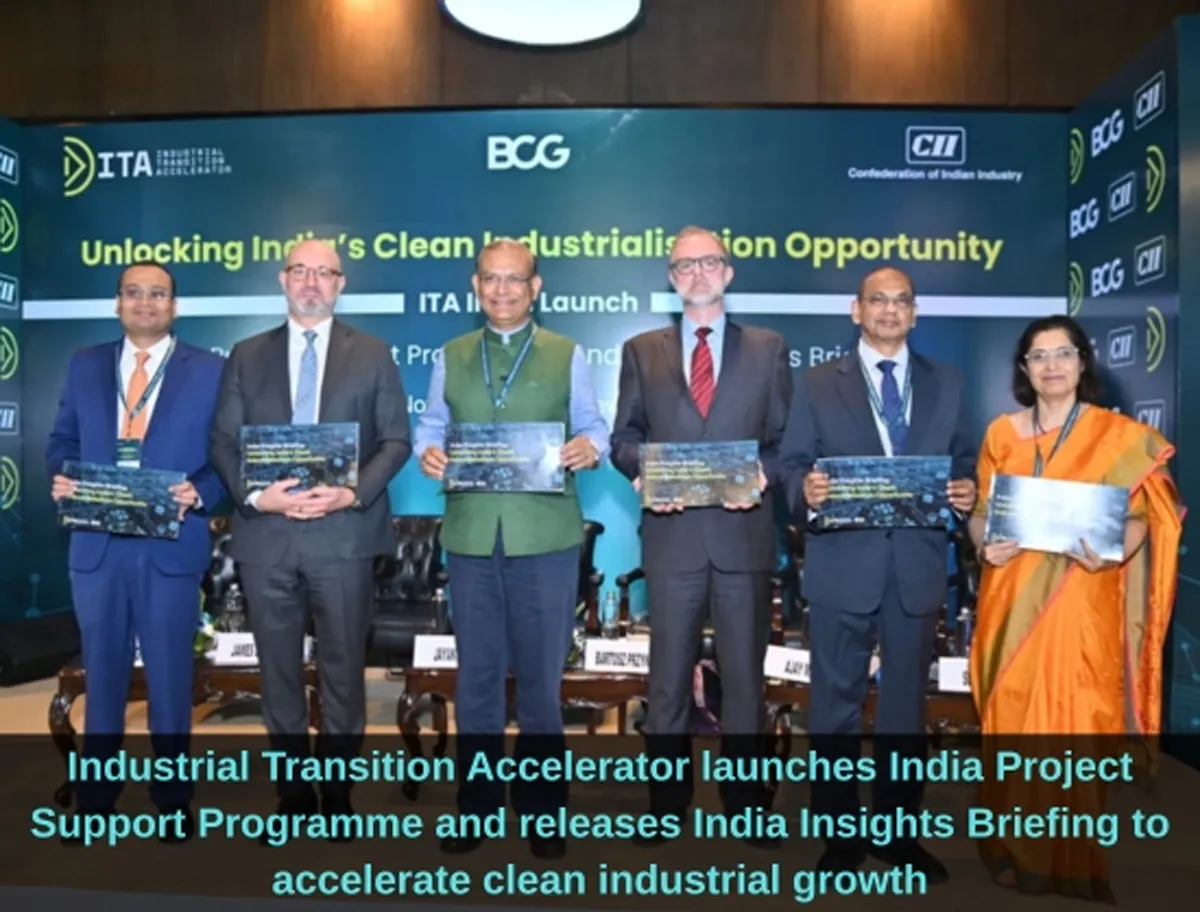
The Industrial Transition Accelerator (ITA) has launched its India Project Support Programme and released the India Insights Briefing: Unlocking India’s Clean Industrialisation Opportunity, developed with Boston Consulting Group (BCG). The initiative seeks to accelerate investment-ready decarbonisation projects and drive low-carbon growth across India’s key industrial sectors.

A global multi-stakeholder initiative launched at COP28, the ITA’s new programme aims to fast-track flagship industrial projects in sectors such as chemicals, steel, cement, aluminium, aviation, and shipping, supporting India’s transition to clean, sustainable growth.

India’s Clean Industrial Potential

The India Insights Briefing, created in collaboration with BCG, highlights India’s vast clean industrial opportunity. It identifies a pipeline of 65 commercial-scale projects with potential investment exceeding USD 150 billion (around Rs 12.5 trillion), capable of abating 160–175 million tonnes of CO? equivalent each year and generating over 200,000 direct and indirect jobs.

According to the report, India has the world’s third-largest pipeline of low- and near-zero-emission industrial projects, following China and the US — underscoring the country’s growing leadership in sustainable industrial development. However, only six projects have reached the Final Investment Decision (FID) stage so far. Challenges such as uncertain clean demand, high capital costs, regulatory delays, and under-developed infrastructure continue to slow progress.

Driving Execution and Investment

The ITA’s India Project Support Programme aims to overcome these barriers by aligning policy, finance, and demand to move flagship projects toward bankable status.

James Schofield, Managing Director of the Industrial Transition Accelerator, said, “India’s industrial transition is crucial to both its domestic growth and the global decarbonisation effort. With one of the largest project pipelines worldwide, the challenge now lies in execution. This programme will help unlock demand, de-risk finance, and fast-track projects that can cement India’s leadership in clean manufacturing.”

Sumit Gupta, APAC Leader – Climate and Sustainability Practice, Boston Consulting Group, noted, “India stands at a pivotal moment in the global clean industrial transformation. The ITA India Project Support Programme can help mobilise stakeholders and accelerate the next wave of investment-ready projects across clean fuels, green materials, and emerging manufacturing value chains.”

Yash Kashyap, India Lead at ITA, added, “The next 24 months will determine which of India’s clean industry projects move from plans to plants. Our focus is on integrating demand, finance, and infrastructure to make these projects investment-ready.”

Building a Foundation for Clean Growth

Through the India Project Support Programme, ITA will promote clean demand creation through voluntary and regulatory measures, enhance project viability via blended finance and de-risking mechanisms, and support shared infrastructure for hydrogen and carbon networks. The programme will run through 2026, preparing selected projects for investment while strengthening the broader clean industrial ecosystem.

The Industrial Transition Accelerator (ITA) has launched its India Project Support Programme and released the India Insights Briefing: Unlocking India’s Clean Industrialisation Opportunity, developed with Boston Consulting Group (BCG). The initiative seeks to accelerate investment-ready decarbonisation projects and drive low-carbon growth across India’s key industrial sectors. A global multi-stakeholder initiative launched at COP28, the ITA’s new programme aims to fast-track flagship industrial projects in sectors such as chemicals, steel, cement, aluminium, aviation, and shipping, supporting India’s transition to clean, sustainable growth. India’s Clean Industrial Potential The India Insights Briefing, created in collaboration with BCG, highlights India’s vast clean industrial opportunity. It identifies a pipeline of 65 commercial-scale projects with potential investment exceeding USD 150 billion (around Rs 12.5 trillion), capable of abating 160–175 million tonnes of CO? equivalent each year and generating over 200,000 direct and indirect jobs. According to the report, India has the world’s third-largest pipeline of low- and near-zero-emission industrial projects, following China and the US — underscoring the country’s growing leadership in sustainable industrial development. However, only six projects have reached the Final Investment Decision (FID) stage so far. Challenges such as uncertain clean demand, high capital costs, regulatory delays, and under-developed infrastructure continue to slow progress. Driving Execution and Investment The ITA’s India Project Support Programme aims to overcome these barriers by aligning policy, finance, and demand to move flagship projects toward bankable status. James Schofield, Managing Director of the Industrial Transition Accelerator, said, “India’s industrial transition is crucial to both its domestic growth and the global decarbonisation effort. With one of the largest project pipelines worldwide, the challenge now lies in execution. This programme will help unlock demand, de-risk finance, and fast-track projects that can cement India’s leadership in clean manufacturing.” Sumit Gupta, APAC Leader – Climate and Sustainability Practice, Boston Consulting Group, noted, “India stands at a pivotal moment in the global clean industrial transformation. The ITA India Project Support Programme can help mobilise stakeholders and accelerate the next wave of investment-ready projects across clean fuels, green materials, and emerging manufacturing value chains.” Yash Kashyap, India Lead at ITA, added, “The next 24 months will determine which of India’s clean industry projects move from plans to plants. Our focus is on integrating demand, finance, and infrastructure to make these projects investment-ready.” Building a Foundation for Clean Growth Through the India Project Support Programme, ITA will promote clean demand creation through voluntary and regulatory measures, enhance project viability via blended finance and de-risking mechanisms, and support shared infrastructure for hydrogen and carbon networks. The programme will run through 2026, preparing selected projects for investment while strengthening the broader clean industrial ecosystem.

Next Story
Infrastructure Transport

Delhi Airport to Finalise 20-Year Master Plan

Delhi International Airport Ltd (DIAL) is finalising a 20-year master plan to guide long term infrastructure and operational development at Indira Gandhi International Airport, an official said. The operator expects the plan to reflect changes in the airline industry, shifts in the competitive landscape and evolving infrastructure requirements across terminals, airside and support services. The official said the document is likely to be ready in the next two to two-and-a-half months as the operator moves through planning stages. The plan will be prepared after consultations with airport users ..

Next Story
Real Estate

Aadhar Housing Finance Targets Rs 500 bn AUM By FY29

Aadhar Housing Finance has set a target to raise its asset under management to Rs 500 billion (bn) by the end of FY29, aiming to achieve this over the next three financial years through an 18-20 per cent loan growth trajectory. The firm focuses on the low-income segment with a ticket size of less than Rs 1.5 million (mn) and has relied on that segment to drive expansion. The company closed FY26 with an AUM of Rs 305.71 bn, reflecting the expansion in recent years, and it reported a net profit rise of 22 per cent to Rs 11.08 bn. Management indicated that gross non-performing assets stood at 1.0..

Next Story
Infrastructure Energy

Government to Launch Coal Gasification Urea Policy

The government will unveil a coal gasification based policy for urea production within one month, aiming to promote the use of domestic coal feedstock in synthetic fertiliser manufacture. The move seeks to enhance self reliance in fertiliser supply and to provide an alternative route to natural gas based synthesis. Officials said the policy will set out technical standards, permitting norms and incentives for projects that adopt coal gasification technology. It will aim to attract investments from both public sector undertakings and private manufacturers. The scheme will address logistical and..

Advertisement

Subscribe to Our Newsletter

Get daily newsletters around different themes from Construction world.

STAY CONNECTED

Advertisement

Advertisement

Advertisement