Jindal Stainless Commissions One Point Two mn tpa Plant in Indonesia
ECONOMY & POLICY

Jindal Stainless Commissions One Point Two mn tpa Plant in Indonesia

Jindal Stainless has commissioned a new manufacturing plant in Indonesia with one point two million tonnes per annum (mn tpa) capacity, marking a significant expansion of its global stainless production. The plant commenced operations following completion of construction and commissioning activities and will form part of the company's international asset base. The development was presented as a strategic step to enhance supply resilience and to diversify production footprints outside its domestic market. Management indicated that the new facility aligns with its medium term growth objectives and capacity planning.

The plant is expected to strengthen the company's ability to serve markets in Southeast Asia and beyond by shortening supply chains and reducing delivery times for regional customers. Increased local production will allow for greater responsiveness to demand fluctuations and support the company's export strategy without relying solely on long distance shipments. The facility will integrate with existing logistics and distribution networks to improve overall operational efficiency. This expansion is intended to complement the firm's other production centres and to balance global throughput.

Local economic benefits are likely to include employment opportunities across operations, maintenance and administration functions as the facility moves to full scale production. The company will engage with local suppliers and service providers to support day to day activities and to develop regional vendor capacities. Skill development and training programmes are expected to be part of the operational roll out to ensure workforce readiness and to maintain production standards. Stakeholders will monitor the ramp up period to assess output stability and market impact.

Looking ahead, the new plant is anticipated to contribute to the global stainless steel supply and to provide a platform for further capacity additions if market conditions remain favourable. The company will continue to evaluate demand trends and to align its investment decisions with long term strategic priorities. The commissioning in Indonesia underlines the company's focus on internationalisation and on strengthening manufacturing presence in key markets. Observers will watch how the additional capacity influences regional pricing and trade flows.

Jindal Stainless has commissioned a new manufacturing plant in Indonesia with one point two million tonnes per annum (mn tpa) capacity, marking a significant expansion of its global stainless production. The plant commenced operations following completion of construction and commissioning activities and will form part of the company's international asset base. The development was presented as a strategic step to enhance supply resilience and to diversify production footprints outside its domestic market. Management indicated that the new facility aligns with its medium term growth objectives and capacity planning. The plant is expected to strengthen the company's ability to serve markets in Southeast Asia and beyond by shortening supply chains and reducing delivery times for regional customers. Increased local production will allow for greater responsiveness to demand fluctuations and support the company's export strategy without relying solely on long distance shipments. The facility will integrate with existing logistics and distribution networks to improve overall operational efficiency. This expansion is intended to complement the firm's other production centres and to balance global throughput. Local economic benefits are likely to include employment opportunities across operations, maintenance and administration functions as the facility moves to full scale production. The company will engage with local suppliers and service providers to support day to day activities and to develop regional vendor capacities. Skill development and training programmes are expected to be part of the operational roll out to ensure workforce readiness and to maintain production standards. Stakeholders will monitor the ramp up period to assess output stability and market impact. Looking ahead, the new plant is anticipated to contribute to the global stainless steel supply and to provide a platform for further capacity additions if market conditions remain favourable. The company will continue to evaluate demand trends and to align its investment decisions with long term strategic priorities. The commissioning in Indonesia underlines the company's focus on internationalisation and on strengthening manufacturing presence in key markets. Observers will watch how the additional capacity influences regional pricing and trade flows.

Related Stories

Gold Stories

Next Story
Infrastructure Urban

KONE Opens India's First Digital Experience Centre in Pune

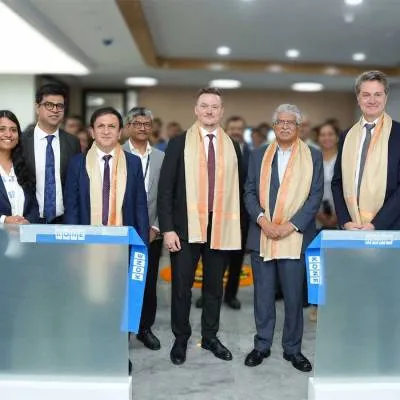
KONE, a global elevator and escalator manufacturer, has inaugurated its first Digital Experience Centre (DEC) in India, located in Pune. The facility aims to showcase how artificial intelligence (AI), connectivity and data-driven technologies can enhance customer experiences and improve building operations.The centre was inaugurated by Jussi Herlin, Executive Vice Chair, KONE Corporation; Philippe Delorme, President and CEO, KONE; and Nandan Nilekani, Co-founder and Chairman of the Board, Infosys.Designed as an interactive customer environment, the facility demonstrates digital solutions cover..

Next Story
Infrastructure Urban

CII GreenCo Launches Circularity Guidelines for Indian Industry

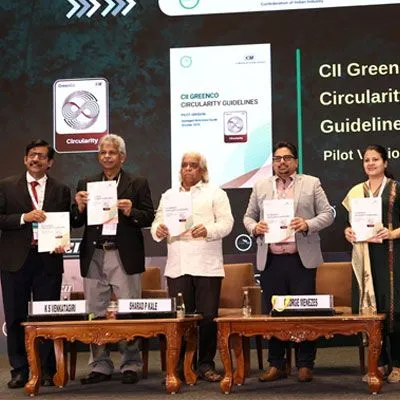
The Confederation of Indian Industry (CII) GreenCo Council has launched the CII GreenCo Circularity Guidelines – Pilot Version at the 17th CII GreenCo Waste & Resource Management Summit 2026 in Chennai. The initiative aims to strengthen resource efficiency, waste reduction and circular economy practices across Indian manufacturing and process industries.The guidelines introduce a structured framework with circularity indices covering raw materials, consumables, packaging and other resource inputs. These indicators will help industries assess existing practices, identify opportunities to ..

Next Story
Infrastructure Energy

Global Electronics Association Launches IPC-1783-CO2E Standard

The Global Electronics Association has introduced IPC-1783-CO2E, a new international standard aimed at improving consistency, transparency and comparability in product carbon footprint reporting across the electronics manufacturing industry.The standard, titled International Standard for Data Collection and Reporting of CO2 Equivalent (CO2e) Emissions for the Electronics Manufacturing Supply Chain, provides industry-specific guidance for collecting, estimating and reporting carbon emissions data.With increasing regulatory requirements and customer expectations, electronics manufacturers face c..

Advertisement

Subscribe to Our Newsletter

Get daily newsletters around different themes from Construction world.

STAY CONNECTED

Advertisement

SPECIAL OFFER
QR Code