JK Cabinet Approves SDH Hazratbal Expansion And Rs 3.61 bn Waste Project
ECONOMY & POLICY

JK Cabinet Approves SDH Hazratbal Expansion And Rs 3.61 bn Waste Project

The Jammu and Kashmir Council of Ministers, chaired by Chief Minister Omar Abdullah, approved the upgrading of Sub-District Hospital Hazratbal in Srinagar by relaxing buffer zone restrictions under the Srinagar Master Plan–2035. The cabinet took the decision during its sixth meeting to allow long?pending expansion of the healthcare facility that had been stalled by regulatory constraints. The relaxation clears the way for enlargement of the hospital footprint and for the introduction of additional services to address local patient needs. The move is intended to strengthen secondary healthcare and reduce referrals to tertiary hospitals in the city.

The upgrade will include new infrastructure and specialised units, with planned facilities such as a blood bank and operation theatres to expand clinical capacity. The government indicated that the changes respond to public hardship caused by limited space and services at the existing hospital. The expansion is expected to improve access for residents of Hazratbal and adjoining localities.

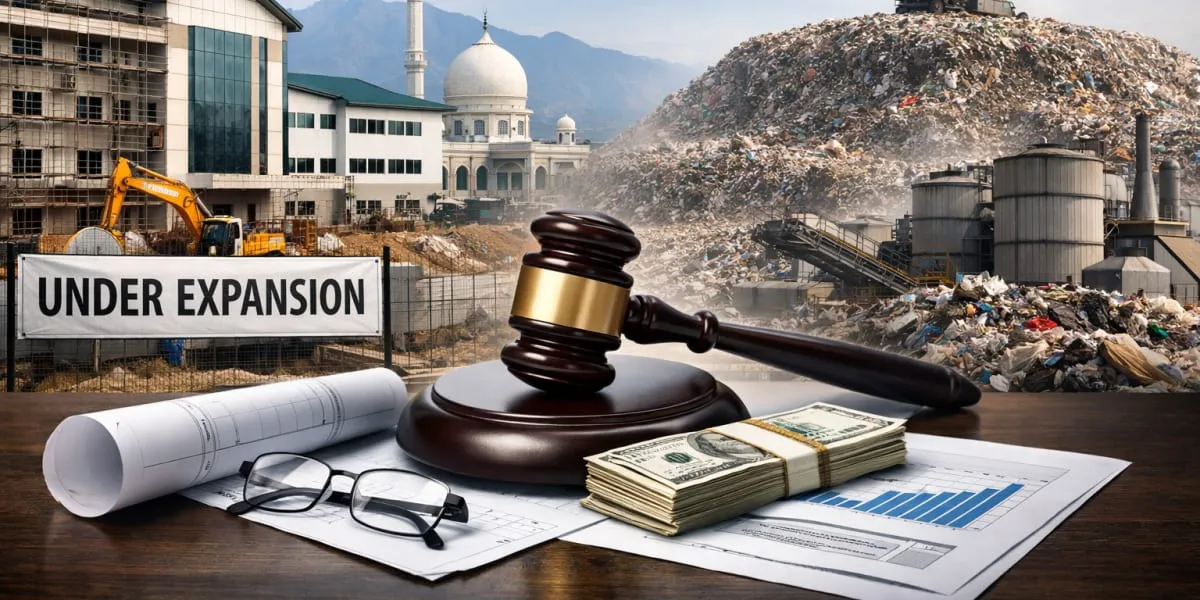
In a parallel decision, the cabinet approved an Integrated Solid Waste Management (ISWM) project at Achan in Srinagar with a processing capacity of 800 tonne (t) per day and an estimated cost of Rs 3.61 billion (bn). One crore equals 10 million and one hundred crore equals one bn, so the Rs 361 crore allocation converts to Rs 3.61 billion (bn) for project accounting. The facility is designed to introduce scientific systems for collection, segregation, treatment and disposal of municipal solid waste to address rising volumes from urban expansion. Officials described the project as a step to improve sanitation standards and reduce environmental pressure.

Both approvals were taken during the sixth meeting, which concentrated on urban infrastructure, healthcare services and environmental management across Jammu and Kashmir. The decisions aim to bolster secondary health provision and provide structured waste processing to meet growing urban demands. Implementation timelines and executing agencies will be finalised through normal administrative procedures.

The Jammu and Kashmir Council of Ministers, chaired by Chief Minister Omar Abdullah, approved the upgrading of Sub-District Hospital Hazratbal in Srinagar by relaxing buffer zone restrictions under the Srinagar Master Plan–2035. The cabinet took the decision during its sixth meeting to allow long?pending expansion of the healthcare facility that had been stalled by regulatory constraints. The relaxation clears the way for enlargement of the hospital footprint and for the introduction of additional services to address local patient needs. The move is intended to strengthen secondary healthcare and reduce referrals to tertiary hospitals in the city. The upgrade will include new infrastructure and specialised units, with planned facilities such as a blood bank and operation theatres to expand clinical capacity. The government indicated that the changes respond to public hardship caused by limited space and services at the existing hospital. The expansion is expected to improve access for residents of Hazratbal and adjoining localities. In a parallel decision, the cabinet approved an Integrated Solid Waste Management (ISWM) project at Achan in Srinagar with a processing capacity of 800 tonne (t) per day and an estimated cost of Rs 3.61 billion (bn). One crore equals 10 million and one hundred crore equals one bn, so the Rs 361 crore allocation converts to Rs 3.61 billion (bn) for project accounting. The facility is designed to introduce scientific systems for collection, segregation, treatment and disposal of municipal solid waste to address rising volumes from urban expansion. Officials described the project as a step to improve sanitation standards and reduce environmental pressure. Both approvals were taken during the sixth meeting, which concentrated on urban infrastructure, healthcare services and environmental management across Jammu and Kashmir. The decisions aim to bolster secondary health provision and provide structured waste processing to meet growing urban demands. Implementation timelines and executing agencies will be finalised through normal administrative procedures.

Next Story
Real Estate

WSB Invests in Omaxe for Tier II Expansion

WSB Partners, a real estate-focused investment firm, has invested Rs 750 million in Omaxe Group to support residential plotted developments in Ujjain and Indore.The investment marks WSB’s entry into Tier II markets and reflects growing institutional interest in emerging cities supported by infrastructure growth, improving affordability and rising housing demand.According to the companies, the funding will be deployed primarily as growth capital, with a portion allocated towards working capital and reserves. The investment has been undertaken alongside affiliates of WSB Partners and co-invest..

Next Story
Infrastructure Transport

RAHSTA Awards 2026 Opens for India’s Leading Road Developers

RAHSTA (Roads and Highways Sustainable Technologies & Advancement), Asia’s leading road infrastructure platform, has officially opened nominations for the RAHSTA Awards 2026 under the Road Developers category. The awards will honour companies and organisations that are shaping India’s highway infrastructure landscape through innovation, sustainability, quality execution and efficient asset management.Scheduled alongside RAHSTA 2026 on July 8–9, 2026 at the Jio World Convention Centre, Mumbai, the awards have emerged as one of the most respected recognitions for the roads and highways..

Next Story
Infrastructure Transport

Railways To Sell 10 per cent In PSUs To Raise Rs Two Point Six Two tn

The railway ministry has outlined a plan to sell up to 10 per cent stakes in several public sector undertakings as part of a broader asset monetisation drive. The move is designed to unlock value and generate funds for capital expenditure and network modernisation. The programme targets private participation through offer for sale and minority stake divestments across operating and finance entities. The initiative follows previous asset recycling efforts and seeks to capture market interest for strategic holdings. The target for the exercise is Rs two point six two trillion (tn) to be realised..

Advertisement

Subscribe to Our Newsletter

Get daily newsletters around different themes from Construction world.

STAY CONNECTED

Advertisement

Advertisement

Advertisement

-->