Titagarh Rail Systems To Make Aluminium Coaches In India By FY27
RAILWAYS & METRO RAIL

Titagarh Rail Systems To Make Aluminium Coaches In India By FY27

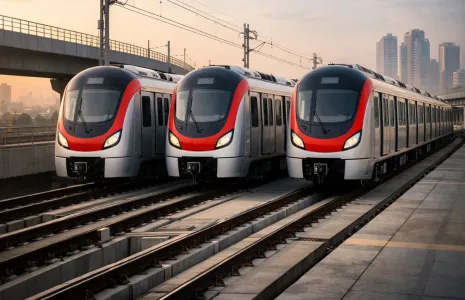
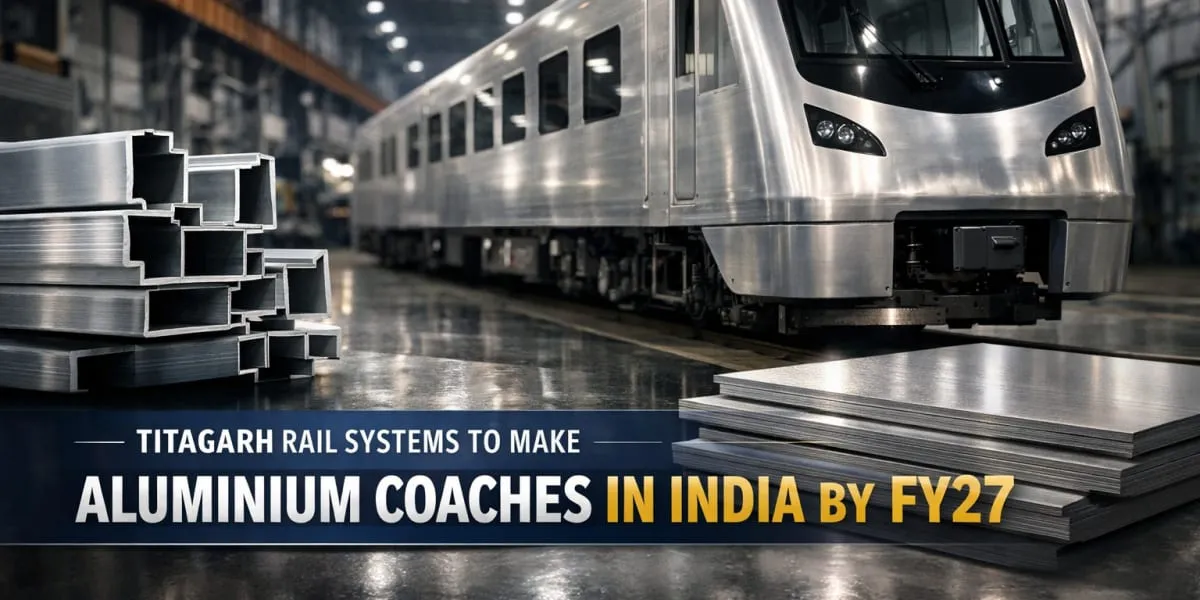
Titagarh Rail Systems plans to manufacture aluminium railway coaches entirely in India by FY27 as part of an effort to become fully self-reliant in coach production. The Uttarpara-based manufacturer has already supplied aluminium coaches for the Pune Metro project and has received an order to build 12 additional aluminium trainsets. The company presented the timeline and rationale in a public statement outlining its investment in domestic production capacity.

Company executives explained that earlier production depended on imported flat packs and sub-assemblies from an Italy-based supplier but that over the past year Titagarh has brought in the machinery required to fabricate those components domestically. The firm intends to transition from importing sub-assemblies to producing flat packs from extrusion and raw material stages within India. Management set the expectation that the shift to fully domestic production would be realised between FY27 and the start of FY28.

The development is being positioned as a step towards integrated capability across both aluminium and stainless steel coach manufacturing, which the company views as important for future projects. Executives indicated that aluminium is the preferred material for many high-speed train designs worldwide and that in-house aluminium capabilities could open opportunities in such segments. The company said it will prepare to pursue contracts linked to high-speed rail initiatives as those projects advance.

The broader policy context includes an earlier parliamentary reply noting that Indian Railways plans to procure 400 next-generation Vande Bharat trainsets with consideration for aluminium body coaches where possible. Titagarh’s increased domestic capability follows its recent metro supplies and the new trainset order and is intended to strengthen its position for upcoming infrastructure programmes. The company described the move as a strategic effort to achieve full Atmanirbhar status in aluminium coach manufacture.

Titagarh Rail Systems plans to manufacture aluminium railway coaches entirely in India by FY27 as part of an effort to become fully self-reliant in coach production. The Uttarpara-based manufacturer has already supplied aluminium coaches for the Pune Metro project and has received an order to build 12 additional aluminium trainsets. The company presented the timeline and rationale in a public statement outlining its investment in domestic production capacity. Company executives explained that earlier production depended on imported flat packs and sub-assemblies from an Italy-based supplier but that over the past year Titagarh has brought in the machinery required to fabricate those components domestically. The firm intends to transition from importing sub-assemblies to producing flat packs from extrusion and raw material stages within India. Management set the expectation that the shift to fully domestic production would be realised between FY27 and the start of FY28. The development is being positioned as a step towards integrated capability across both aluminium and stainless steel coach manufacturing, which the company views as important for future projects. Executives indicated that aluminium is the preferred material for many high-speed train designs worldwide and that in-house aluminium capabilities could open opportunities in such segments. The company said it will prepare to pursue contracts linked to high-speed rail initiatives as those projects advance. The broader policy context includes an earlier parliamentary reply noting that Indian Railways plans to procure 400 next-generation Vande Bharat trainsets with consideration for aluminium body coaches where possible. Titagarh’s increased domestic capability follows its recent metro supplies and the new trainset order and is intended to strengthen its position for upcoming infrastructure programmes. The company described the move as a strategic effort to achieve full Atmanirbhar status in aluminium coach manufacture.

Related Stories

Gold Stories

Next Story
Infrastructure Energy

Asian Energy Services Q1 FY27 PAT Rises 129 Per Cent

Asian Energy Services Limited reported a 129 per cent year-on-year rise in net profit to Rs 128 million for Q1 FY27, compared with the corresponding quarter last year.Revenue increased 135 per cent year-on-year to Rs 2.71 billion, supported by continued momentum across its services business, disciplined execution and contributions from domestic and international operations. EBITDA grew 81 per cent year-on-year during the quarter.As of June 30, 2026, the company’s standalone order book stood at Rs 17.54 billion, with around 60 per cent coming from oil and gas services and 40 per cent from min..

Next Story
Infrastructure Urban

BioBTX to Build First Commercial-Scale Circular Chemicals Plant

Dutch circular chemistry technology developer BioBTX is building what it says will be the world’s first commercial-scale plant to convert mixed plastic waste into high-quality aromatic chemicals using its proprietary Integrated Catalytic Cracking Process (ICCP) technology.The facility will be built at Chemical Park Delfzijl on the northern coast of the Netherlands and is expected to create 35 jobs. Covestro, which has been a shareholder and strategic partner of BioBTX since 2024, holds a mid-single-digit million-euro investment in the company.BioBTX’s ICCP technology uses catalytic pyrolys..

Next Story
Real Estate

Awfis Q1 FY27 PAT Jumps 140% as Revenue Rises 27%

Awfis Space Solutions reported a 140 per cent year-on-year rise in consolidated profit after tax (PAT) to Rs 240 million for Q1 FY27, compared with Rs 100 million in the corresponding quarter last year.Revenue from operations increased 27 per cent to Rs 4.25 billion from Rs 3.35 billion, while EBITDA rose 28 per cent to Rs 1.62 billion. EBITDA margin improved to 38.2 per cent from 37.8 per cent. Profit before tax increased 135 per cent to Rs 240 million.The company's co-working business recorded 27 per cent year-on-year growth, supported by demand from enterprises, Global Capability Centres (G..

Advertisement

Subscribe to Our Newsletter

Get daily newsletters around different themes from Construction world.

STAY CONNECTED

Advertisement