Kashmir Div Com advocates inclusive Srinagar City transport plan
ECONOMY & POLICY

Kashmir Div Com advocates inclusive Srinagar City transport plan

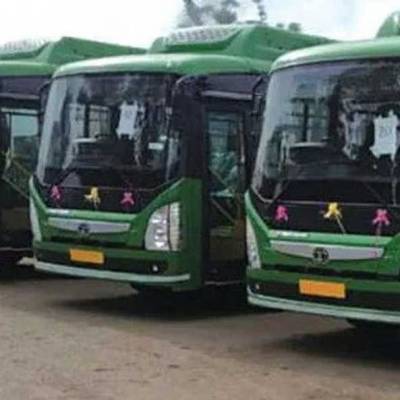
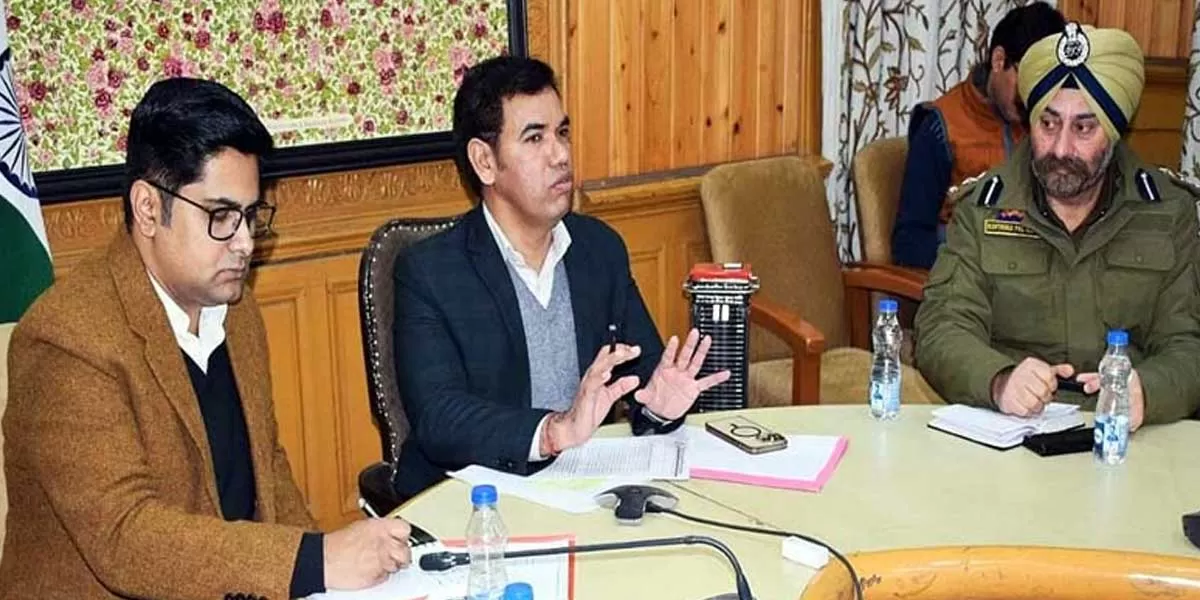
The Divisional Commissioner (Div Com) Kashmir, Vijay Kumar Bidhuri, instructed the officers of Smart City, SRTC, and RTO Kashmir, along with private transporters, to develop a comprehensive plan for the city's convenience and to create a timetable to ensure buses are available on time at bus stops.

These directions were given by the Div Com during a meeting convened to address the demands, issues, and grievances of transporters in Kashmir. The meeting saw the participation of CEO, Smart City Limited/VC SDA/ Commissioner SMC, Dr Owais Ahmad; MD SRTC; RTO Kashmir; SSP Traffic City; SSP Rural; and representatives of various Transport Associations.

In the meeting, the Div Com urged transporters to enhance their services and collaborate with the officers of Smart City, SRTC, and RTO Kashmir to guarantee their vehicles operate until late evening on all routes. Transporters briefed the meeting about their various grievances and issues, requesting a comprehensive Transport Policy for the Union Territory (UT) and the regulation of unregistered service providers, as well as a policy for E-Rickshaw Autos.

During the meeting, the Div Com directed RTO Kashmir to take the lead in formulating a detailed plan and timetable in consultation with other stakeholders. He emphasized that passengers should be informed about the arrival and departure times of buses at any stop in the city.

The Div Com also stressed the importance of private transporters getting involved in water transportation to help alleviate traffic congestion.

The Divisional Commissioner (Div Com) Kashmir, Vijay Kumar Bidhuri, instructed the officers of Smart City, SRTC, and RTO Kashmir, along with private transporters, to develop a comprehensive plan for the city's convenience and to create a timetable to ensure buses are available on time at bus stops. These directions were given by the Div Com during a meeting convened to address the demands, issues, and grievances of transporters in Kashmir. The meeting saw the participation of CEO, Smart City Limited/VC SDA/ Commissioner SMC, Dr Owais Ahmad; MD SRTC; RTO Kashmir; SSP Traffic City; SSP Rural; and representatives of various Transport Associations. In the meeting, the Div Com urged transporters to enhance their services and collaborate with the officers of Smart City, SRTC, and RTO Kashmir to guarantee their vehicles operate until late evening on all routes. Transporters briefed the meeting about their various grievances and issues, requesting a comprehensive Transport Policy for the Union Territory (UT) and the regulation of unregistered service providers, as well as a policy for E-Rickshaw Autos. During the meeting, the Div Com directed RTO Kashmir to take the lead in formulating a detailed plan and timetable in consultation with other stakeholders. He emphasized that passengers should be informed about the arrival and departure times of buses at any stop in the city. The Div Com also stressed the importance of private transporters getting involved in water transportation to help alleviate traffic congestion.

Next Story
Infrastructure Urban

Implementation Status of Jal Jeevan Mission

Since August 2019 the Government has implemented Jal Jeevan Mission to provide assured potable water through household tap connections in rural India. At the start of the mission only 32.3 million (mn) rural households, representing 16.7 per cent, were reported to have tap water connections. States and union territories have reported that 125.8 mn additional rural households have since been provided with tap connections. As a result, of about 193.6 mn rural households roughly 158.2 mn, or 81.71 per cent, are reported to have tap water supply at home.\n\nThe State, district and village level st..

Next Story
Infrastructure Urban

Jal Jeevan Mission Reaches Eighty One Per Cent Rural Coverage

The Government reported substantial progress under the Jal Jeevan Mission, launched in August 2019 to provide tap water to every rural household. At launch only 32.3 million (mn) rural households had tap connections and states and Union territories reported provision of 125.8 mn additional households by March 2026. Consequently, out of about 193.6 mn rural households around 158.2 mn, or 81.71 per cent, are reported to have tap water at home. The Finance Minister announced extension of the mission until 2028 in the 2025-26 budget speech. The Swachh Bharat Mission Grameen, launched in October 20..

Next Story
Infrastructure Urban

Empowering Local Governance for Sustainable Rural Water Supply

The Ministry of Jal Shakti has aligned the Jal Jeevan Mission (JJM) with the 73rd Amendment to strengthen village level planning and community ownership of water supply. Gram Panchayats, village water and sanitation committees and Pani Samitis are to plan, implement, manage and maintain piped water systems, with gram sabha processes formalising handover and oversight. Implementation support agencies including non government organisations, community based organisations and self help groups have been empanelled to train local committees and promote women participation. Under JJM, the department ..

Advertisement

Subscribe to Our Newsletter

Get daily newsletters around different themes from Construction world.

STAY CONNECTED

Advertisement

Advertisement

Advertisement