+
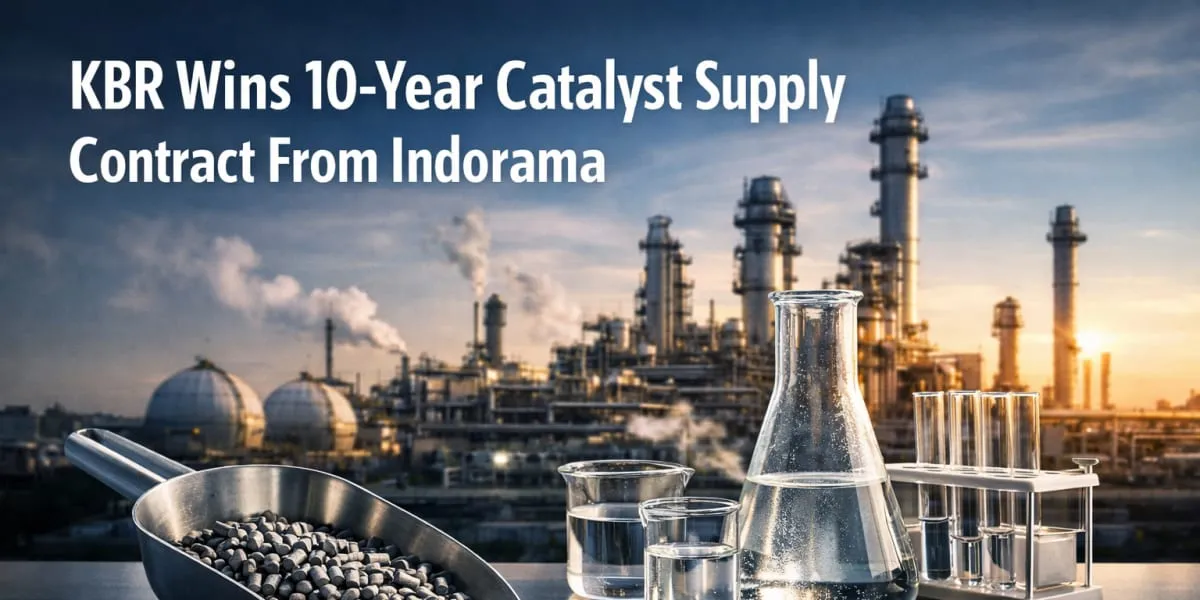
KBR Wins 10-Year Catalyst Supply Contract From Indorama
ECONOMY & POLICY

KBR Wins 10-Year Catalyst Supply Contract From Indorama

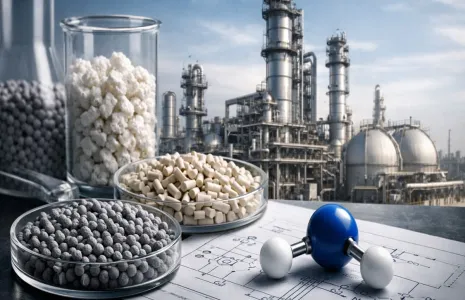
KBR has been awarded a 10-year catalyst supply contract by Indorama Eleme Fertilizer & Chemicals FZE for its entire ammonia plant portfolio. This marks the first long-term catalyst agreement for KBR in the ammonia sector and reinforces the company's position as a leading ammonia solutions provider globally. Under the contract, KBR will provide complete catalyst solutions for Indorama's six ammonia plants in Nigeria, Georgia, Uzbekistan and India. The scope covers supply, optimisation and lifecycle support to enhance plant performance.

KBR's president of Sustainable Technology Solutions, Jay Ibrahim, noted that the agreement builds on a long relationship with Indorama spanning multiple ammonia projects and decades of collaboration, and that the project extends support beyond technology licensing into long-term catalyst solutions. He added that KBR is committed to delivering differentiated, high-performance technologies designed to achieve optimal plant performance and create sustained value. The company expects Indorama to benefit from enhanced efficiency, improved reliability and stronger operational performance across its global ammonia portfolio.

For more than 75 years KBR has delivered ammonia technology, proprietary equipment and catalysts across the globe, supporting efficient and sustainable fertiliser production for customers worldwide. The new contract represents a strategic expansion of KBR's services into long-term material provision and optimisation for large scale fertiliser assets. Indorama's selection of a single supplier for catalyst solutions is aimed at standardising performance and leveraging lessons from diverse operating environments to drive consistent uptime and output.

Industry observers note that long-term catalyst agreements can align incentives between licensor and operator by linking material supply with operational outcomes and optimisation programmes. KBR will be responsible for ongoing catalyst supply planning, technical support and application engineering to support plant reliability and emissions performance where relevant. The partnership is expected to influence future decisions on lifecycle services for ammonia assets in emerging and established markets.

KBR has been awarded a 10-year catalyst supply contract by Indorama Eleme Fertilizer & Chemicals FZE for its entire ammonia plant portfolio. This marks the first long-term catalyst agreement for KBR in the ammonia sector and reinforces the company's position as a leading ammonia solutions provider globally. Under the contract, KBR will provide complete catalyst solutions for Indorama's six ammonia plants in Nigeria, Georgia, Uzbekistan and India. The scope covers supply, optimisation and lifecycle support to enhance plant performance. KBR's president of Sustainable Technology Solutions, Jay Ibrahim, noted that the agreement builds on a long relationship with Indorama spanning multiple ammonia projects and decades of collaboration, and that the project extends support beyond technology licensing into long-term catalyst solutions. He added that KBR is committed to delivering differentiated, high-performance technologies designed to achieve optimal plant performance and create sustained value. The company expects Indorama to benefit from enhanced efficiency, improved reliability and stronger operational performance across its global ammonia portfolio. For more than 75 years KBR has delivered ammonia technology, proprietary equipment and catalysts across the globe, supporting efficient and sustainable fertiliser production for customers worldwide. The new contract represents a strategic expansion of KBR's services into long-term material provision and optimisation for large scale fertiliser assets. Indorama's selection of a single supplier for catalyst solutions is aimed at standardising performance and leveraging lessons from diverse operating environments to drive consistent uptime and output. Industry observers note that long-term catalyst agreements can align incentives between licensor and operator by linking material supply with operational outcomes and optimisation programmes. KBR will be responsible for ongoing catalyst supply planning, technical support and application engineering to support plant reliability and emissions performance where relevant. The partnership is expected to influence future decisions on lifecycle services for ammonia assets in emerging and established markets.

Next Story
Infrastructure Urban

Implementation Status of Jal Jeevan Mission

Since August 2019 the Government has implemented Jal Jeevan Mission to provide assured potable water through household tap connections in rural India. At the start of the mission only 32.3 million (mn) rural households, representing 16.7 per cent, were reported to have tap water connections. States and union territories have reported that 125.8 mn additional rural households have since been provided with tap connections. As a result, of about 193.6 mn rural households roughly 158.2 mn, or 81.71 per cent, are reported to have tap water supply at home.\n\nThe State, district and village level st..

Next Story
Infrastructure Urban

Jal Jeevan Mission Reaches Eighty One Per Cent Rural Coverage

The Government reported substantial progress under the Jal Jeevan Mission, launched in August 2019 to provide tap water to every rural household. At launch only 32.3 million (mn) rural households had tap connections and states and Union territories reported provision of 125.8 mn additional households by March 2026. Consequently, out of about 193.6 mn rural households around 158.2 mn, or 81.71 per cent, are reported to have tap water at home. The Finance Minister announced extension of the mission until 2028 in the 2025-26 budget speech. The Swachh Bharat Mission Grameen, launched in October 20..

Next Story
Infrastructure Urban

Empowering Local Governance for Sustainable Rural Water Supply

The Ministry of Jal Shakti has aligned the Jal Jeevan Mission (JJM) with the 73rd Amendment to strengthen village level planning and community ownership of water supply. Gram Panchayats, village water and sanitation committees and Pani Samitis are to plan, implement, manage and maintain piped water systems, with gram sabha processes formalising handover and oversight. Implementation support agencies including non government organisations, community based organisations and self help groups have been empanelled to train local committees and promote women participation. Under JJM, the department ..

Advertisement

Subscribe to Our Newsletter

Get daily newsletters around different themes from Construction world.

STAY CONNECTED

Advertisement

Advertisement

Advertisement