Kerala Drives Growth With Tourism, IT, MSMEs And Green Energy
ECONOMY & POLICY

Kerala Drives Growth With Tourism, IT, MSMEs And Green Energy

Kerala is accelerating growth with strong strides in tourism, information technology, micro, small and medium enterprises (MSMEs), and green energy, reaffirming its path towards a progressive and knowledge-driven economy, according to a study by the MSME Export Promotion Council.
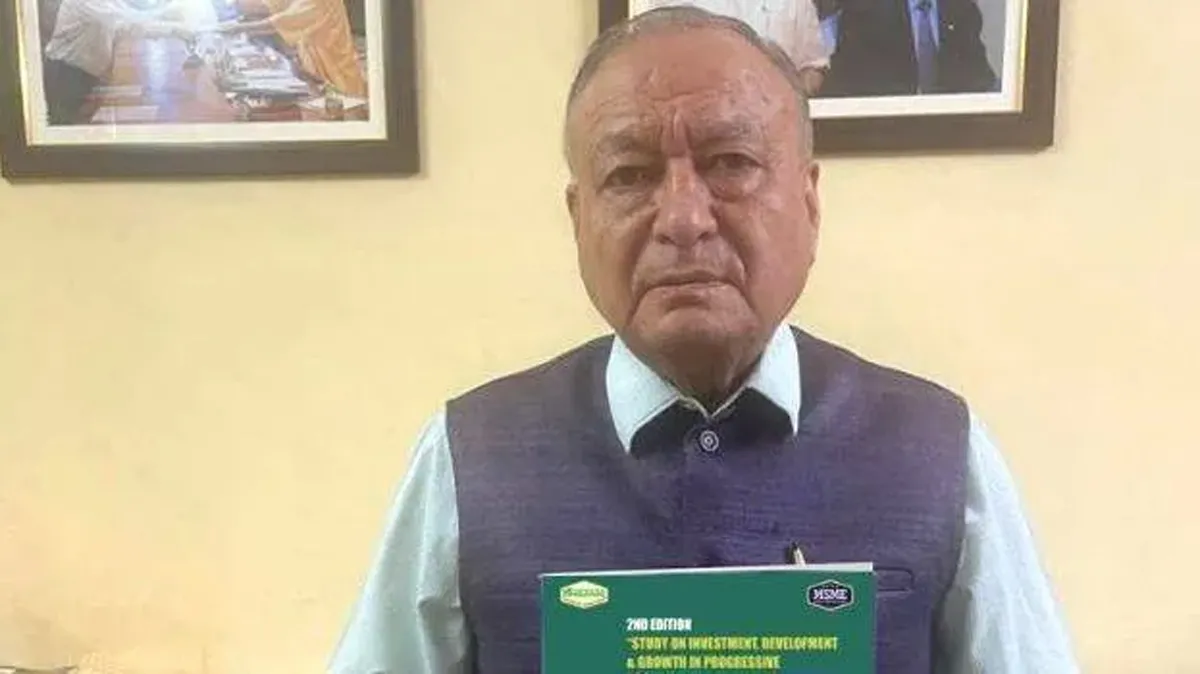
Releasing the report on Investment, Growth & Development between 2021-22 to 2024-25 in Progressive Kerala, Council chairman Dr D. S. Rawat said that during the period, Kerala attracted new investment projects worth Rs 709 billion.
Projects worth Rs 237 billion were completed, Rs 108 billion worth revived, while projects valued at Rs 3,037 billion were under implementation at various stages. The data was sourced from the Centre for Monitoring of Indian Economy (CMIE).
The study highlighted Kerala’s steady growth across key sectors, reaffirming its position as India’s most socially advanced state. With a focus on human development, sustainability, and inclusive policies, Kerala has been balancing economic expansion with social welfare.
The state recorded notable progress in IT, tourism, healthcare, education, and MSMEs, while new opportunities are emerging in green energy, start-ups, and the knowledge economy.
In FY 2024-25, newly announced projects were valued at Rs 115 billion, completed projects at Rs 29 billion, and revived projects at Rs 8.6 billion. Of this, the private sector accounted for Rs 81 billion in new projects, Rs 6.7 billion in completions, and Rs 4.3 billion in revivals.
Dr Rawat stressed the need for a high-powered committee to resolve hurdles facing ongoing projects to ensure timely completion and avoid cost escalations.
Tourism has rebounded strongly post-pandemic, with over 22 million domestic and foreign visitors reported in 2024, contributing 10-12 per cent to state GDP and generating direct and indirect jobs for about 24 per cent of the workforce, or 1.5 million people.
The MSME sector has grown rapidly, with over 240,000 new enterprises set up in the past two years, attracting Rs 150 billion in investment and creating 220,000 jobs.
However, many MSMEs face challenges due to limited access to affordable credit, gaps in government scheme implementation, and concentration in retail and services rather than high-value manufacturing. The study recommends promoting manufacturing MSMEs, improving marketing support, enhancing export orientation, and driving technology adoption.

Kerala is accelerating growth with strong strides in tourism, information technology, micro, small and medium enterprises (MSMEs), and green energy, reaffirming its path towards a progressive and knowledge-driven economy, according to a study by the MSME Export Promotion Council.Releasing the report on Investment, Growth & Development between 2021-22 to 2024-25 in Progressive Kerala, Council chairman Dr D. S. Rawat said that during the period, Kerala attracted new investment projects worth Rs 709 billion.Projects worth Rs 237 billion were completed, Rs 108 billion worth revived, while projects valued at Rs 3,037 billion were under implementation at various stages. The data was sourced from the Centre for Monitoring of Indian Economy (CMIE).The study highlighted Kerala’s steady growth across key sectors, reaffirming its position as India’s most socially advanced state. With a focus on human development, sustainability, and inclusive policies, Kerala has been balancing economic expansion with social welfare.The state recorded notable progress in IT, tourism, healthcare, education, and MSMEs, while new opportunities are emerging in green energy, start-ups, and the knowledge economy.In FY 2024-25, newly announced projects were valued at Rs 115 billion, completed projects at Rs 29 billion, and revived projects at Rs 8.6 billion. Of this, the private sector accounted for Rs 81 billion in new projects, Rs 6.7 billion in completions, and Rs 4.3 billion in revivals.Dr Rawat stressed the need for a high-powered committee to resolve hurdles facing ongoing projects to ensure timely completion and avoid cost escalations.Tourism has rebounded strongly post-pandemic, with over 22 million domestic and foreign visitors reported in 2024, contributing 10-12 per cent to state GDP and generating direct and indirect jobs for about 24 per cent of the workforce, or 1.5 million people.The MSME sector has grown rapidly, with over 240,000 new enterprises set up in the past two years, attracting Rs 150 billion in investment and creating 220,000 jobs.However, many MSMEs face challenges due to limited access to affordable credit, gaps in government scheme implementation, and concentration in retail and services rather than high-value manufacturing. The study recommends promoting manufacturing MSMEs, improving marketing support, enhancing export orientation, and driving technology adoption.

Next Story
Technology

AI-Enabled Workflows Lift Profitability and Productivity

Organisations modernising frontline workflows with artificial intelligence, automation and real-time data are reporting stronger financial performance, higher productivity and improved employee engagement, according to a global study by Zebra Technologies and Oxford Economics.The research covered 1,000 senior leaders across retail, manufacturing, transportation and logistics in the US, Mexico, the UK, Germany, India, Japan, Australia and New Zealand.In transportation and logistics, 54 per cent of companies that improved picking and packing operations reported faster operational performance, wh..

Next Story
Real Estate

India Leads Global AI Readiness but Implementation Lags

Indian companies lead global averages across all eight artificial intelligence readiness indicators tracked by JLL, but only 19 per cent have started making changes to their workplaces, according to the JLL 2026 Future of Work Survey.The study found that 77 per cent of Indian business leaders expect AI to change their office requirements, creating a 58-percentage-point gap between awareness and implementation. The survey covered more than 2,200 CEOs, CFOs and real estate leaders across 21 countries during the first quarter of 2026.Despite concerns over automation, 58 per cent of Indian leaders..

Next Story
Equipment

Three WOLFF Cranes Build Riyadh Cable-Stayed Bridges

Three WOLFF 180 B luffing jib cranes are supporting the construction of two cable-stayed bridges alongside the existing Wadi Laban Bridge in Riyadh, Saudi Arabia. The project is being developed for the Royal Commission for Riyadh City and executed by the ICRC joint venture comprising IC Ictas and Al Rashid Trading & Contracting Company.The cranes are handling lifting operations including formwork, reinforcement, concrete placement, work platforms, surveying equipment and other construction materials. Each crane is fitted with a 40 m jib, reaches a hook height of 157 m and offers a maximum ..

Advertisement

Subscribe to Our Newsletter

Get daily newsletters around different themes from Construction world.

STAY CONNECTED

Advertisement

Advertisement

Advertisement