Kerala Targets Rs. 20.4 bn Urban Infrastructure Investment
ECONOMY & POLICY

Kerala Targets Rs. 20.4 bn Urban Infrastructure Investment

Kerala is seeking to mobilise Rs. 20.4 bn for urban infrastructure under the Centre’s Urban Challenge Fund (UCF), including up to Rs. 5.1 bn in central assistance. The state plans to submit its first one or two projects for approval within the next three to four months.

The scheme shifts urban infrastructure development away from conventional grant funding towards market finance and financially viable projects. Urban local bodies will be required to prepare assets that can generate sustainable revenue, with income from those assets intended to meet operation and maintenance costs after the initial project contract ends.

Under the Rs. 1 tn UCF, central assistance is capped at 25 per cent of eligible project costs. At least 50 per cent must be raised through market sources, including bank loans, municipal bonds and public-private partnerships. Kerala’s UCF Mission is prioritising partnerships and loans, while municipal bonds are seen as more difficult because they require credit ratings, detailed compliance and strong financial credentials.

The state is examining funding from non-banking financial companies, scheduled commercial banks, cooperative banks, the Housing and Urban Development Corporation and institutions operating under the National Bank for Agriculture and Rural Development. Potential projects are expected to address congestion and infrastructure gaps in cities through road widening, parking facilities, underground utility ducts and expanded sewage networks.

The town and country planning department has prepared plans covering master-plan updates, city beautification and the decongestion of core urban areas. The UCF has three broad areas: cities as growth hubs, creative redevelopment and water and sanitation. Eligible initiatives include economic and transit corridors, urban mobility, redevelopment of old city centres and markets, water supply, sewerage and integrated solid waste management. State officials said Kerala could use the creative redevelopment component to improve existing urban spaces while creating financially sustainable assets.

Kerala is seeking to mobilise Rs. 20.4 bn for urban infrastructure under the Centre’s Urban Challenge Fund (UCF), including up to Rs. 5.1 bn in central assistance. The state plans to submit its first one or two projects for approval within the next three to four months. The scheme shifts urban infrastructure development away from conventional grant funding towards market finance and financially viable projects. Urban local bodies will be required to prepare assets that can generate sustainable revenue, with income from those assets intended to meet operation and maintenance costs after the initial project contract ends. Under the Rs. 1 tn UCF, central assistance is capped at 25 per cent of eligible project costs. At least 50 per cent must be raised through market sources, including bank loans, municipal bonds and public-private partnerships. Kerala’s UCF Mission is prioritising partnerships and loans, while municipal bonds are seen as more difficult because they require credit ratings, detailed compliance and strong financial credentials. The state is examining funding from non-banking financial companies, scheduled commercial banks, cooperative banks, the Housing and Urban Development Corporation and institutions operating under the National Bank for Agriculture and Rural Development. Potential projects are expected to address congestion and infrastructure gaps in cities through road widening, parking facilities, underground utility ducts and expanded sewage networks. The town and country planning department has prepared plans covering master-plan updates, city beautification and the decongestion of core urban areas. The UCF has three broad areas: cities as growth hubs, creative redevelopment and water and sanitation. Eligible initiatives include economic and transit corridors, urban mobility, redevelopment of old city centres and markets, water supply, sewerage and integrated solid waste management. State officials said Kerala could use the creative redevelopment component to improve existing urban spaces while creating financially sustainable assets.

Related Stories

Gold Stories

Next Story
Infrastructure Transport

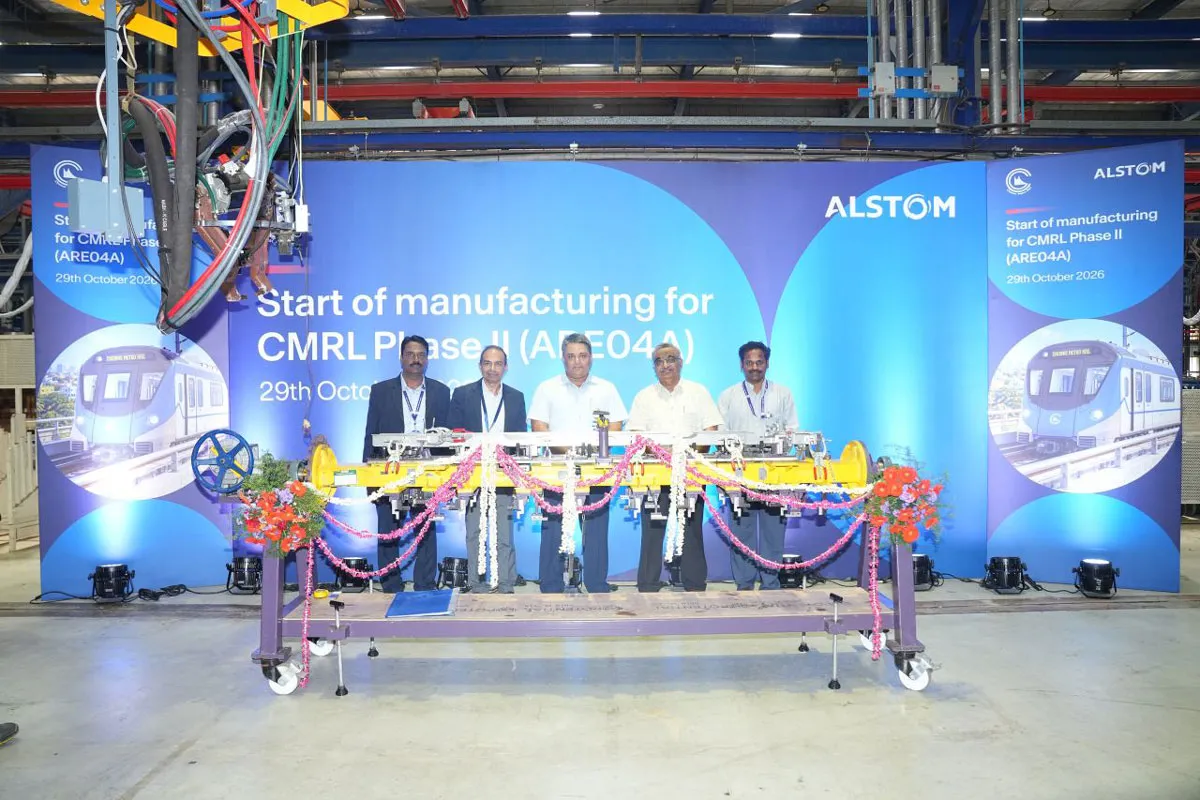
Alstom Begins Production of 96 Driverless Chennai Metro Cars

Alstom has commenced manufacturing 96 Metropolis driverless metro cars for Chennai Metro Phase II at its Sri City facility in Andhra Pradesh. The production forms part of a €135 million contract awarded by Chennai Metro Rail Limited (CMRL) in 2025, covering the design and manufacture of 32 three-car trainsets and 15 years of comprehensive maintenance following the warranty period.Chennai Metro Phase II spans approximately 119 km across three corridors and associated inter-corridor sections, comprising more than 76 km of elevated tracks and 43 km of underground routes.Under the Make in India ..
Next Story
Products

Hafele launches Alustro flexible shelving system

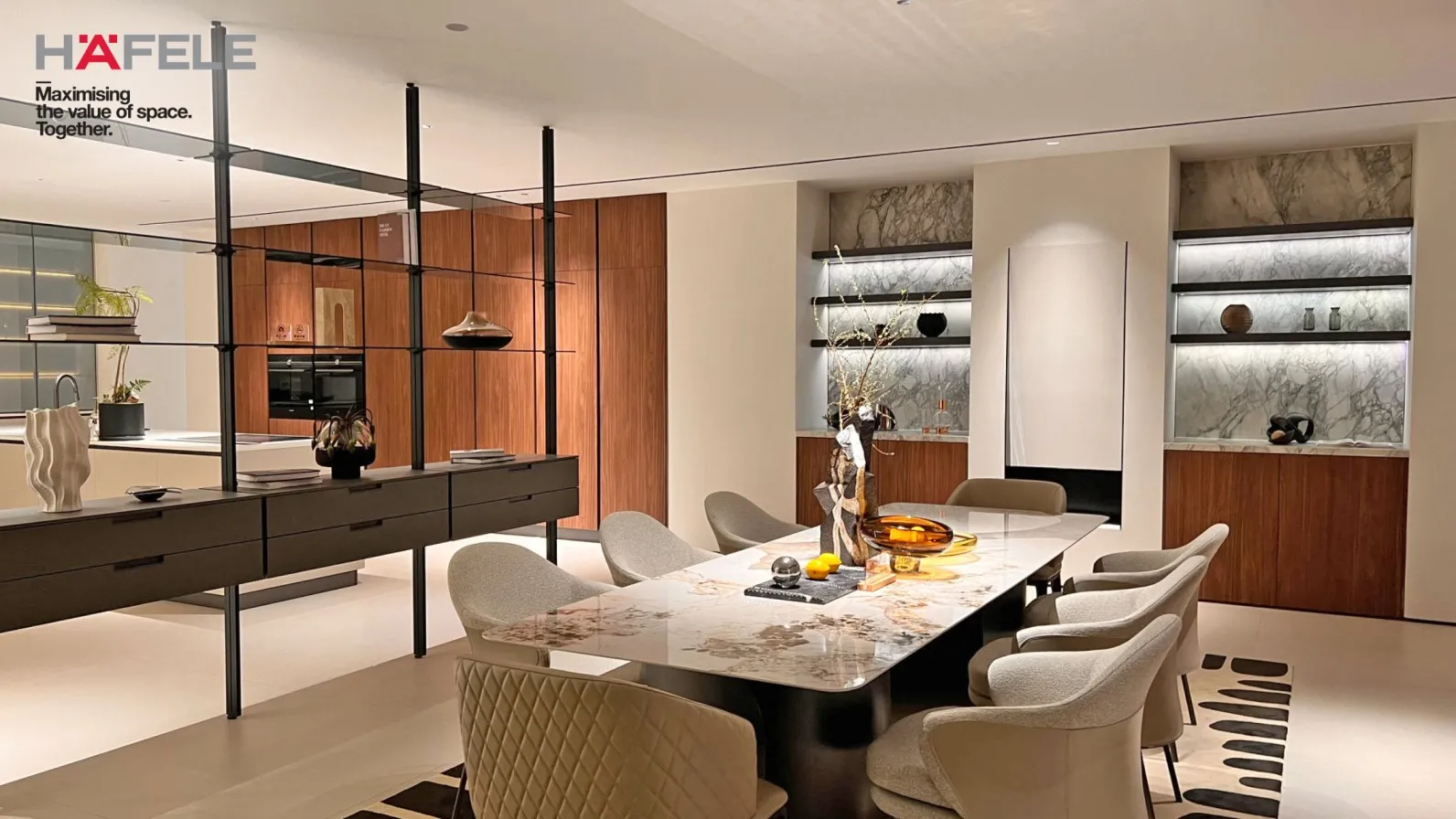
Häfele India has introduced the Alustro Flexible Shelving System, a modular storage solution designed to maximise space and offer flexibility in residential interiors. The system can be configured for applications such as room dividers, walk-in wardrobes, kitchen units, wall-mounted shelves and vanity mirrors.Alustro allows users to combine aluminium, wooden and glass shelves within a single structure. It supports shelf heights of up to 3,000 mm and section widths of up to 1,164 mm. Additional options include coat stand profiles with protective gaskets for wardrobes and front- or rear-facing ..
Next Story
Infrastructure Urban

India's warehousing leasing rises 12 per cent to 19.1 million sq ft in Q3

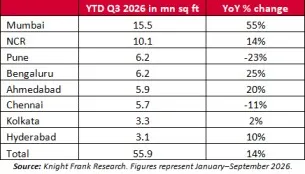
India's warehousing market recorded leasing of 19.1 million sq ft across eight primary markets in Q3 2026, an increase of 12 per cent year-on-year, according to Knight Frank India's India Warehousing Market Report – Q3 2026. Manufacturing and third-party logistics (3PL) operators remained the key demand drivers, while occupiers continued to favour Grade A facilities.Manufacturing and 3PL together accounted for 76 per cent of leasing demand during the quarter. Manufacturing leasing, excluding fast-moving consumer goods (FMCG) and consumer durables (FMCD), increased 11 per cent year-on-year, s..

Advertisement

Subscribe to Our Newsletter

Get daily newsletters around different themes from Construction world.

STAY CONNECTED

Advertisement

SPECIAL OFFER
QR Code