LANXESS Pigments Bring Colour to Concrete at Venice Biennale
ECONOMY & POLICY

LANXESS Pigments Bring Colour to Concrete at Venice Biennale

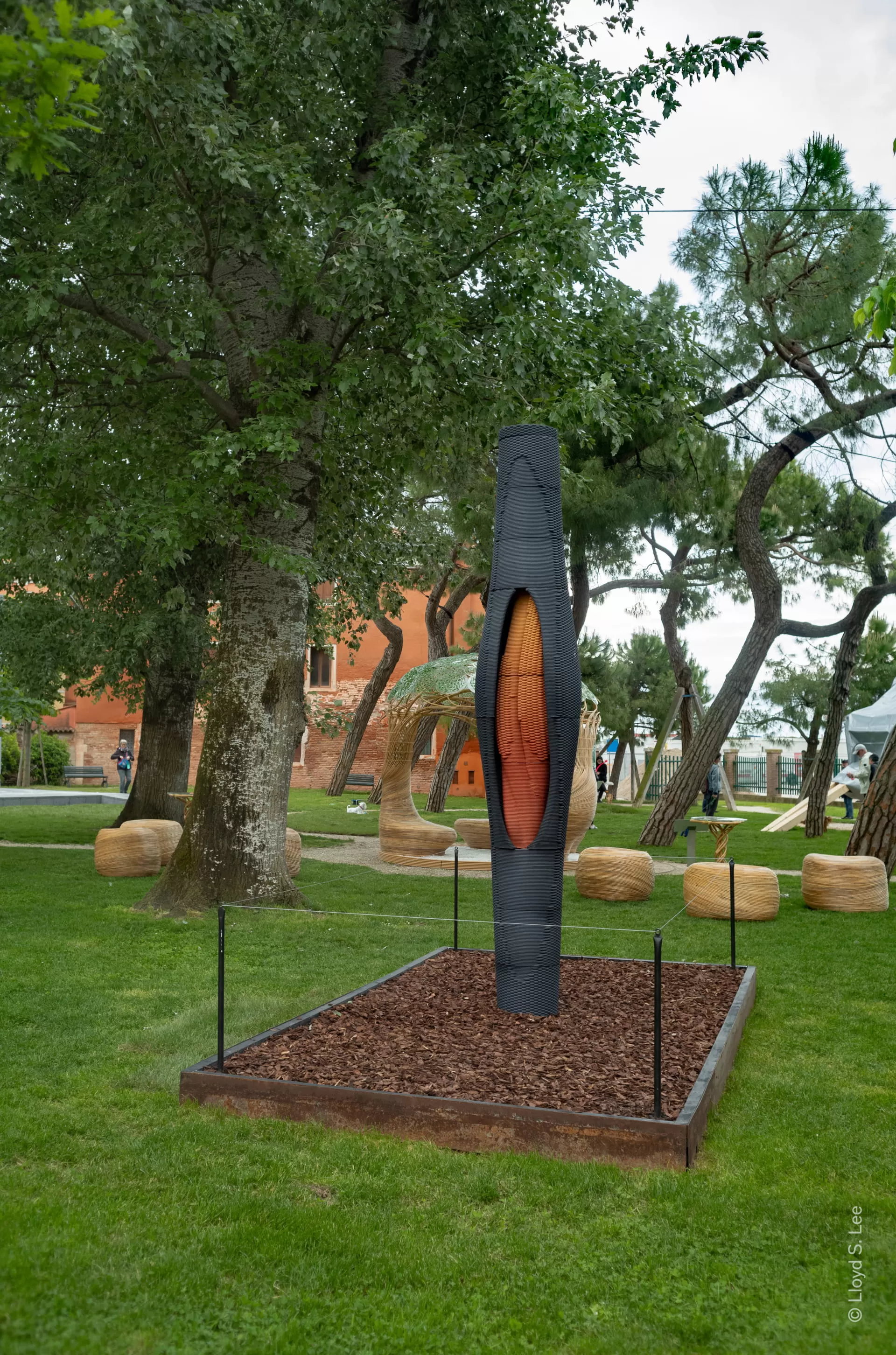
LANXESS’s advanced inorganic pigments have brought a splash of colour to concrete architecture through a striking 3D-printed sculpture titled “Duality of Skin and Core”, currently exhibited at the “Time. Space. Existence.” show during the Venice Architecture Biennale. The sculpture is the result of a collaboration between Eindhoven University of Technology’s Assistant Professor Cristina Nan and architect Mattia Zucco, supported by LANXESS and Dutch 3D-printing specialist Vertico.

The column-like structure explores architectural experimentation using red and black iron oxide pigments from LANXESS’s Bayferrox and Colortherm ranges. The pigments helped redefine the traditional grey look of concrete, introducing vivid colour and high-definition patterning. Designed in a modular format, the structure comprises nine lightweight drums and four wings, each weighing less than 30 kg, allowing for easy transport, assembly, and reuse—principles aligned with sustainable and circular design strategies.

This project demonstrates how digital manufacturing, aesthetic creativity, and structural performance can be combined in 3D concrete printing. The slit-like openings in the sculpture’s outer surface expose its colourful inner core, breaking away from monolithic design norms and referencing the duality between form and material. The approach pays homage to ancient Roman and Greek columns while enabling modern construction flexibility.

To ensure the pigments work effectively in 3D-printed concrete applications, LANXESS is conducting research in collaboration with the Institute of Construction Materials at TU Dresden. Early results indicate that the pigments do not alter concrete properties while delivering vibrant, consistent colour output—unlocking new design and commercial possibilities for architectural concrete applications worldwide.

LANXESS’s advanced inorganic pigments have brought a splash of colour to concrete architecture through a striking 3D-printed sculpture titled “Duality of Skin and Core”, currently exhibited at the “Time. Space. Existence.” show during the Venice Architecture Biennale. The sculpture is the result of a collaboration between Eindhoven University of Technology’s Assistant Professor Cristina Nan and architect Mattia Zucco, supported by LANXESS and Dutch 3D-printing specialist Vertico.The column-like structure explores architectural experimentation using red and black iron oxide pigments from LANXESS’s Bayferrox and Colortherm ranges. The pigments helped redefine the traditional grey look of concrete, introducing vivid colour and high-definition patterning. Designed in a modular format, the structure comprises nine lightweight drums and four wings, each weighing less than 30 kg, allowing for easy transport, assembly, and reuse—principles aligned with sustainable and circular design strategies.This project demonstrates how digital manufacturing, aesthetic creativity, and structural performance can be combined in 3D concrete printing. The slit-like openings in the sculpture’s outer surface expose its colourful inner core, breaking away from monolithic design norms and referencing the duality between form and material. The approach pays homage to ancient Roman and Greek columns while enabling modern construction flexibility.To ensure the pigments work effectively in 3D-printed concrete applications, LANXESS is conducting research in collaboration with the Institute of Construction Materials at TU Dresden. Early results indicate that the pigments do not alter concrete properties while delivering vibrant, consistent colour output—unlocking new design and commercial possibilities for architectural concrete applications worldwide.

Next Story
Infrastructure Urban

TBO Tek Q2 Profit Climbs 12%, Revenue Surges 26% YoY

TBO Tek Limited one of the world’s largest travel distribution platforms, reported a solid performance for Q2 FY26 with a 26 per cent year-on-year increase in revenue to Rs 5.68 billion, reflecting broad-based growth and improving profitability.The company recorded a Gross Transaction Value (GTV) of Rs 8,901 crore, up 12 per cent YoY, driven by strong performance across Europe, MEA, and APAC regions. Adjusted EBITDA before acquisition-related costs stood at Rs 1.04 billion, up 16 per cent YoY, translating into an 18.32 per cent margin compared to 16.56 per cent in Q1 FY26. Profit after tax r..

Next Story
Infrastructure Energy

Northern Graphite, Rain Carbon Secure R&D Grant for Greener Battery Materials

Northern Graphite Corporation and Rain Carbon Canada Inc, a subsidiary of Rain Carbon Inc, have jointly received up to C$860,000 (€530,000) in funding under the Canada–Germany Collaborative Industrial Research and Development Programme to develop sustainable battery anode materials.The two-year, C$2.2 million project aims to transform natural graphite processing by-products into high-performance, battery-grade anode material (BAM). Supported by the National Research Council of Canada Industrial Research Assistance Programme (NRC IRAP) and Germany’s Federal Ministry for Economic Affairs a..

Next Story
Infrastructure Urban

Antony Waste Q2 Revenue Jumps 16%; Subsidiary Wins Rs 3,200 Cr WtE Projects

Antony Waste Handling Cell Limited (AWHCL), a leading player in India’s municipal solid waste management sector, announced a 16 per cent year-on-year increase in total operating revenue to Rs 2.33 billion for Q2 FY26. The growth was driven by higher waste volumes, escalated contracts, and strong operational execution.EBITDA rose 18 per cent to Rs 570 million, with margins steady at 21.6 per cent, while profit after tax stood at Rs 173 million, up 13 per cent YoY. Revenue from Municipal Solid Waste Collection and Transportation (MSW C&T) reached Rs 1.605 billion, and MSW Processing re..

Advertisement

Subscribe to Our Newsletter

Get daily newsletters around different themes from Construction world.

STAY CONNECTED

Advertisement

Advertisement

Advertisement