+
Lemon Tree Plans Overseas Expansion as Outbound Travel Grows
ECONOMY & POLICY

Lemon Tree Plans Overseas Expansion as Outbound Travel Grows

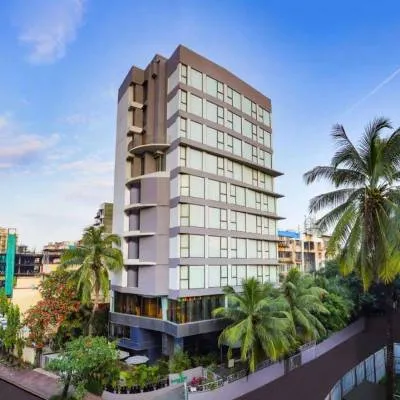
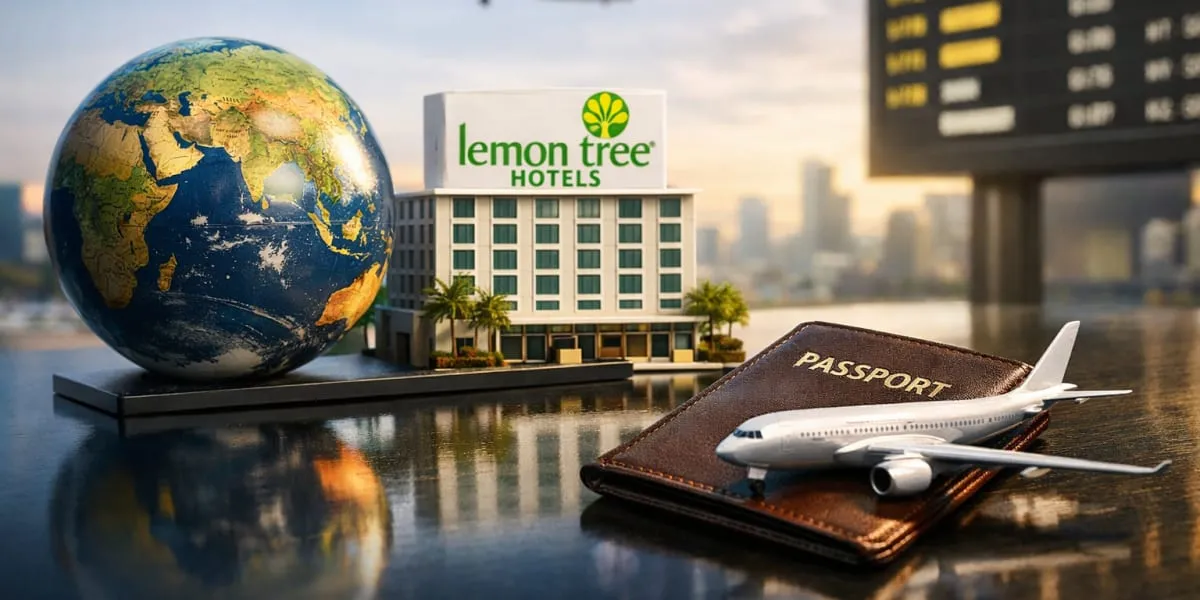
Lemon Tree Hotels, hereafter Lemon Tree, is preparing to intensify its overseas expansion over the next three to five years as outbound travel from India grows. The company is positioning its midscale offering to follow demand from Indian leisure travellers, citing projections that India will become the fourth-largest outbound tourism market by 2035, rising from 10th place according to Capital Economics. The strategy reflects an expectation of sustained growth in overseas leisure travel by Indians.

Lemon Tree has identified destinations such as Thailand, Vietnam and Singapore as natural fits for its brand as it tracks traveller flows. The group currently operates five hotels outside India, with two in Nepal and Bhutan and one in the UAE, part of a portfolio that exceeds 120 properties. The chain is positioning its services and distribution for international guests while continuing to grow domestically.

The company owns brands including Aurika, Red Fox and Keys Select and is the third-biggest homegrown hotel chain by number of rooms. It sits behind Indian Hotels, owner of the Ginger brand, and ITC Hotels, which runs the Fortune and Welcomhotel brands. Lemon Tree reports a significant development pipeline and says India will remain its primary market as it pursues selective international openings.

Company executives stress that overseas growth is a mid-term objective and that the firm intends to adhere to its strategy amid regional geopolitical tensions. At home, Lemon Tree is exploring a largely franchise-led model to bring unbranded hotels into its system and tap an independent segment that the industry estimates is about half unbranded. In January the group announced it would transfer hotel ownership to a subsidiary, Fleur, and become a fully asset-light operator, creating two publicly traded entities within 12 to 15 months.

Lemon Tree Hotels, hereafter Lemon Tree, is preparing to intensify its overseas expansion over the next three to five years as outbound travel from India grows. The company is positioning its midscale offering to follow demand from Indian leisure travellers, citing projections that India will become the fourth-largest outbound tourism market by 2035, rising from 10th place according to Capital Economics. The strategy reflects an expectation of sustained growth in overseas leisure travel by Indians. Lemon Tree has identified destinations such as Thailand, Vietnam and Singapore as natural fits for its brand as it tracks traveller flows. The group currently operates five hotels outside India, with two in Nepal and Bhutan and one in the UAE, part of a portfolio that exceeds 120 properties. The chain is positioning its services and distribution for international guests while continuing to grow domestically. The company owns brands including Aurika, Red Fox and Keys Select and is the third-biggest homegrown hotel chain by number of rooms. It sits behind Indian Hotels, owner of the Ginger brand, and ITC Hotels, which runs the Fortune and Welcomhotel brands. Lemon Tree reports a significant development pipeline and says India will remain its primary market as it pursues selective international openings. Company executives stress that overseas growth is a mid-term objective and that the firm intends to adhere to its strategy amid regional geopolitical tensions. At home, Lemon Tree is exploring a largely franchise-led model to bring unbranded hotels into its system and tap an independent segment that the industry estimates is about half unbranded. In January the group announced it would transfer hotel ownership to a subsidiary, Fleur, and become a fully asset-light operator, creating two publicly traded entities within 12 to 15 months.

Next Story
Building Material

Operational Excellence Redefined!

Operational excellence in cement has moved far beyond the old pursuit of ‘more tonne’. The new benchmark is smarter, cleaner, more reliable production—delivered with discipline across process, people and data. In an industry where energy can account for nearly 30 per cent of manufacturing cost, even marginal gains translate into meaningful value. As Dr SB Hegde, Professor, Jain College of Engineering & Technology, Hubli and Visiting Professor, Pennsylvania State University, USA, puts it, “Operational excellence… is no longer about producing more. It is about producing smarter, cleane..

Next Story
Infrastructure Urban

CMC Reviews State Progress on Polluted Rivers and Sewage Management

The 21st meeting of the Central Monitoring Committee (CMC) on river rejuvenation was held under the chairpersonship of Shri V. L. Kantha Rao, Secretary of the Department of Water Resources, River Development and Ganga Rejuvenation in the Ministry of Jal Shakti. The meeting was attended by senior officials including the Director General of the National Mission for Clean Ganga (NMCG) and representatives of state governments and state pollution control boards. The committee reviewed the latest status of polluted river stretches based on the Central Pollution Control Board (CPCB) 2025 report and e..

Next Story
Infrastructure Urban

India Proposes Biomanufacturing Working Group With Delaware

Union Minister for Science and Technology Dr Jitendra Singh proposed a small India–Delaware biomanufacturing working group to convert discussions into collaborations in research, manufacturing and startup ecosystems. The proposal was made during his meeting with a visiting US delegation led by Delaware Governor Matt Meyer at Seva Teerth. Both sides focused on bilateral collaboration in pharma, biotechnology, clean energy and innovation-led industrial growth. The minister said science, technology and biotechnology are a key pillar of the India–US strategic partnership and that India seeks d..

Advertisement

Subscribe to Our Newsletter

Get daily newsletters around different themes from Construction world.

STAY CONNECTED

Advertisement

Advertisement

Advertisement

Open In App