Lemon Tree Plans Overseas Expansion As Outbound Travel Rises
ECONOMY & POLICY

Lemon Tree Plans Overseas Expansion As Outbound Travel Rises

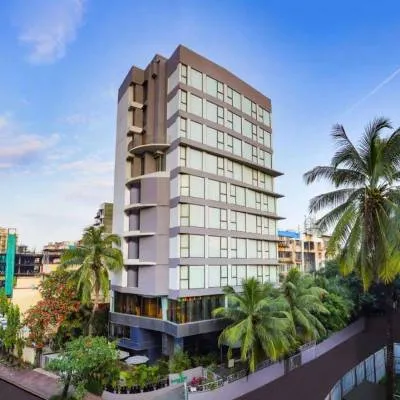
Lemon Tree Hotels plans to increase overseas expansion over the next three to five years as outbound leisure travel by Indian citizens grows. Capital Economics projects India will become the world's fourth-largest outbound tourism market by 2035, rising from tenth place. The move reflects expectations of stronger international leisure demand.

Managing Director and Chief Executive Officer Neelendra Singh said the group intends to follow Indian travellers to destinations such as Thailand, Vietnam and Singapore. He offered no further details on markets or timing. The strategy aims to align the brand with established outbound preferences.

The midscale chain operates five hotels outside India, with two in Nepal and Bhutan and one in the UAE, from a portfolio of more than 120 properties. Lemon Tree owns brands including Aurika, Red Fox and Keys Select and is the country's third-biggest homegrown hotel chain by number of rooms. India will remain the main focus for now.

Domestically the company is exploring bringing unbranded hotels into its system through a largely franchise-led model to tap the vast independent hotel market, which industry estimates place at about half unbranded. In January the group said it would transfer hotel ownership to subsidiary Fleur and become a fully asset-light operator, creating two publicly traded entities within 12 to 15 months. The change is expected to enable faster expansion and lower capital intensity.

Other Indian groups with luxury portfolios have limited overseas footprints, and Lemon Tree characterises international growth as a mid-term goal rather than an immediate strategic shift. The company indicated that rising geopolitical tensions would not materially alter its expansion intent but that timing would be adjusted to market conditions. The push is framed as a response to where Indian leisure travellers choose to go.

Lemon Tree Hotels plans to increase overseas expansion over the next three to five years as outbound leisure travel by Indian citizens grows. Capital Economics projects India will become the world's fourth-largest outbound tourism market by 2035, rising from tenth place. The move reflects expectations of stronger international leisure demand. Managing Director and Chief Executive Officer Neelendra Singh said the group intends to follow Indian travellers to destinations such as Thailand, Vietnam and Singapore. He offered no further details on markets or timing. The strategy aims to align the brand with established outbound preferences. The midscale chain operates five hotels outside India, with two in Nepal and Bhutan and one in the UAE, from a portfolio of more than 120 properties. Lemon Tree owns brands including Aurika, Red Fox and Keys Select and is the country's third-biggest homegrown hotel chain by number of rooms. India will remain the main focus for now. Domestically the company is exploring bringing unbranded hotels into its system through a largely franchise-led model to tap the vast independent hotel market, which industry estimates place at about half unbranded. In January the group said it would transfer hotel ownership to subsidiary Fleur and become a fully asset-light operator, creating two publicly traded entities within 12 to 15 months. The change is expected to enable faster expansion and lower capital intensity. Other Indian groups with luxury portfolios have limited overseas footprints, and Lemon Tree characterises international growth as a mid-term goal rather than an immediate strategic shift. The company indicated that rising geopolitical tensions would not materially alter its expansion intent but that timing would be adjusted to market conditions. The push is framed as a response to where Indian leisure travellers choose to go.

Next Story
Equipment

Sanjay Saxena Passes Away, Leaving Behind a Powerful Industry Legacy

The construction equipment industry mourns the untimely demise of Sanjay Saxena, Chief Operating Officer (Sales, Marketing & Customer Support) at Sany India and South Asia, a respected leader whose vision and dedication left a lasting imprint on the sector. He was a seasoned professional with decades of experience across construction, material handling, port, and mining equipment industries. At Sany India, he played a pivotal role in steering the company’s growth, overseeing business operations across all six key verticals—Hoisting, Foundation, Port, Excavators, Road, and Mining. His s..

Next Story
Infrastructure Urban

The Gateway of Guwahati

The Brahmaputra does not behave like an ordinary river. It shifts, swells and retreats with extraordinary force, carrying immense sediment loads from the Himalayas while constantly reshaping its own channel. In Guwahati, seasonal water levels can swing by nearly 10-11 m, transforming calm winter waters into a roaring monsoon current.Building permanent infrastructure in such conditions is notoriously difficult. Conventional river terminals – fixed jetties anchored to the riverbed – struggle to survive in an environment where currents intensify, sediment accumulates rapidly and the river’s..

Next Story
Building Material

Cement Excellence Redefined!

Operational excellence in cement is no longer about producing more – it is about producing smarter, cleaner and more reliably, where cost per tonne meets carbon per tonne.Operational excellence in cement has moved far beyond the old pursuit of ‘more tonne’. The new benchmark is smarter, cleaner, more reliable production, delivered with discipline across process, people and data. In an industry where energy can account for nearly 30 per cent of manufacturing cost, even marginal gains translate into meaningful value. As Dr SB Hegde, Professor, Jain College of Engineering & Technol..

Advertisement

Subscribe to Our Newsletter

Get daily newsletters around different themes from Construction world.

STAY CONNECTED

Advertisement

Advertisement

Advertisement