LML Industrial Park to Attract Rs 10 billion (bn) from 50 Plus Companies
ECONOMY & POLICY

LML Industrial Park to Attract Rs 10 billion (bn) from 50 Plus Companies

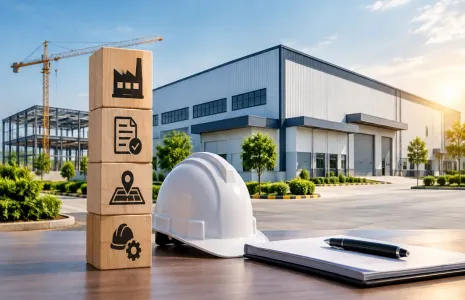
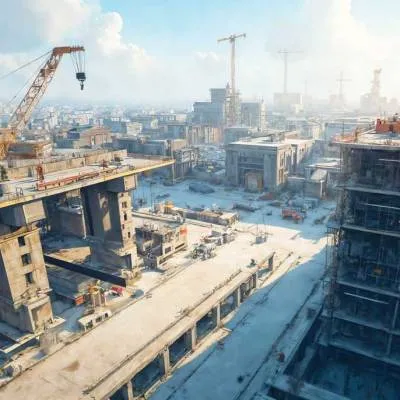
LML Realty has announced that its upcoming LML Industrial Park in Jhirka Valley, Haryana, is projected to attract cumulative investments exceeding Rs 10 billion (bn) from 50 plus companies. The development is being presented as the formation of a planned industrial ecosystem designed to enable long-term operational efficiency, infrastructure reliability and affordability at scale. The project is intended to provide a disciplined alternative to ad hoc expansion by embedding key systems before density increases.

Commitments to establish operations within the ecosystem include A.D. Global Synergies Pvt Ltd, Hindustan Rasayan Pvt Ltd, Shri Cranes and VAAN Global Energy, alongside a roster of over 35 additional enterprises spanning manufacturing, logistics, trading, chemicals, engineering and allied sectors. The park design prioritises utilities, internal mobility systems, compliance frameworks and scalable layouts from inception to reduce lifecycle operating costs and to eliminate retrofitted inefficiencies. Planners expect these measures to support predictable expansion and long-term usability for enterprises of varying scales.

Affordability is to be achieved through planning discipline and execution clarity rather than by lowering standards, and the ecosystem emphasis is intended to lower operational friction for industry. Jhirka Valley is described as an emerging strategic industrial corridor owing to its connectivity, favourable policy environment and proximity to national capital region demand clusters. The projected investment level and the scale of participation are presented as early indicators of confidence in an ecosystem-driven model rather than fragmented expansion.

LML Group and its LML Realty arm position their developments as integrated ecosystems where industrialisation and urbanisation function as one system, with each project structured to signal order, clarity and long-term intent. The chief executive stated that the responsibility of the developer is to create environments where enterprises can operate efficiently from day one and scale predictably over time. The LML name has stood for industrial ambition since 1972 and is now framed around delivering systems that endure.

LML Realty has announced that its upcoming LML Industrial Park in Jhirka Valley, Haryana, is projected to attract cumulative investments exceeding Rs 10 billion (bn) from 50 plus companies. The development is being presented as the formation of a planned industrial ecosystem designed to enable long-term operational efficiency, infrastructure reliability and affordability at scale. The project is intended to provide a disciplined alternative to ad hoc expansion by embedding key systems before density increases. Commitments to establish operations within the ecosystem include A.D. Global Synergies Pvt Ltd, Hindustan Rasayan Pvt Ltd, Shri Cranes and VAAN Global Energy, alongside a roster of over 35 additional enterprises spanning manufacturing, logistics, trading, chemicals, engineering and allied sectors. The park design prioritises utilities, internal mobility systems, compliance frameworks and scalable layouts from inception to reduce lifecycle operating costs and to eliminate retrofitted inefficiencies. Planners expect these measures to support predictable expansion and long-term usability for enterprises of varying scales. Affordability is to be achieved through planning discipline and execution clarity rather than by lowering standards, and the ecosystem emphasis is intended to lower operational friction for industry. Jhirka Valley is described as an emerging strategic industrial corridor owing to its connectivity, favourable policy environment and proximity to national capital region demand clusters. The projected investment level and the scale of participation are presented as early indicators of confidence in an ecosystem-driven model rather than fragmented expansion. LML Group and its LML Realty arm position their developments as integrated ecosystems where industrialisation and urbanisation function as one system, with each project structured to signal order, clarity and long-term intent. The chief executive stated that the responsibility of the developer is to create environments where enterprises can operate efficiently from day one and scale predictably over time. The LML name has stood for industrial ambition since 1972 and is now framed around delivering systems that endure.

Related Stories

Gold Stories

Next Story
Infrastructure Urban

KONE Opens India's First Digital Experience Centre in Pune

KONE, a global elevator and escalator manufacturer, has inaugurated its first Digital Experience Centre (DEC) in India, located in Pune. The facility aims to showcase how artificial intelligence (AI), connectivity and data-driven technologies can enhance customer experiences and improve building operations.The centre was inaugurated by Jussi Herlin, Executive Vice Chair, KONE Corporation; Philippe Delorme, President and CEO, KONE; and Nandan Nilekani, Co-founder and Chairman of the Board, Infosys.Designed as an interactive customer environment, the facility demonstrates digital solutions cover..

Next Story
Infrastructure Urban

CII GreenCo Launches Circularity Guidelines for Indian Industry

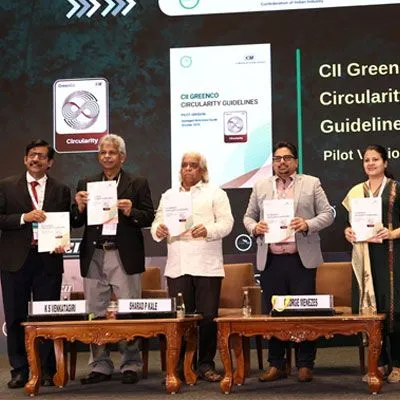
The Confederation of Indian Industry (CII) GreenCo Council has launched the CII GreenCo Circularity Guidelines – Pilot Version at the 17th CII GreenCo Waste & Resource Management Summit 2026 in Chennai. The initiative aims to strengthen resource efficiency, waste reduction and circular economy practices across Indian manufacturing and process industries.The guidelines introduce a structured framework with circularity indices covering raw materials, consumables, packaging and other resource inputs. These indicators will help industries assess existing practices, identify opportunities to ..

Next Story
Infrastructure Energy

Global Electronics Association Launches IPC-1783-CO2E Standard

The Global Electronics Association has introduced IPC-1783-CO2E, a new international standard aimed at improving consistency, transparency and comparability in product carbon footprint reporting across the electronics manufacturing industry.The standard, titled International Standard for Data Collection and Reporting of CO2 Equivalent (CO2e) Emissions for the Electronics Manufacturing Supply Chain, provides industry-specific guidance for collecting, estimating and reporting carbon emissions data.With increasing regulatory requirements and customer expectations, electronics manufacturers face c..

Advertisement

Subscribe to Our Newsletter

Get daily newsletters around different themes from Construction world.

STAY CONNECTED

Advertisement

SPECIAL OFFER
QR Code