



+
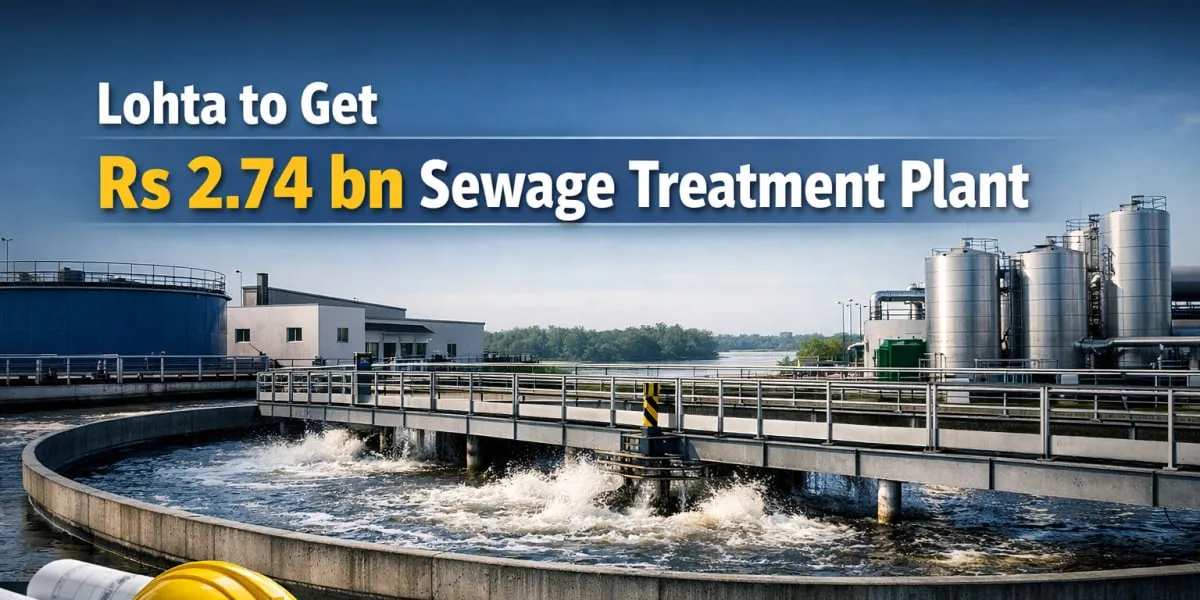
Lohta To Get Rs 2.74 bn Sewage Treatment Plant
ECONOMY & POLICY

Lohta To Get Rs 2.74 bn Sewage Treatment Plant

Lohta in Varanasi will receive a sewage treatment plant to be funded at Rs 2.74 billion (Rs 2.74 bn).

The investment forms part of wider urban sanitation and river conservation initiatives in the region.

The facility is designed to treat wastewater to prescribed environmental standards and improve overall water quality.

The funding is expected to support procurement of treatment technology and associated civil works while aligning with regional environmental compliance frameworks.

Construction is scheduled to be carried out under approved infrastructure programmes and the project will proceed following tender finalisation.

The undertaking is expected to increase local sewage management capacity and reduce untreated effluent entering nearby water bodies.

Project delivery timelines and firm selection will be determined through standard procurement processes.

Local agencies will coordinate with state authorities to align timelines and resource allocation.

The plant will incorporate systems for primary and secondary treatment in line with regulatory requirements and will be integrated with existing sanitation networks where feasible.

Authorities anticipate the facility will support public health objectives and contribute to ongoing river conservation efforts, with monitoring regimes and periodic performance reviews planned to ensure compliance.

The project is presented as part of municipal and state level planning to upgrade urban services.

Operators and contractors will be required to comply with environmental safeguards during construction and operation.

Stakeholders indicated that implementation oversight will include monitoring of effluent quality and adherence to operational norms to ensure long term performance.

The initiative is expected to bolster infrastructure resilience in Lohta and provide capacity for future urban growth.

Community outreach and capacity building are expected to form part of operational planning to ensure sustainable outcomes.

Further details are likely to be disclosed once procurement and implementation arrangements are finalised.

Lohta in Varanasi will receive a sewage treatment plant to be funded at Rs 2.74 billion (Rs 2.74 bn). The investment forms part of wider urban sanitation and river conservation initiatives in the region. The facility is designed to treat wastewater to prescribed environmental standards and improve overall water quality. The funding is expected to support procurement of treatment technology and associated civil works while aligning with regional environmental compliance frameworks. Construction is scheduled to be carried out under approved infrastructure programmes and the project will proceed following tender finalisation. The undertaking is expected to increase local sewage management capacity and reduce untreated effluent entering nearby water bodies. Project delivery timelines and firm selection will be determined through standard procurement processes. Local agencies will coordinate with state authorities to align timelines and resource allocation. The plant will incorporate systems for primary and secondary treatment in line with regulatory requirements and will be integrated with existing sanitation networks where feasible. Authorities anticipate the facility will support public health objectives and contribute to ongoing river conservation efforts, with monitoring regimes and periodic performance reviews planned to ensure compliance. The project is presented as part of municipal and state level planning to upgrade urban services. Operators and contractors will be required to comply with environmental safeguards during construction and operation. Stakeholders indicated that implementation oversight will include monitoring of effluent quality and adherence to operational norms to ensure long term performance. The initiative is expected to bolster infrastructure resilience in Lohta and provide capacity for future urban growth. Community outreach and capacity building are expected to form part of operational planning to ensure sustainable outcomes. Further details are likely to be disclosed once procurement and implementation arrangements are finalised.

Next Story
Infrastructure Urban

Implementation Status of Jal Jeevan Mission

Since August 2019 the Government has implemented Jal Jeevan Mission to provide assured potable water through household tap connections in rural India. At the start of the mission only 32.3 million (mn) rural households, representing 16.7 per cent, were reported to have tap water connections. States and union territories have reported that 125.8 mn additional rural households have since been provided with tap connections. As a result, of about 193.6 mn rural households roughly 158.2 mn, or 81.71 per cent, are reported to have tap water supply at home.\n\nThe State, district and village level st..

Next Story
Infrastructure Urban

Jal Jeevan Mission Reaches Eighty One Per Cent Rural Coverage

The Government reported substantial progress under the Jal Jeevan Mission, launched in August 2019 to provide tap water to every rural household. At launch only 32.3 million (mn) rural households had tap connections and states and Union territories reported provision of 125.8 mn additional households by March 2026. Consequently, out of about 193.6 mn rural households around 158.2 mn, or 81.71 per cent, are reported to have tap water at home. The Finance Minister announced extension of the mission until 2028 in the 2025-26 budget speech. The Swachh Bharat Mission Grameen, launched in October 20..

Next Story
Infrastructure Urban

Empowering Local Governance for Sustainable Rural Water Supply

The Ministry of Jal Shakti has aligned the Jal Jeevan Mission (JJM) with the 73rd Amendment to strengthen village level planning and community ownership of water supply. Gram Panchayats, village water and sanitation committees and Pani Samitis are to plan, implement, manage and maintain piped water systems, with gram sabha processes formalising handover and oversight. Implementation support agencies including non government organisations, community based organisations and self help groups have been empanelled to train local committees and promote women participation. Under JJM, the department ..

Advertisement

Subscribe to Our Newsletter

Get daily newsletters around different themes from Construction world.

STAY CONNECTED

Advertisement

Advertisement

Advertisement














