





Madurai Plans Major EV Infrastructure Boost
ECONOMY & POLICY

Madurai Plans Major EV Infrastructure Boost

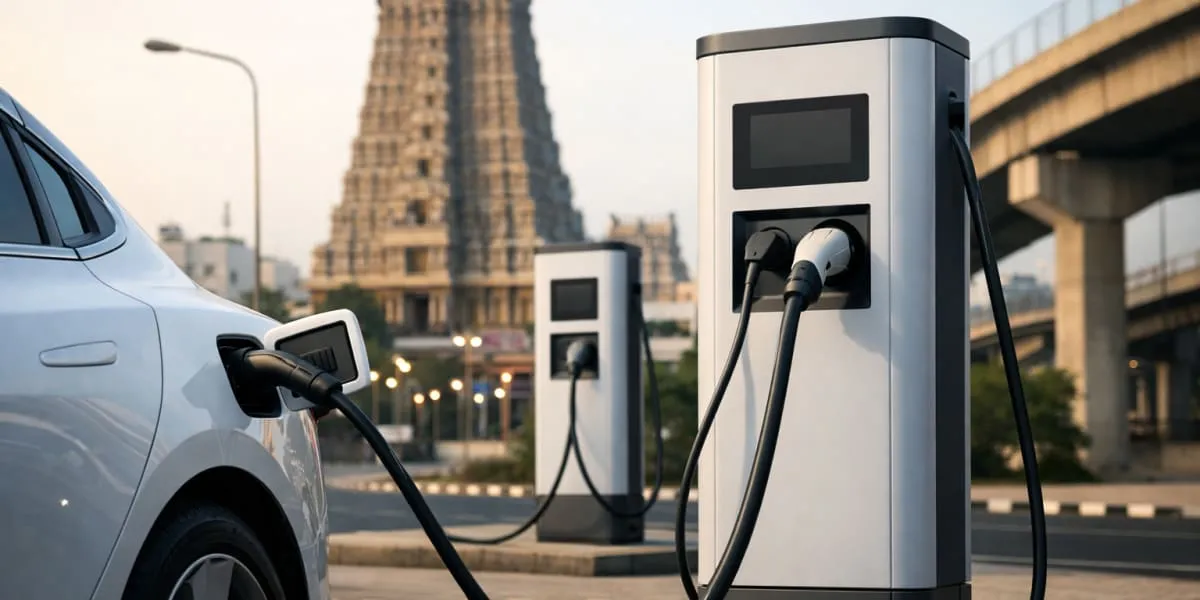
Madurai municipal authorities have unveiled a plan to accelerate electric vehicle infrastructure across the city. The initiative aims to expand public charging networks, support private investment and create an enabling environment for wider adoption. Officials have set priorities that include accessibility, affordability and integration with urban mobility plans. Stakeholders will be consulted to align the plan with local needs and land use.

The programme will prioritise deployment of charging points in commercial centres and at transport hubs. Emphasis will be placed on fast charging capacity along major corridors and on standardised connectors to improve interoperability. Grid upgrades and smart management systems are planned to ensure reliability and to balance demand. Authorities plan to map demand hotspots to guide charger placement and to avoid duplication.

Local transport operators will be encouraged to electrify fleets, with initial focus on buses and last mile services. Support is expected for two wheeler and three wheeler operators through incentives and preferential parking provisions. Collaboration with manufacturers and charging providers will be sought to pilot scalable solutions. Equity measures will aim to ensure charging access in underserved neighbourhoods.

Funding models under consideration include public private partnerships and targeted subsidies to reduce upfront costs for operators and consumers. The municipal plan envisages training programmes to build local technical capacity and to support maintenance networks. Officials anticipate that new investment will also generate employment opportunities in installation and operations. Regulatory adjustments are anticipated to streamline approvals and to encourage investment.

The city will establish performance metrics and monitoring mechanisms to track uptake and to measure environmental benefits. Expected outcomes include reductions in local emissions, improvements in air quality and growth in related service sectors. Authorities have said the approach will be phased and adaptive to emerging technology and demand patterns. Periodic reviews will allow course corrections and alignment with state and national policies.

Madurai municipal authorities have unveiled a plan to accelerate electric vehicle infrastructure across the city. The initiative aims to expand public charging networks, support private investment and create an enabling environment for wider adoption. Officials have set priorities that include accessibility, affordability and integration with urban mobility plans. Stakeholders will be consulted to align the plan with local needs and land use. The programme will prioritise deployment of charging points in commercial centres and at transport hubs. Emphasis will be placed on fast charging capacity along major corridors and on standardised connectors to improve interoperability. Grid upgrades and smart management systems are planned to ensure reliability and to balance demand. Authorities plan to map demand hotspots to guide charger placement and to avoid duplication. Local transport operators will be encouraged to electrify fleets, with initial focus on buses and last mile services. Support is expected for two wheeler and three wheeler operators through incentives and preferential parking provisions. Collaboration with manufacturers and charging providers will be sought to pilot scalable solutions. Equity measures will aim to ensure charging access in underserved neighbourhoods. Funding models under consideration include public private partnerships and targeted subsidies to reduce upfront costs for operators and consumers. The municipal plan envisages training programmes to build local technical capacity and to support maintenance networks. Officials anticipate that new investment will also generate employment opportunities in installation and operations. Regulatory adjustments are anticipated to streamline approvals and to encourage investment. The city will establish performance metrics and monitoring mechanisms to track uptake and to measure environmental benefits. Expected outcomes include reductions in local emissions, improvements in air quality and growth in related service sectors. Authorities have said the approach will be phased and adaptive to emerging technology and demand patterns. Periodic reviews will allow course corrections and alignment with state and national policies.

Related Stories

Gold Stories

Next Story
Products

Koemmerling opens Navi Mumbai experience centre

Koemmerling, a brand of the profine Group, has expanded its presence in the Mumbai metropolitan region with the opening of a new experience centre in Navi Mumbai and launched its Allure S46 minimal sliding door system for the Indian market.Located in CBD Belapur, the facility was inaugurated by Peter Mrosik, Owner and CEO, profine Group, along with Farid Khan, Chairman and Managing Director, profine India, and Kamal Bajaj, CEO, profine India.The company said the new centre will showcase its portfolio of uPVC and aluminium window and door systems to architects, developers and homeowners.The ina..

Next Story
Products

India's waterproofing market nears Rs 150 bn milestone

India's waterproofing industry is approaching a market size of Rs 150 billion and is expected to surpass the $2 billion milestone, according to speakers at the 2nd India International Waterproofers Conference & Expo 2026 organised by the Waterproofers Association of India (WAI) in New Delhi.The two-day event brought together more than 20 speakers, 55 international delegates and 53 exhibition booths, with discussions focusing on climate-resilient construction, advanced waterproofing technologies and international collaboration.Inaugurating the event, Durga Shanker Mishra, former Secretary, ..

Next Story
Real Estate

Dilip Buildcon Q1 FY27 Revenue at Rs 23.78 billion

Dilip Buildcon Limited reported consolidated revenue from operations of Rs 2,378 crore in Q1 FY27, along with EBITDA of Rs 429 crore and profit after tax of Rs 128 crore.Consolidated EBITDA margin stood at 18.1%, improving from 17.1% in Q4 FY26. On a standalone basis, revenue from operations was Rs 1,930 crore, EBITDA stood at Rs 199 crore and PAT was Rs 39 crore, with an EBITDA margin of 10.3%.The company’s order book stood at Rs 27,691 crore as of 30 June 2026, compared with Rs 28,830 crore as of 31 March 2026. Roads and highways accounted for 17.1% of the order book, irrigation and water ..

Advertisement

Subscribe to Our Newsletter

Get daily newsletters around different themes from Construction world.

STAY CONNECTED

Advertisement














