Maharashtra to Make State Road Transport Fleet Fully Electric by 2037
ECONOMY & POLICY

Maharashtra to Make State Road Transport Fleet Fully Electric by 2037

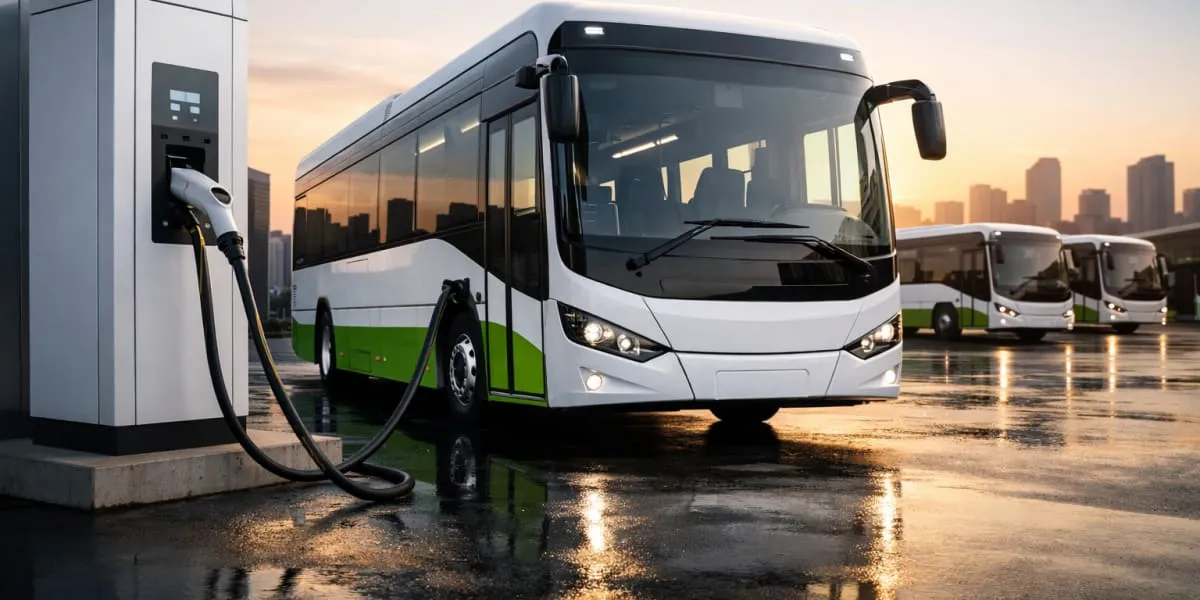
The Maharashtra transport minister told the Legislative Council that the Maharashtra State Road Transport Corporation will convert its entire fleet of 22,000 buses to EVs by 2037, which would make the state the first in the country to commit to a complete transition of its state-run bus network to electric power. He noted that about 800 buses are already electric and that the target has been moved forward to align with the national vision for a full shift to electric mobility by 2047.

The minister said an earlier plan to procure 5,000 diesel buses annually for five years has been significantly revised. Beyond the 8,000 diesel buses currently in progress, all future additions to the fleet will be electric, and the government has devised a scheme to convert existing diesel buses to electric drivetrains.

The statement outlined measures to support the transition, including the use of solar power to recharge charging stations and thereby reduce reliance on the traditional power grid. The state EV Policy 2026 is reported to provide monetary incentives for electric vehicle purchases, including tax exemptions and toll discounts, and existing toll waivers already apply on major arterial routes such as the Mumbai–Pune Expressway, the Nagpur–Mumbai Samruddhi Mahamarg and the Atal Setu. The policy also aims to encourage private participation in charging networks.

The government plans to develop charging stations every 25 km on highways, extend financial support and promote training courses on charging technology. Officials framed the move as part of a broader effort to accelerate electric mobility, noting that Delhi currently has the largest electric bus fleet in the country with over 4,200 buses and its own expansion targets through 2028. Officials said the transition will require phased infrastructure deployment and sustained investment.

The Maharashtra transport minister told the Legislative Council that the Maharashtra State Road Transport Corporation will convert its entire fleet of 22,000 buses to EVs by 2037, which would make the state the first in the country to commit to a complete transition of its state-run bus network to electric power. He noted that about 800 buses are already electric and that the target has been moved forward to align with the national vision for a full shift to electric mobility by 2047. The minister said an earlier plan to procure 5,000 diesel buses annually for five years has been significantly revised. Beyond the 8,000 diesel buses currently in progress, all future additions to the fleet will be electric, and the government has devised a scheme to convert existing diesel buses to electric drivetrains. The statement outlined measures to support the transition, including the use of solar power to recharge charging stations and thereby reduce reliance on the traditional power grid. The state EV Policy 2026 is reported to provide monetary incentives for electric vehicle purchases, including tax exemptions and toll discounts, and existing toll waivers already apply on major arterial routes such as the Mumbai–Pune Expressway, the Nagpur–Mumbai Samruddhi Mahamarg and the Atal Setu. The policy also aims to encourage private participation in charging networks. The government plans to develop charging stations every 25 km on highways, extend financial support and promote training courses on charging technology. Officials framed the move as part of a broader effort to accelerate electric mobility, noting that Delhi currently has the largest electric bus fleet in the country with over 4,200 buses and its own expansion targets through 2028. Officials said the transition will require phased infrastructure deployment and sustained investment.

Next Story
Infrastructure Urban

UniAcoustic, Vicoustic Form UniVicoustic Alliance

UniAcoustic, part of United Group, has acquired a strategic stake in Portugal-based Vicoustic, forming a new alliance branded as UniVicoustic. The agreement, signed in Mumbai, marks a significant cross-border partnership aligned with evolving India–EU trade dynamics.The collaboration brings together Vicoustic’s global expertise in architectural acoustic products with UniAcoustic’s manufacturing scale and distribution capabilities. The combined platform aims to expand market reach, integrate technology and optimise supply chains across key regions.The development comes amid progress in th..

Next Story
Infrastructure Urban

Dalmia Bharat, Delhi PWD Revamp Under-Flyover Spaces

Dalmia Bharat has partnered with the Public Works Department (PWD), Government of Delhi, to redevelop select under-flyover spaces and a road stretch into sustainable urban hubs. The agreement covers key locations including Lodhi Flyover, Oberoi Flyover, Mangi Bridge and Hanuman Setu.Under the initiative, the company will undertake design, landscaping, plantation and long-term maintenance of the sites, with a defined upkeep period of three years after completion. The project aims to improve urban aesthetics while promoting environmental sustainability and biodiversity restoration in high-densit..

Next Story
Infrastructure Urban

Versigent Debuts as Independent NYSE-Listed Company

Versigent has launched as an independent publicly traded company following its separation from Aptiv, with shares commencing trading on the New York Stock Exchange under the ticker “VGNT”. The move marks a significant milestone in the company’s transition into a standalone global player in power distribution systems.The company specialises in the design, manufacturing and delivery of low- and high-voltage electrical architectures, supported by engineering centres across four continents and manufacturing operations in over 25 countries.Versigent reported revenues of $8.8 billion, net inco..

Advertisement

Subscribe to Our Newsletter

Get daily newsletters around different themes from Construction world.

STAY CONNECTED

Advertisement

Advertisement

Advertisement